Growing Heirloom Tomatoes: A Complete Guide for Beginners
Heirloom tomatoes offer a wide range of colors, shapes, and sizes, and they have a history that spans generations. This guide covers what heirlooms are, how to choose the right varieties, and how to grow them from seed.
By Taylor Collins
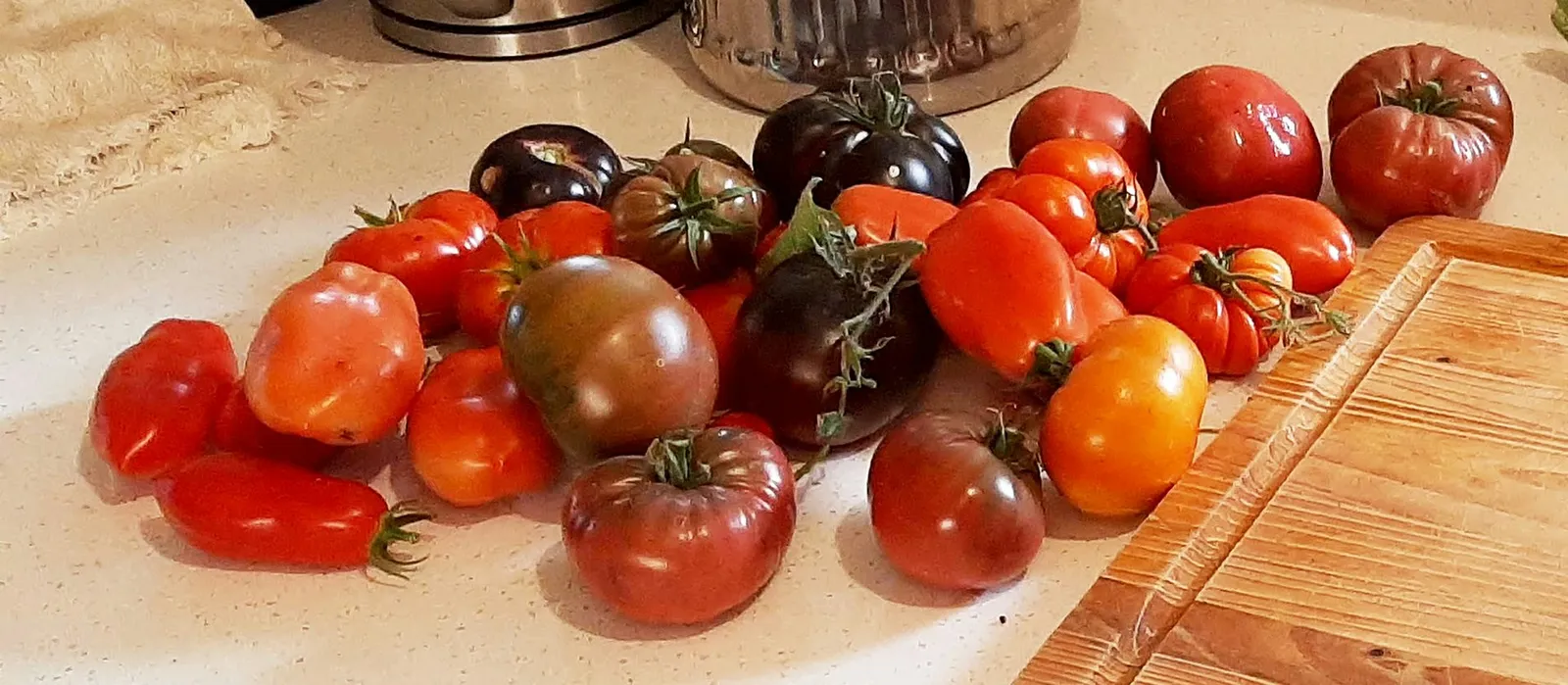
Heirloom tomatoes bring together an array of hues, a diversity of forms and dimensions, and the appeal of a storied past. Heirloom plants in general, and heirloom tomatoes specifically, are set apart by seeds that have been passed down through multiple generations of cultivators.
I have to confess: I am fixated on heirloom tomatoes. They may look unusual, but they are not difficult to cultivate, which makes the results very rewarding. They sprout reliably, gain size and bulk rapidly, and are simple to move to the garden.
If you are thinking about becoming a grower of heirloom tomatoes, it helps to first understand the fundamentals and to investigate the different kinds — not only their dimensions, form, and hue, but also their taste, their cultivation requirements and traits, and whether they will work in your climate and garden.
Defining Heirloom Tomatoes
There is no exact definition of the word "heirloom," but what it is _not_ is hybridized. Let's examine this more closely.
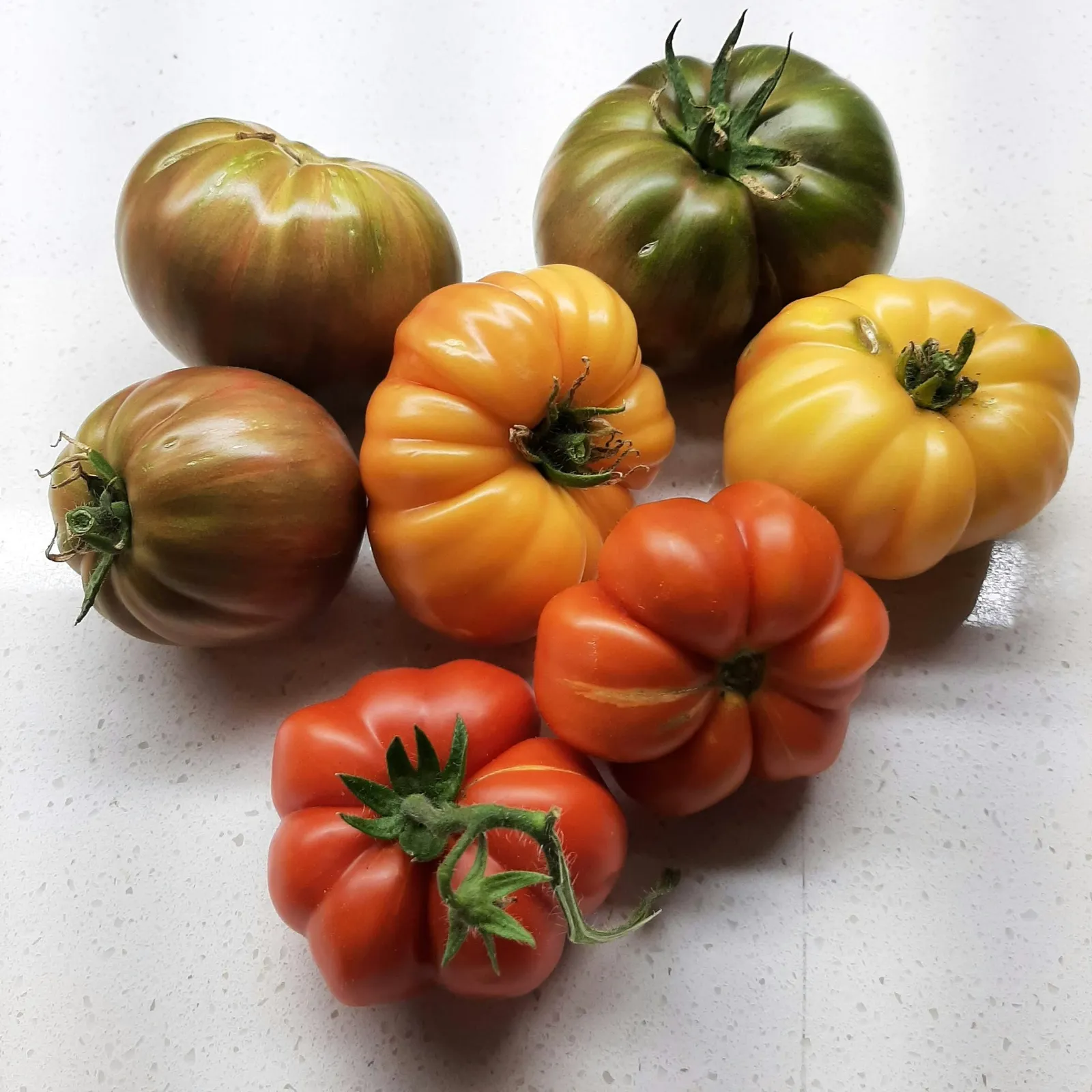
Heirlooms span a generation or more.
Heirlooms Span a Generation or More
Consider 50 years. That period represents numerous generations, not only of seed development but also of families and friends cultivating and exchanging their valued seeds. Fifty years is typically regarded as the minimum duration for a variety to qualify as "heirloom." However, different experts and tomato enthusiasts disagree on this timeline. Some argue for only 25 years, while others claim that any variety that emerged after World War II cannot be an heirloom, and thus any tomato labeled heirloom must have existed before 1940.
Heirlooms Are Open-Pollinated
Regardless of the age debate, there is consensus that heirlooms must be open-pollinated. This means they are pollinated naturally by pollen from other tomato plants of the same variety, and their seeds will grow into plants identical to the parent. This sets them apart from hybrid tomatoes, where breeders deliberately cross two different types to produce a third variety that combines the best traits of both.
Heirlooms (Usually) Look Different
Heirloom tomatoes frequently have a unique appearance and are often not uniform in size or color. In fact, their shape is often bulbous and irregular, with deep clefts and creases. They may be unattractive, in fact. But this is part of their charm!
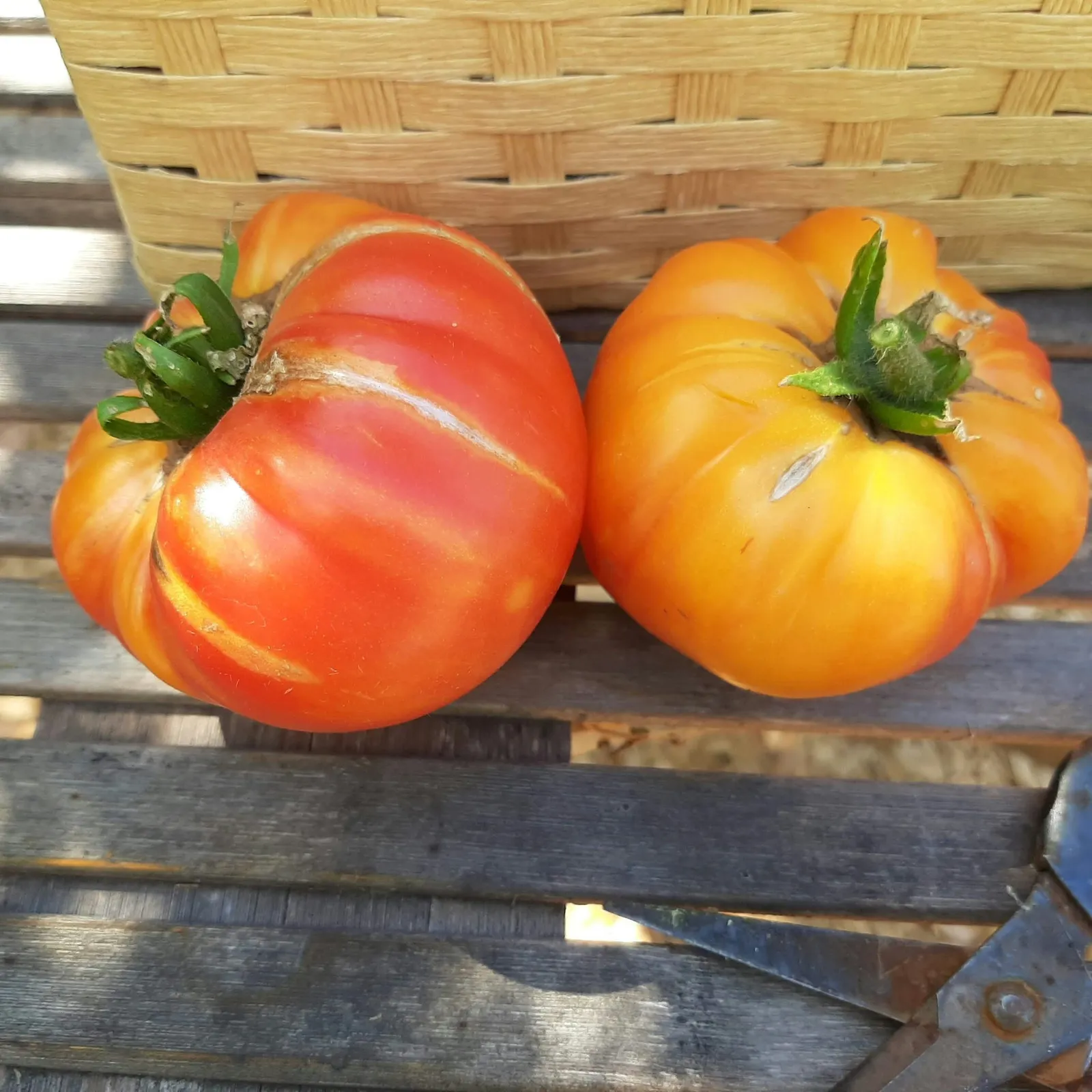
Heirloom variety Pineapple has lovely bicolor skin but can crack when temperatures fluctuate.
Heirlooms May Be Less Disease-Resistant
Since they have not been specifically bred to develop immunity against certain diseases, some heirloom tomatoes are more susceptible to disease than some hybrids. Heirlooms also sometimes yield fewer fruits per plant.
But that's not always the case. Many heirlooms are heavy producers and quite disease-resistant, so it pays to do some research before choosing your varieties.
Types of Heirloom Tomatoes
Most conventional tomatoes are red, and only red. But why settle for a single color when you can have purple, almost-black, green, yellow, orange, and variegated in multiple shades — even green zebra? Just keep in mind that color doesn't necessarily determine flavor.
Heirloom tomato varieties fall into the same basic categories as other tomatoes:
- Determinate or indeterminate: Sometimes called bush tomatoes, determinate varieties stop growing after setting what is called the "terminal bud" and then go on to produce all their fruit at the same time. Indeterminate varieties are sometimes called vine tomatoes and can reach almost any height depending on the growing season and other factors. They produce fruit throughout the growing season, stopped only by cold weather. While most heirlooms are indeterminate, some varieties are indeed determinate.
- Slicing or cherry: You want 'em in a sandwich, sliced? Or do you want to munch on them in the garden or anytime by popping a small, delectable fruit into your mouth? Heirlooms come in all sizes.
- Short or long growing season: Often referred to on a seed packet or tag as "days to maturity," this is an important characteristic to be aware of. Anything under 70 days is considered "short" and is therefore a good choice in northern climes with shorter growing seasons.
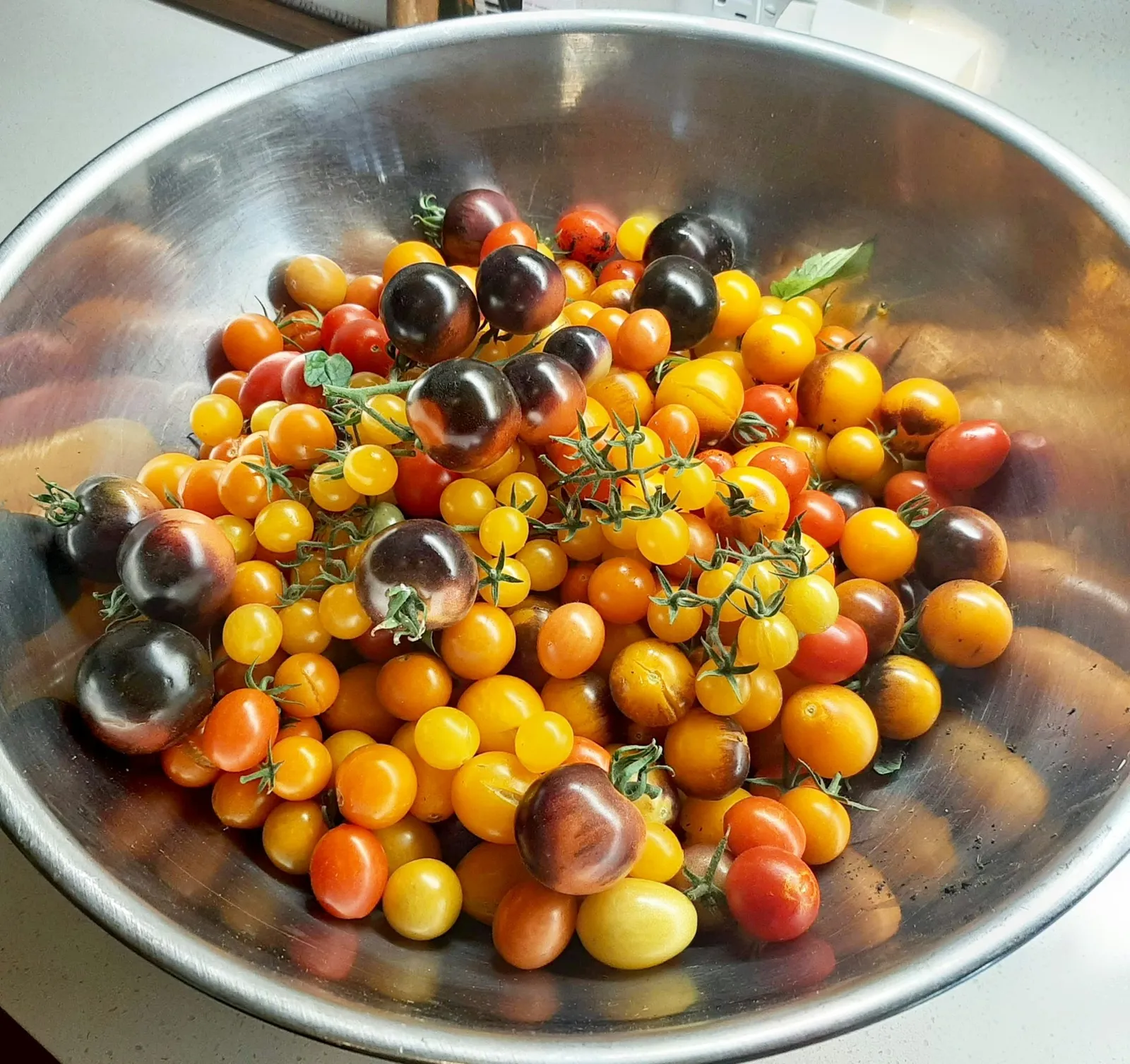
Cherry tomato harvest bonanza: Isis Candy, Golden Currant, Indigo Kumquat, Pandarino Grape, and Indigo Rose.
I have a teensy, tiny greenhouse that can, however, accommodate about 150 plants, and I make sure to stuff it with multiple varieties each year. I have faves that I just have to grow no matter what, but I always peruse the seed catalogs during winter and find new, fascinating varieties to try.
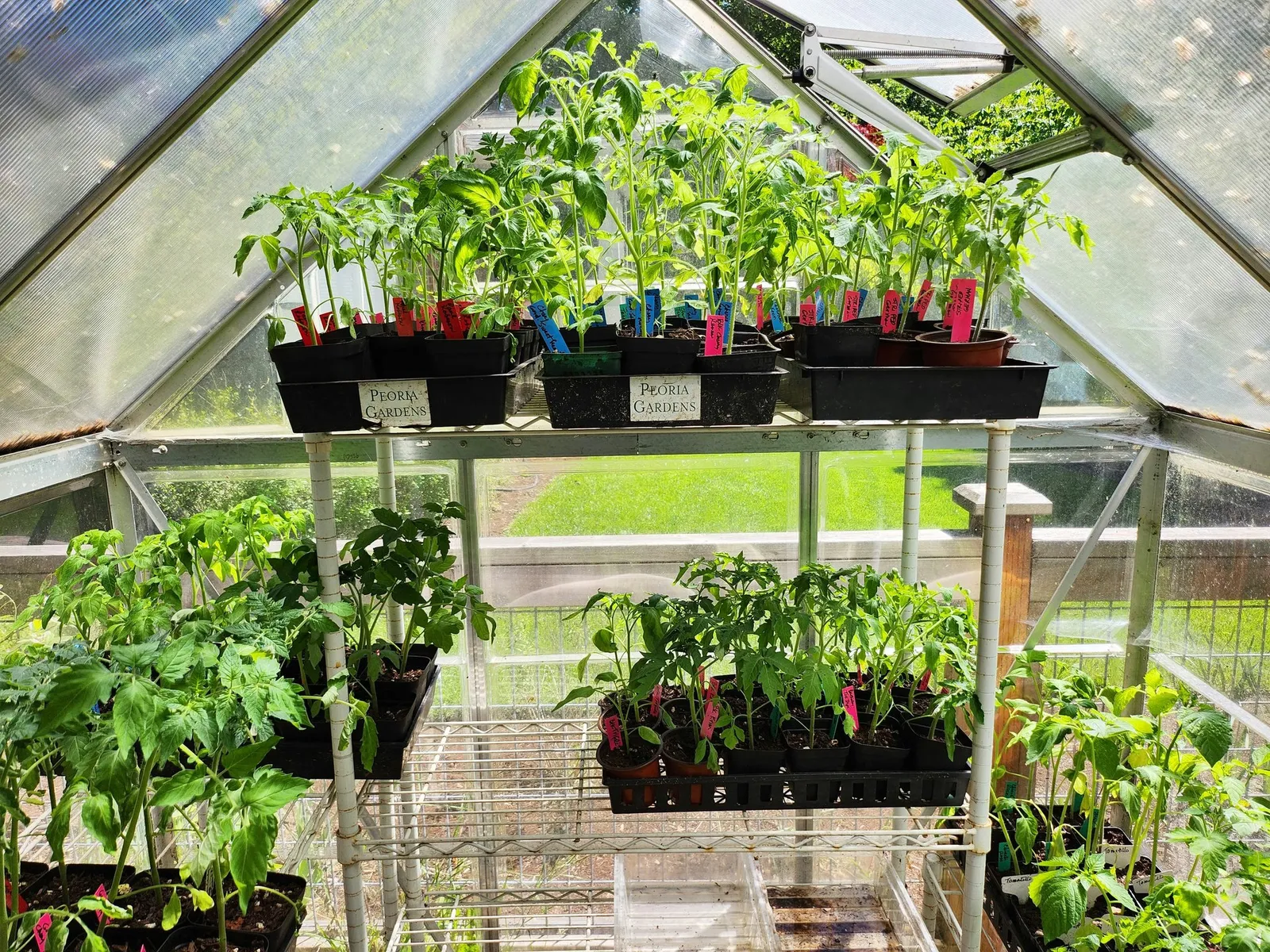
My greenhouse in mid-April. These plants won't be ready to go out into the garden for another month or so.
Choosing Heirloom Tomato Varieties
As with all tomatoes and plants, you can grow them from either seed or purchased seedlings. Seedlings (a.k.a. starts) are always less complicated, requiring less work and allowing you to depend on others' expertise when you're first starting out — so if you can find heirloom tomato starts you'd like to try, that's a great initial step.
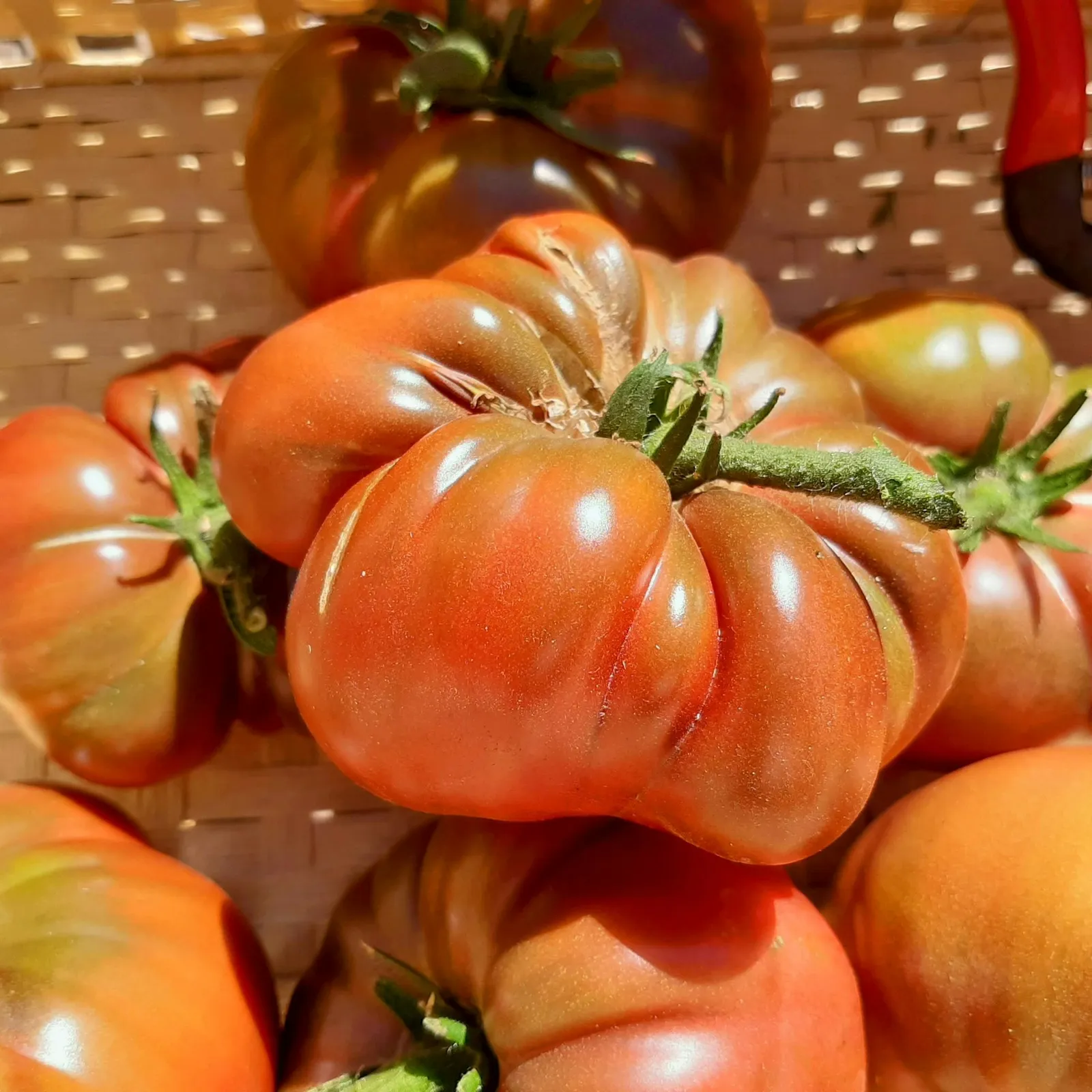
Costoluto Genovese has characteristic deep ridges and a deep orange to red color. When sliced, they may resemble a rosette.
Finding Heirloom Tomato Starts
With seedlings, your choice is limited by availability. Some common heirloom tomato starts are often available at nurseries and some even at big-box stores. You might see Cherokee Purple, a popular dark slicing tomato with amazing flavor. Or, depending on where you live, you might find Brandywine, a lovely beefsteak with a pinkish color, or even Pineapple, Black Krim, or Green Zebra, all of which have become more well-known.
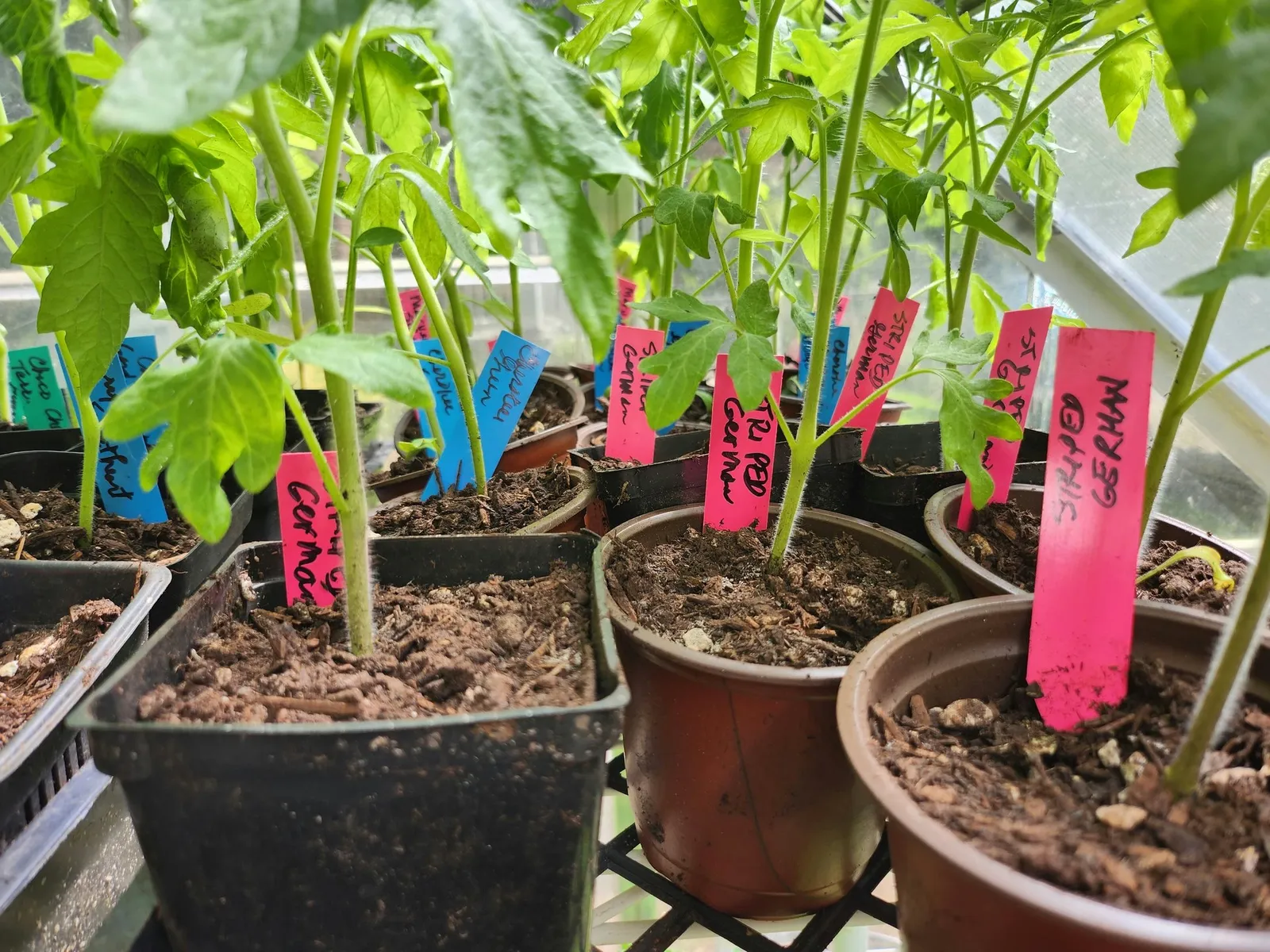
Tomato starts in my greenhouse, including Striped German, Cherokee Green, and Chocolate Cherry.
Some specialty nurseries may carry other less common varieties. Farmers' markets are a good place to try, and you can always ask the vendors if they will consider growing more tomato varieties in future years, so they can be a great source.
Selecting Tomato Varieties
Because heirloom tomatoes can be a little more finicky than hybrid tomatoes, do some research and get the help of local experts when selecting tomato varieties. Trying to grow heirloom tomatoes that thrive in the muggy, hot areas of Mississippi when you're in the Pacific Northwest could be an exercise in failure.
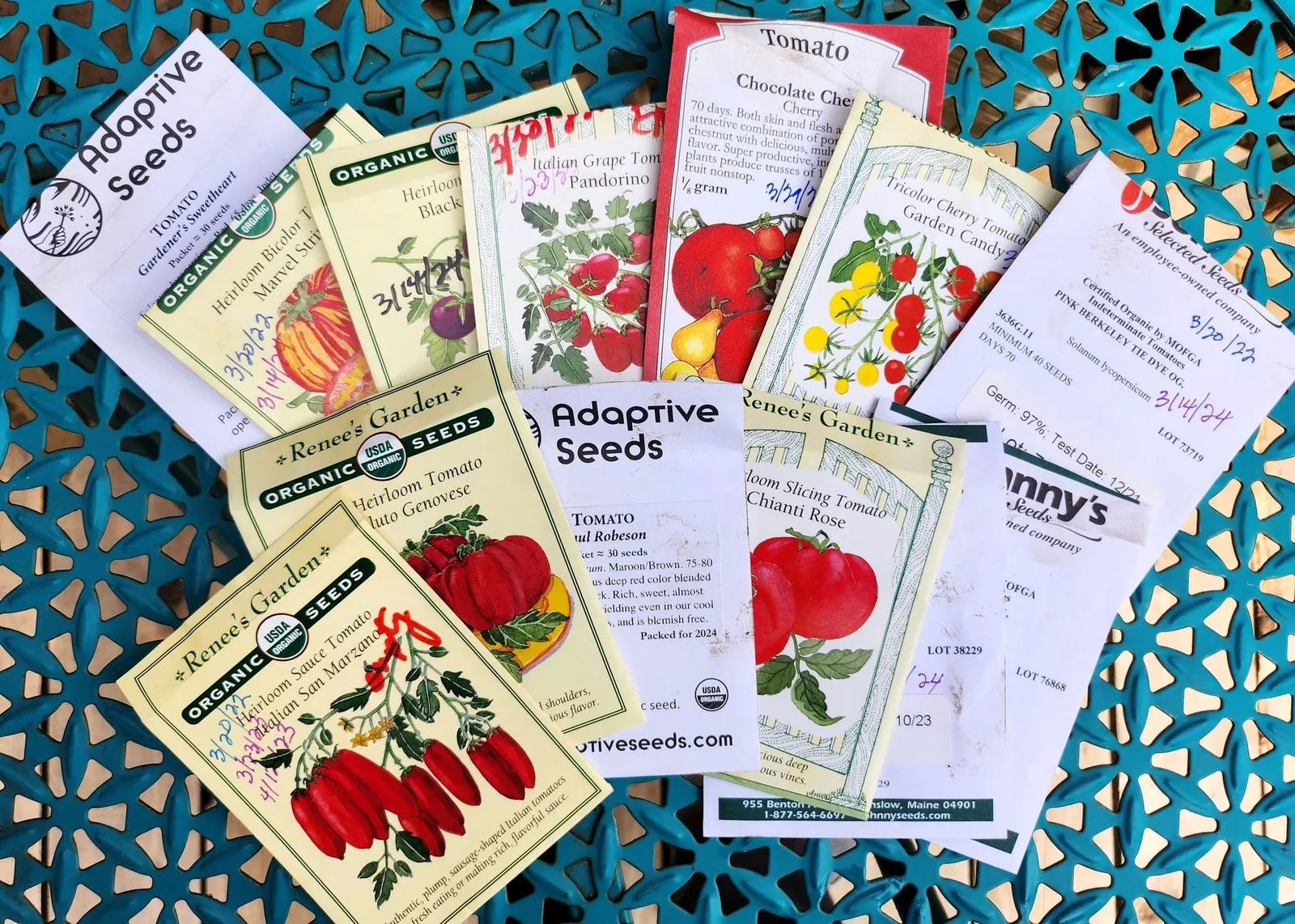
Some of the 2024 varieties I'm trying this year.
Your local university extension office and regional seed companies are excellent sources for finding heirlooms that are recommended for your area. For example, an internet search for "best heirloom tomato varieties in Mississippi" yields multiple discussions on regional varieties from the Mississippi State Extension Service and from other sources. A similar internet search for Colorado also returns useful results, so plug in your state and see what you find.
Growing Heirloom Tomatoes From Seed
The best way to try a range of heirloom tomatoes is to grow them from seed because then the world is your proverbial oyster. Again, try to find regional seed companies that produce heirloom seeds tested and known to grow in your area. I live in Eugene, Oregon, and I am lucky to have multiple local seed producers — you might too.
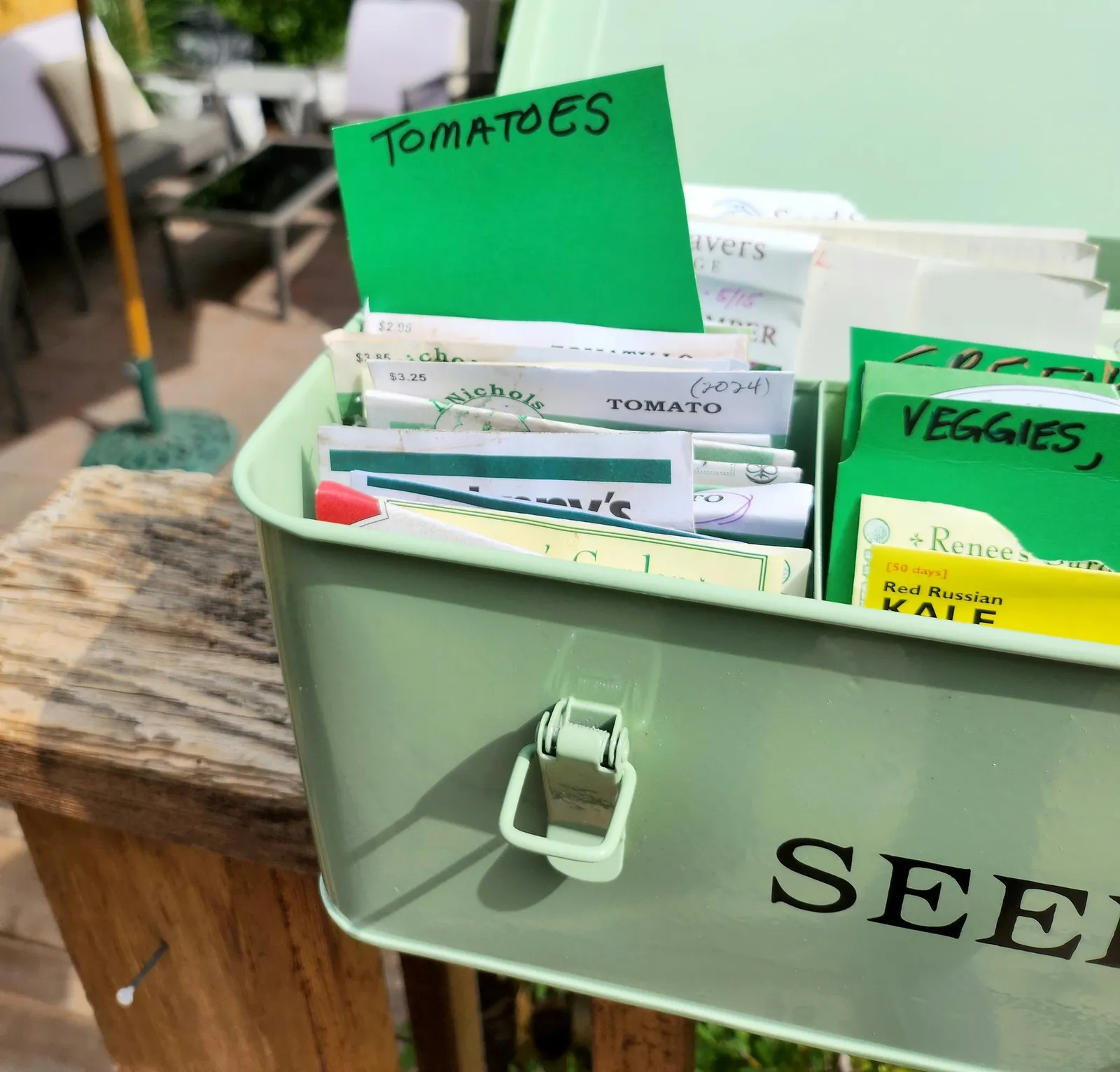
Getting ready for planting time!
No Greenhouse? Use Grow Lights
You don't need a greenhouse, but you must have a way to provide light and warmth to your sprouting seeds and seedlings until you can plant them outside because tomatoes love it warm.
Growing with lights is, however, a science as much as any other method of cultivation, and it has everything to do with the intensity of the light and how far away it is from your plants to make sure they get just enough light but not too much. This means continuously adjusting the level of the lights as the plants grow, so be sure to thoroughly research using grow lights if you use this method.
When and How to Plant Heirloom Tomato Seeds
Planting time is exciting! Eight weeks before your area's last frost date is the time. For me, this is about March 15.
Caring for Your Seedlings
The key ingredients are sun, warmth, and fertilizer in addition to water, of course. If you can provide these, your tomato starts will jump out of their pots.
Seasonal Care for Heirloom Tomatoes
All tomatoes, whether heirloom or not, are heavy feeders. When you plant, add a good amount of compost and manure to the planting hole and then side-dress them during the growing season every four to six weeks with a water-soluable, balanced solution.
Tomato care is an extensive topic and not part of our subject today. But if you run into disease problems or need general advice, your local extension office is the place to start.
Harvesting Heirloom Tomatoes
You might think that harvesting your tomatoes is the easiest part of growing them — but this is not necessarily so! The best information I've found on how to know when to harvest is from the seminal book written by Craig Lehoullier titled _Epic Tomatoes_. If you get bitten by the heirloom tomato bug, this book will be your bible.
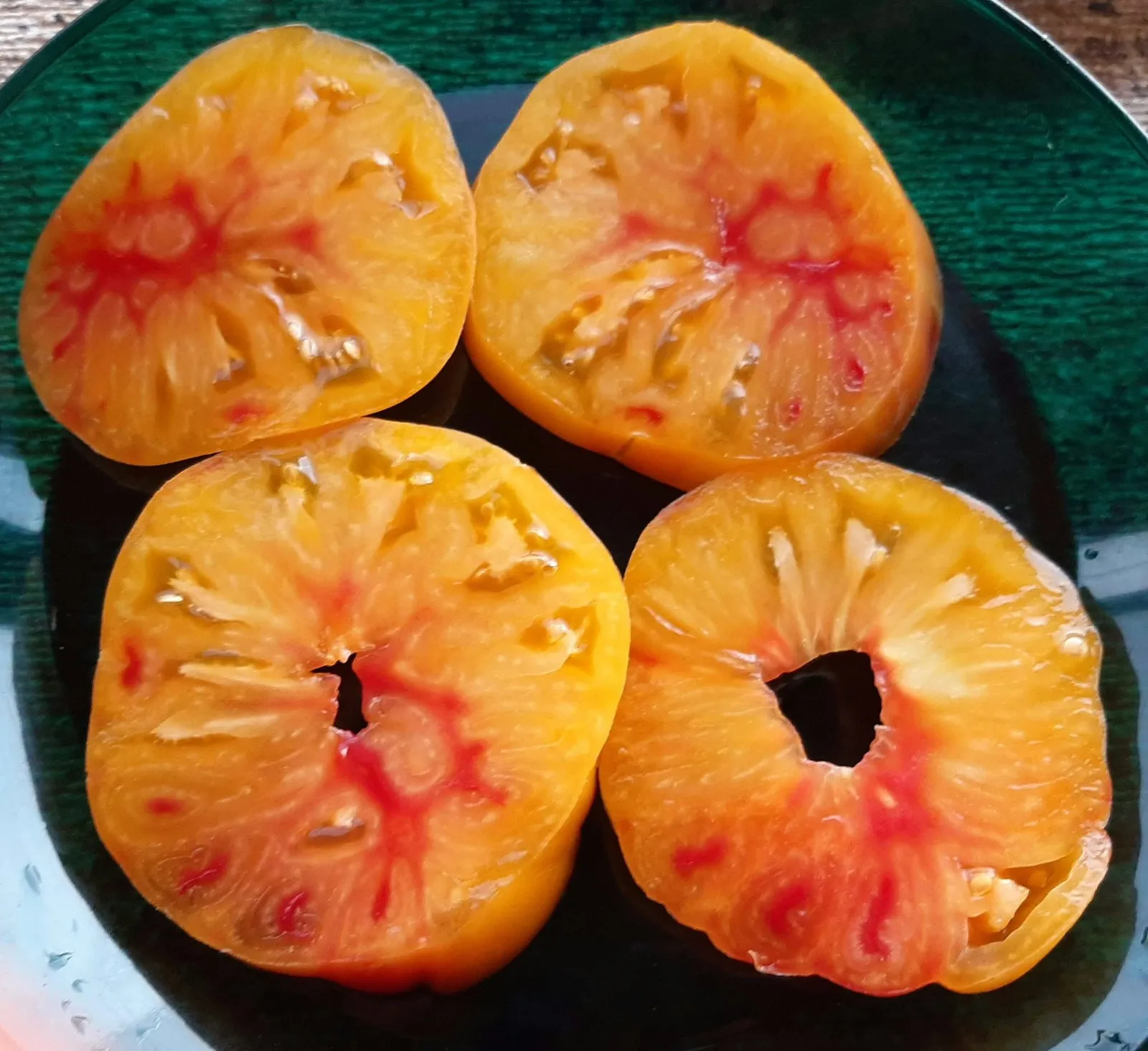
Bicolor pineapple, sliced.
On Tomato Color
Consider these interesting factoids about tomatoes, grabbed from Lehoullier's book:
- Tomato color is based on two things: their skin color and their flesh color. The skins of tomatoes are either clear, yellow, or striped. The flesh has more variety and ranges from yellow, orange, red, and red-yellow bicolored to green, as with the "black" tomatoes. How these colors combine affect the color of the fruit throughout the growing season as well as at harvest time.
- The color a tomato is known by (red, pink, purple, green, bicolored, yellow, or orange) is _based on the flesh, not the skin_. This means that the Cherokee Green tomato, which has yellow skin and green flesh, will appear a deep yellow when ripe, but when sliced, it will be green inside.
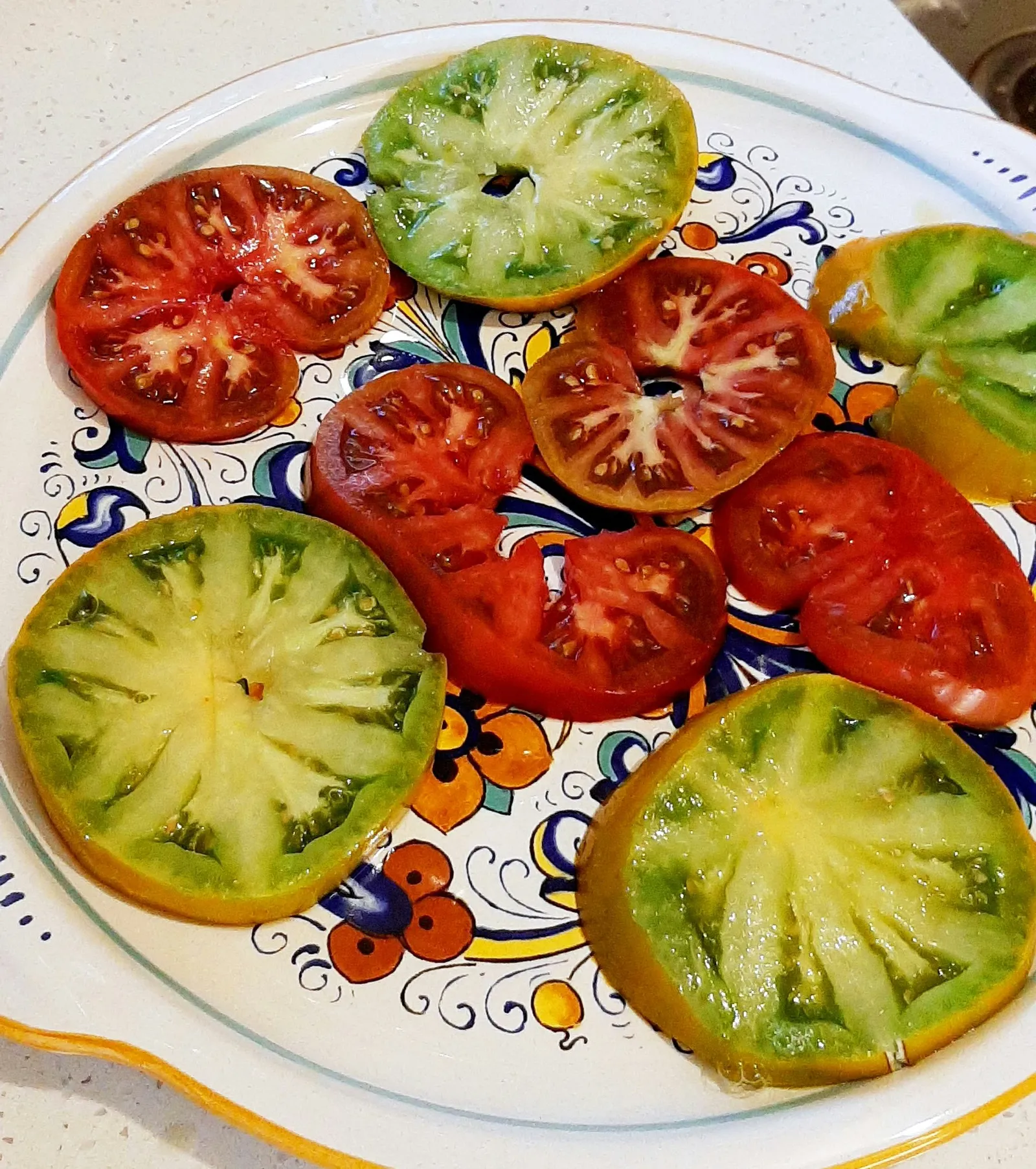
Cherokee Green, sliced, with red tomatoes. Note the yellow skin.
Color does not indicate harvest-readiness. Sometimes, experimentation is best. If you think your tomato variety is getting close to harvest, pick one and taste it. Take notes and perhaps even pictures so you will recognize its color if you grow it again. Then, a few days later, pick another.
Tomatoes will generally be more tart in the early stages of ripeness compared to the later stages when they develop more sweet flavors.
Harvesting Tomatoes Based on Color
Here's a super-short summary from _Epic Tomatoes_.
- Red tomatoes. You know the rub here (I mean, these are _red_ tomatoes, familiar to us all), but there can be a catch. Some red tomatoes never go completely red, retaining that green tinge on the stem end.
- Purple or black tomatoes. These dark tomatoes can retain some green pigment when ripe, so you might see a green color overlaying a deeper red. Some varieties have clear skin, which will make the fruit look more purple, while some have yellow skin, resulting in a brown, chocolatey color.
- Pink tomatoes. Pink tomatoes have deep pink or red flesh just like red tomatoes, but their skin color is clear, while red tomatoes' skin is yellow. They generally turn a deep pink when ripe.
- Yellow or orange tomatoes. Here, you have to know your variety so you know the expected color when ripe. It may vary from a somewhat pale yellow to a soft or deep orange.
- Green tomatoes. These may have either yellow skin or clear skin. The yellow-skinned varieties, including Cherokee Green, are a golden yellow when ripe, but the clear-skinned types (Aunt Ruby's German Green, for instance) stay fully green even when ripe. These latter types may develop a faint pink blush at the blossom end and may warm up slightly in color.
- White tomatoes. These may be an ivory color when ripe, although that will depend on whether the fruits were in direct sun or hidden by foliage.
- Bicolored tomatoes. These tomatoes vary so much that different fruit on the same plant will have entirely different patterns. Usually, the red stripes turn a deeper shade when ripe. Again, know your variety.
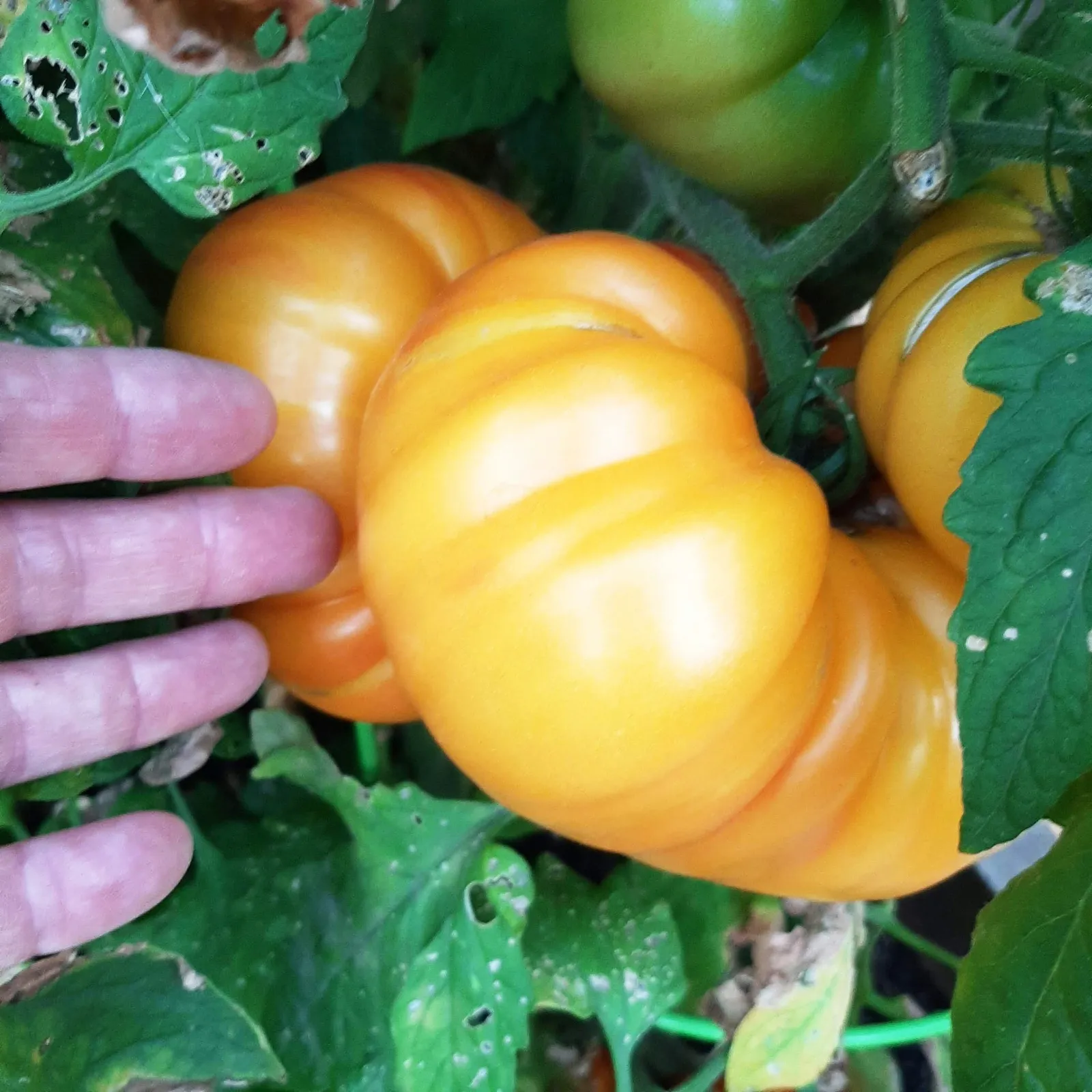
Golden Jubilee tomato ready for harvest