Common Ailments Affecting Fraxinus Species
Ash trees, prized for their attractive crowns and cooling shade, are vulnerable to a variety of illnesses, including some that can be fatal. Problems range from untreatable fungal and phytoplasma infections to bacterial conditions and fungal spots, with management often focusing on pruning and removal.
By Riley Cooper
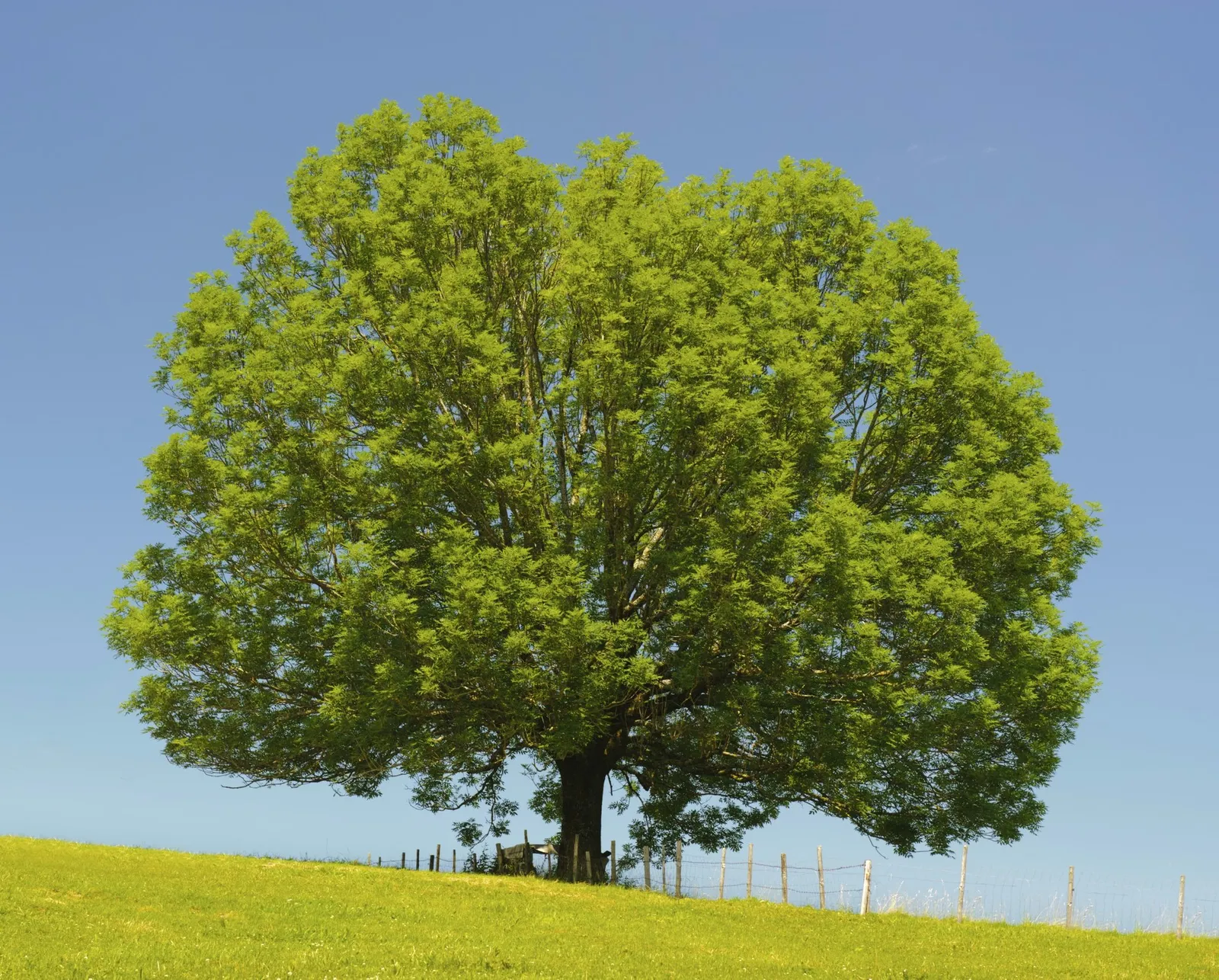
An ash tree on a grassy hill near near a fence.
Because of their attractive crown forms and the ample shade they provide, several ash species (Fraxinus spp.) have become common plantings in residential landscapes. However, these trees are susceptible to numerous diseases, and a few of them can be lethal. When no specific pathogen can be identified as the cause of an ash tree's overall decline, the condition is often called ash decline, which may actually involve a combination of multiple diseases. Depending on the species, ashes typically thrive in USDA plant hardiness zones 3 through 11.
Conditions Without a Cure
Verticillium wilt is a widespread and fatal fungal infection that affects ash trees as well as many other plants. The fungus obstructs the small, vein-like vessels that transport water throughout the tree, effectively depriving the ash of water flow. Leaves start to droop, and portions of branches begin to die back. The disease also disperses toxins throughout the tree. Verticillium infections can be either acute or chronic. Acute cases develop quite suddenly, whereas chronic cases progress much more gradually. This fungus resides in the soil, and no effective treatment is currently known. Ash yellows is another frequent disease, caused by a phytoplasma that behaves in some ways like a virus. White ash (Fraxinus americana) and green ash (Fraxinus pennsylvanica), both hardy in USDA zones 3 through 9, are particularly prone to yellows. An affected ash gradually loses vigor over a span of two to 10 years, ultimately leading to death. Foliage turns a pale yellow and may drop early. Cankers result in dieback of twigs and branches.
Diseases Caused by Fungi
Anthracnose, a significant fungal disease, produces symptoms such as light brown patches on mature leaves, dark spots at the tips of young leaves, and constricted young twigs. Premature leaf fall frequently occurs, especially on the lower branches. Often, the disease does not cause major damage within a single season, but after three or more consecutive years of weather that favors anthracnose, heavy leaf drop can leave trees looking thin. As the name implies, leaf spots appear as discolorations of various hues, and different types of leaf spots can emerge throughout the year. Rust is marked by orange, gall-like growths on leaves and twigs. Rots, as the term suggests, tend to slowly decay different parts of the ash. Wood rots usually stem from wounds, whereas root rots begin in the roots and then spread. Although cankers are less frequently seen than some other ash diseases, they can be caused by several fungal species.
Diseases Caused by Bacteria
Bacterial problems include wetwood, a condition where the wood becomes saturated with water and bacterial infections develop in the sapwood. The most typical sign is sap oozing from the trunk or from larger, older limbs of the ash. Hairy root is a disorder in which the base of the stem or the larger roots generate an abundance of small roots that give a hairy appearance.
Managing the Diseases
For certain ash diseases, such as anthracnose, you can cut away infected branches while the tree is dormant to prevent further spread. After pruning diseased trees, always sanitize your pruning equipment by soaking it in a household disinfectant and letting it dry in the air. To keep diseases from spreading, burn or otherwise discard infected branches and leaves away from the site. Ash trees that have ash yellows or root rot, as well as those that have suffered severe damage from verticillium wilt or other diseases, should be removed.