Homelite Super XL AO: Engine, Bar and Safety Details
The Super XL AO, a Homelite chain saw also known as the Super XL Automatic, sat above the XL-12 in the company's lineup. It carried a bigger engine and several refinements, making it more capable yet heavier than the XL-12.
By Riley Turner
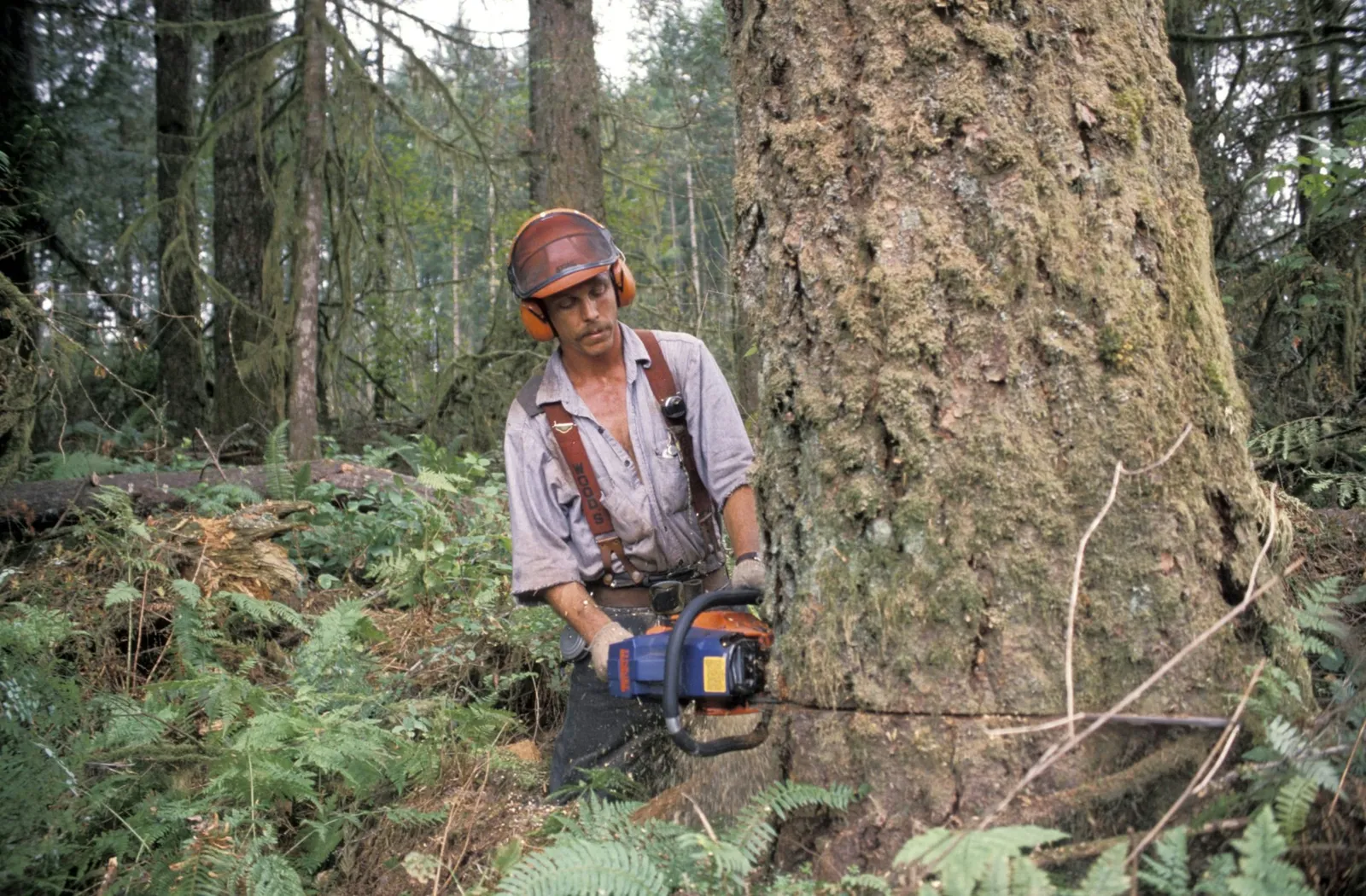
Man using chainsaw to cut down tree
Within Homelite's range of chain saws, the Super XL AO—sometimes referred to as the Super XL Automatic—occupied a slot above the XL-12. Compared with the XL-12, this model used a larger engine and added certain upgraded features, which gave it greater capability while also making it heavier than its XL-12 sibling.
General Specifications
A single-cylinder, two-cycle engine displacing 3.55 cubic inches powers the Super XL AO. During its production run, the saw came with different carburetors at various times, including units built by Tillotson, Walbro and Zama. For starting, it uses an automatic-rewind recoil starter, and it has solid state ignition. With no guide bar mounted, the powerhead tips the scales at 13 pounds, 14 ounces—over a pound more than the comparable figure for the XL-12.
Guide Bars and Oiling System
The Super XL AO left Homelite with a guide bar measuring either 16 inches or 24 inches. Its model designation contains "AO," which stands for the automatic bar oiler included on the saw; this feature was among the main upgrades distinguishing the Super XL from the XL-12. In addition, the Super XL provided a manual oiling mechanism that let the operator override the automatic oiler when desired.
Raker III Chain
Both the Super XL AO and the XL-12 used 3/8-inch-pitch Raker III chain. Each cutter on this chain had three depth gauges, also called rakers, whereas conventional chains normally carried just one depth gauge per cutter link. The design sought to lower the likelihood of saw kickback by keeping the chain from cutting too deeply and jamming in the kerf.
Safety Features
As an additional measure against dangerous kickback, Homelite fitted the Super XL AO with a Safe-T-Tip Anti-Kickback device. This guard is bolted to the nose of the guide bar and covers the chain at the point where it curves around the bar tip. By blocking that area, it keeps the operator from cutting with the top side of the bar tip—the scenario in which kickback is most likely. The saw also has a hand guard that shields the operator's hand where it sits on the handlebar, though it does not include a chain brake.