Why Kentia Palm Foliage Turns Yellow
Finley Hayes
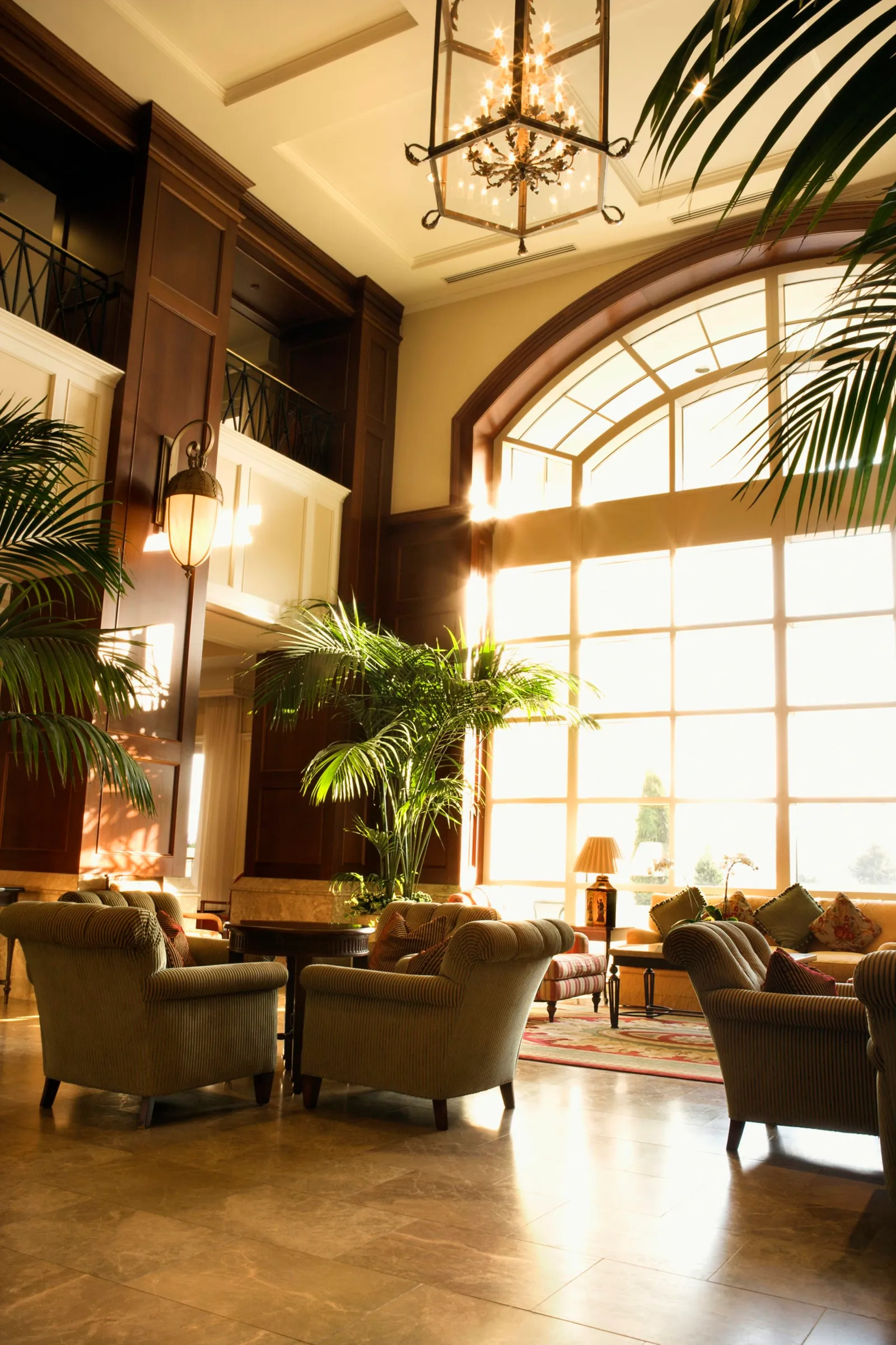
Kentia palms grace the brightly lit atrium and foyer of this hotel.
The kentia palm, or Howea forsteriana, is also referred to as the sentry palm or hotel palm. It is native to the low elevations of Lord Howe Island, located off the eastern coast of Australia. In that natural setting, this palm, which grows with a single trunk, can reach heights of 50 to 60 feet. However, when planted in tropical gardens outside its native range, it usually attains only 20 to 30 feet at maturity. Because it can withstand the low light and dry air often found in homes and offices, kentia palm has been widely used as an indoor plant since the late 19th century. When growing conditions are not right, the leaves may turn yellow.
Light Requirements
Within the United States, kentia palms can be cultivated outdoors only in areas without frost, including Hawaii, coastal Southern California, Puerto Rico, and the southernmost parts of Florida. The majority of these palms are grown in shaded greenhouses to be sold as indoor plants. This process gets the short, young palms with arching leaves used to the lower light levels they will encounter inside buildings. In its natural environment, though, kentia palm grows in full sun. If a palm that was grown in shade is suddenly moved to strong sunlight, the fronds will burn and turn yellow. After being exposed to full sun conditions, a kentia palm will produce fully green new leaves within one to two years.
Understanding Soil Moisture
Kentia palm leaves can yellow when the soil is either too dry or too wet. Dry soil restricts growth and the plant's ability to maintain its tissues, while waterlogged or flooded conditions smother the roots and lead to rot, preventing the fronds from getting enough moisture and nutrients. Plant kentia palm in any well-draining soil, whether in the ground or in a container. It grows best with regular, moderate watering. In sunnier spots and sandy soils, you will need to water more often. Indoors, where temperatures are lower and light is less intense, soil that is evenly moist to slightly dry is sufficient.
Growth Factors
Kentia palms are generally slow-growing, which is one advantage of keeping them as houseplants—they won't rapidly outgrow their pot or the room. The oldest, lowest fronds on a kentia palm are expected to turn yellow as part of aging. A more concerning sign is when younger or newly unfurled leaves are yellow, which points to a serious nutrient shortage. Young seedling kentia palms should not be placed in full sunlight, as this causes stress and yellowing of the leaves. Once they are over 5 years old, the seedlings are better equipped to handle plenty of sun.
Feeding
For optimal growth, plant kentia palms in soil that is rich in organic matter, such as compost, peat, or other decaying plant material mixed into the soil. A lack of nitrogen results in new growth that is white, while yellow new growth indicates a deficiency in magnesium, manganese, iron, or potassium. Outdoors, apply a balanced, slow-release granular palm fertilizer that contains micronutrients to keep the soil adequately nourished for the palm. Indoors, you can spread balanced slow-release granules on the soil surface and also use diluted liquid fertilizers when you water. It is best to apply liquid fertilizers only during the warmer, longer days from spring through fall. Avoid fertilizing in winter.