How Do Hex Nut Threads Differ from Pipe Threads?
Threads on fasteners and pipes serve different purposes. A hexagonal bolt and nut combination can clamp two metal parts, whereas a threaded pipe may connect a pipe to an elbow fitting.
By Taylor Mitchell
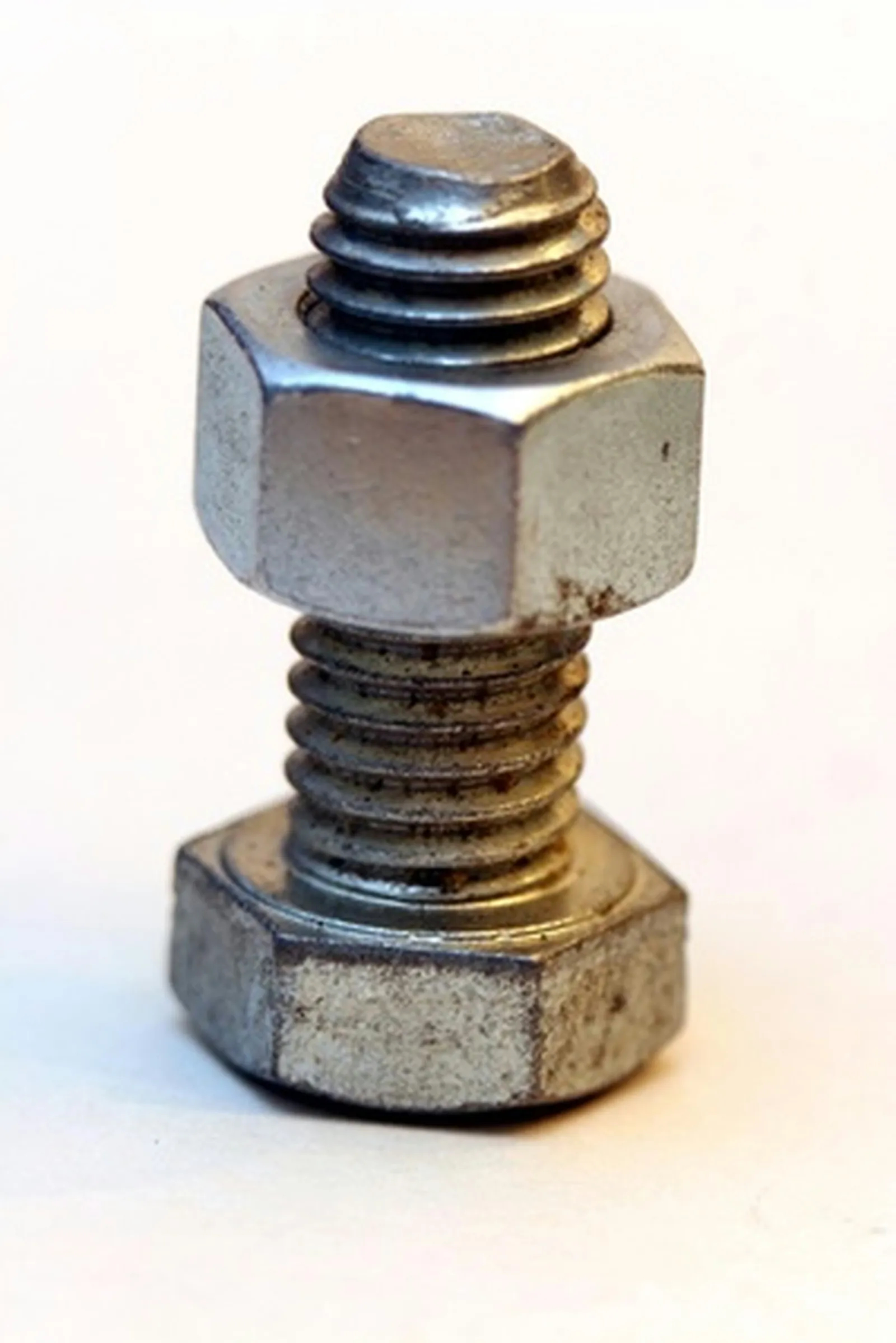
Nut and bolt threads are somewhat different than pipe threads.
Screw threads are essentially "V"-shaped inclined planes cut into material to join pieces of material together. For instance, a hex head bolt and hex nut could hold two pieces of metal together, while a threaded pipe could join a pipe and elbow together.
Threads
The distance between adjacent threads is known as the pitch, and it is defined by the number of threads per inch. The pitch and depth of the thread cut are standardized according to the diameter of the hex bolt or pipe. Both pipe and hex nut threads have a specific number of threads per inch. The outside diameter (OD) of the pipe or hex bolt determines the threads per inch. The mating internal diameter (ID) of the hex nut or pipe fixture matches the OD of the pipe or hex bolt. Because pipe diameters do not match those of hex nuts and bolts, a hex nut cannot be screwed onto a pipe.
Hex Nut
The term hex refers to the shape of a bolt head or nut as being six-sided. Bolt heads and nuts can also be square.
Hex Bolt and Hex Nut Threads
Bolts and nuts use standard thread designations based on the outside diameter of the bolt. They are either unified national course (UNC) or unified national fine (UNF). UNC has fewer threads than UNF. UNC is the most common.
Pipe Threads
Pipe threads are cut tapered to be leak proof. The taper is 1/16 of an inch or 3/4 of an inch per foot. The threads become shallower along the taper. Some pipe threads are straight depending on the application.