From Marsh to Mat: Processing and Weaving Cattail Leaves
Found throughout North American wetlands, cattails stand out with their tall, flat foliage and unique flower spikes that can grow 3 to 10 feet tall. The U.S. hosts two varieties: broad-leaf and narrow-leaf cattail. Indigenous peoples traditionally crafted mats, baskets, bags, shoes, military gear, and toys from cattails using finger weaving and braiding. Modern makers expand this repertoire with hats, place mats, and chair seats.
By Jordan Ross5 steps
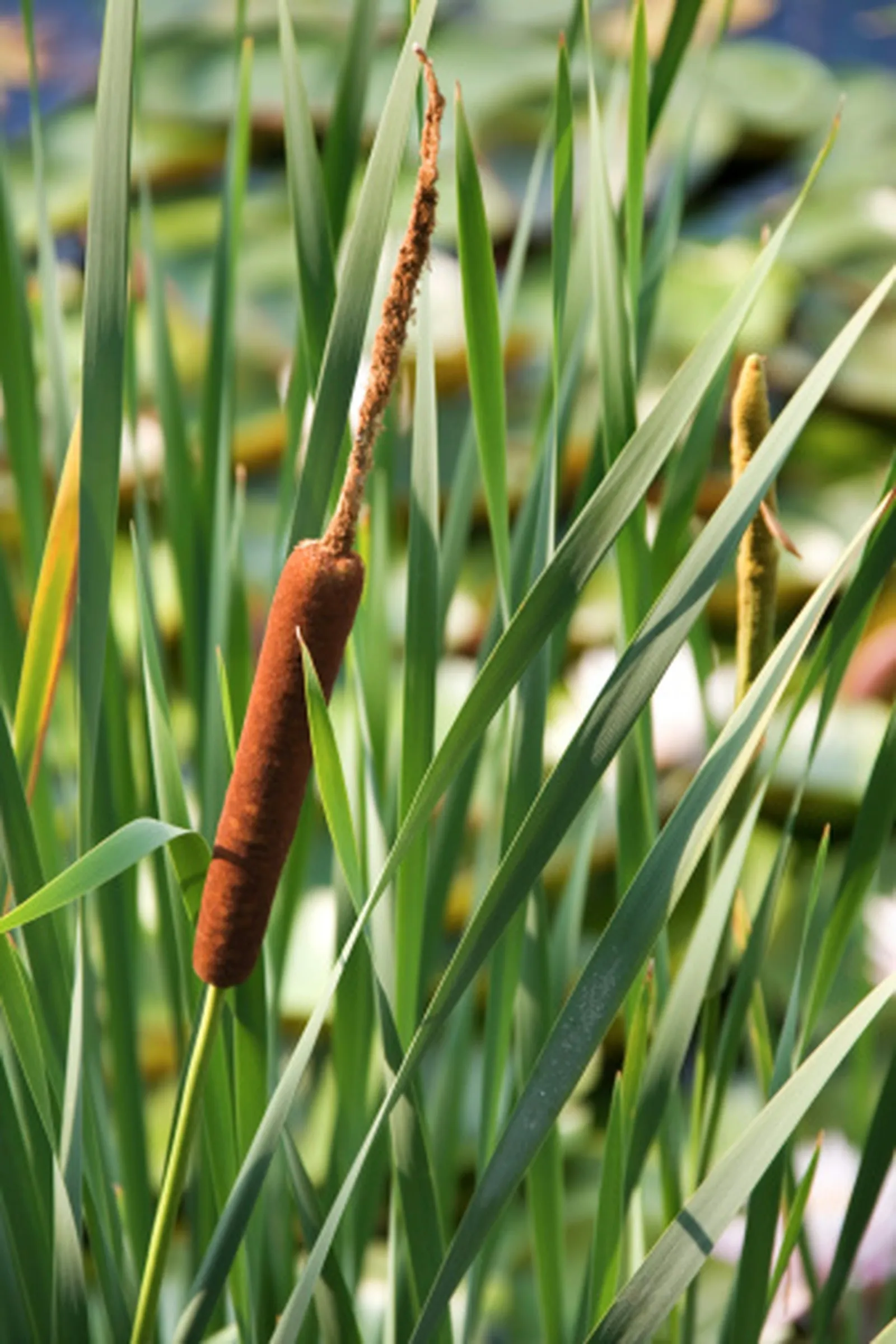
Cattail plants have many uses.
Cattails rank among North America's most widespread wetland plants, easily identified by their long, flat leaves and the striking flower stalk that can reach 3 to 10 feet in height. In the United States, two species are found: a broad-leaf cattail and a narrow-leaf cattail. Native Americans used both finger weaving and braiding to turn cattails into mats, baskets, bags, shoes, military apparatus, and toys. Contemporary weavers apply cattails to additional items, including hats, place mats, and chair seats.
Step 1
Gather cattail leaves during late summer or early autumn. Search for them in shallow water at the edges of ponds and lakes, in drainage ditches, and in marshes. Using a knife or scissors, cut just above the waterline so the root stays in place. To make transport easier, bundle the leaves with all butt ends aligned and tie the bundle with string.
Step 2
At home, prepare and dry the cattail leaves. While they remain bundled, trim off the leaf tips and the thick ends. Next, separate the leaves and rinse them with water. For broad-leaf cattails, split them lengthwise down the middle with the knife. Place the leaves flat on a screen with a 2-by-4 frame or on old screen doors. Elevate these screen drying racks off the ground using sawhorses or garage rafters so air can move around them. To prevent mold or mildew, turn the leaves several times each day. Drying time can range from several days to several weeks, depending on temperature, humidity, and the moisture content of the leaves.
Step 3
Once dry, bundle and store the cattail leaves. Choose enough leaves to form a bundle roughly 10 inches in diameter, then wrap it snugly with corrugated cardboard, taking care not to bend or break the leaves. Fasten the cardboard using duct tape. Keep the bundle upright in a dry area that is out of sunlight.
Step 4
Get the cattail leaves ready for weaving. Spread the plastic sheeting over a large flat surface, such as a floor, lawn, or deck. Place the bed sheet on top of the plastic. Take a handful of dried leaves out of the bundle. Lay the leaves out on the sheet with their butt ends together. Using the spray bottle, saturate the leaves. Roll the leaves up in the sheet, then wrap loosely in the plastic sheeting. Lay the bundle horizontally on the flat surface and leave it for eight to 12 hours. Check the leaves every three to four hours to see if they are ready. They are ready when they feel soft like chamois. If the leaves crack and break when twisted, let them mellow longer. If they are slimy and soggy, they are too wet or have mellowed too long. Wash and dry the sheet before preparing the next batch.
Step 5
Incorporate the leaves into weaving projects. Cattails work like any other weaving material across a range of projects. To make a woven cattail place mat, attach one end of eight cattail leaves to cardboard using thumbtacks. Position the cattails snugly next to one another. Weave lengths of cattail over and under the attached cattails until the place mat reaches the length you want. Trim the ends with utility scissors. Glue down the ends all around. If desired, laminate or seal with polyurethane.