Selecting a Cottage's Exterior Palette
To make a cottage look inviting, its paint plan typically needs a minimum of three hues: the primary wall color, the trim shade, and one or more accent tones. The surroundings of the cottage also heavily influence the color selection. Ultimately, your personal reaction to the chosen colors is the most important consideration.
By Avery Rivera
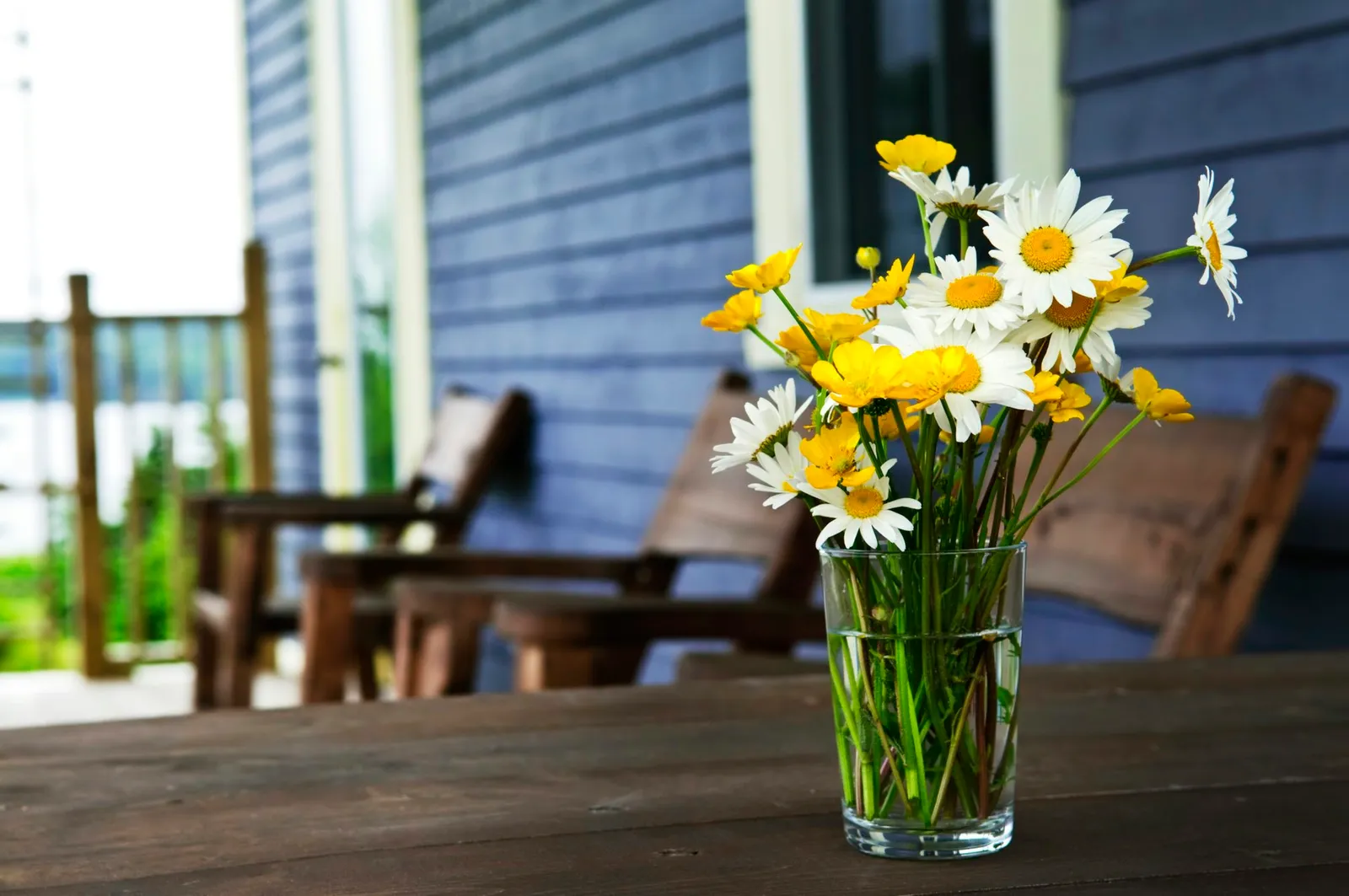
A close-up of a beach cottage painted blue with white trim and rustic brown accents.
For a cottage to present strong curb appeal, its palette usually incorporates a minimum of three hues: the main or field color, the trim shade, and one or more accent tones. The setting in which the cottage sits also carries significant weight when deciding on a color scheme. A coastal location demands a different palette than what might suit a rural or mountain cottage. Even so, your own feelings about the selected colors outweigh everything else. Spend adequate time making the choice so you won't need to redo the work.
Matching Colors to Architectural Style
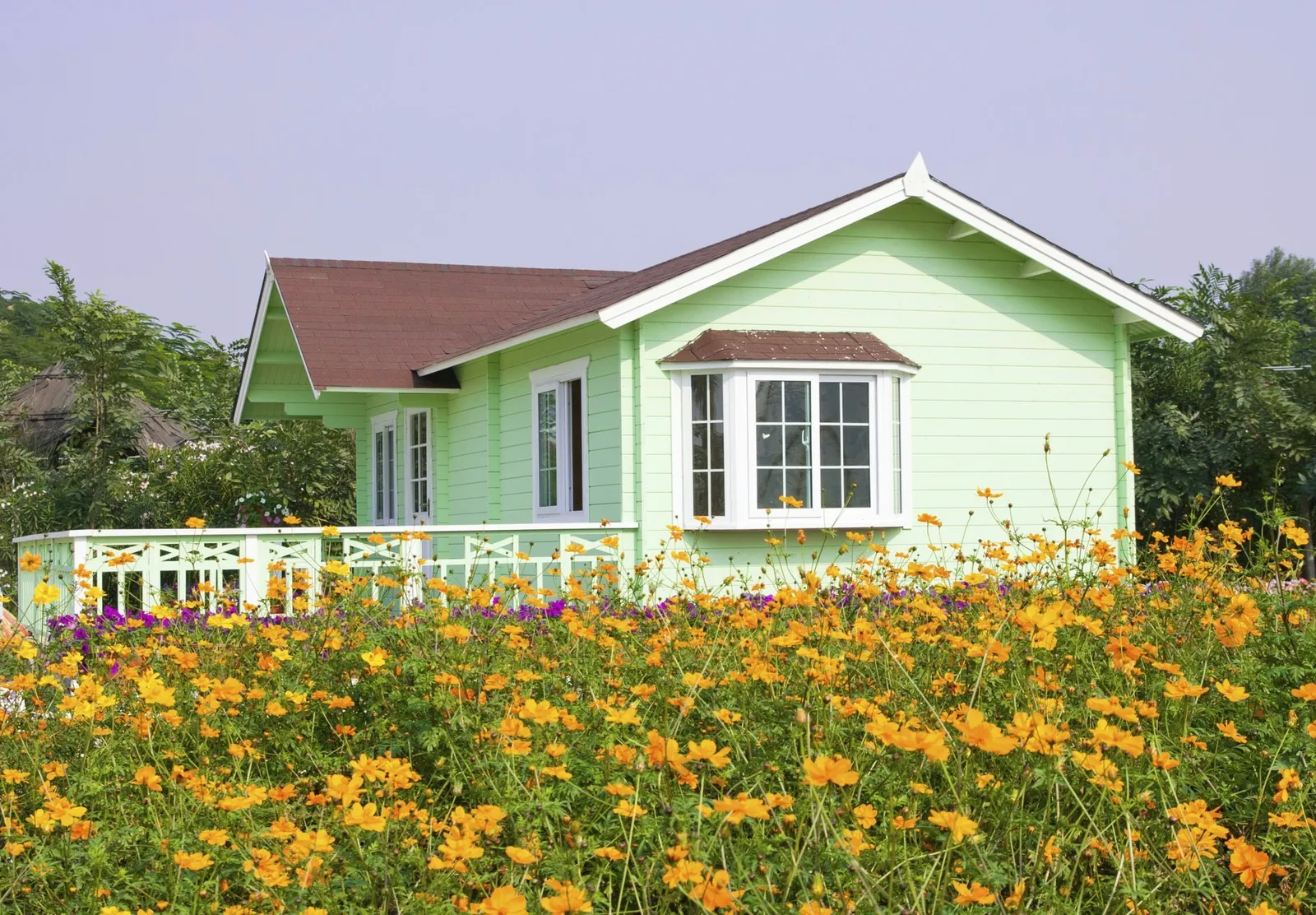
A spring green cottage with white trim and brown accents in a country meadow.
When thinking through a color scheme, take into account the two most significant aspects of a cottage: its surrounding neighborhood and its architectural style. Look at the color schemes used on homes along your street that you find attractive. Cottages located in Florida, for instance, would be well served by exterior colors drawn from an Art Deco palette, a motif common to much of the architecture in that state's coastal cities. Allow the cottage's historical architectural style to guide your color selection, since these choices tend to work reliably. New England Cape Cod cottages, for example, are most flattered by gray with white trim, or white accented with dark slate gray trim and rain-sky gray accents.
Tudor and English Cottage Styles
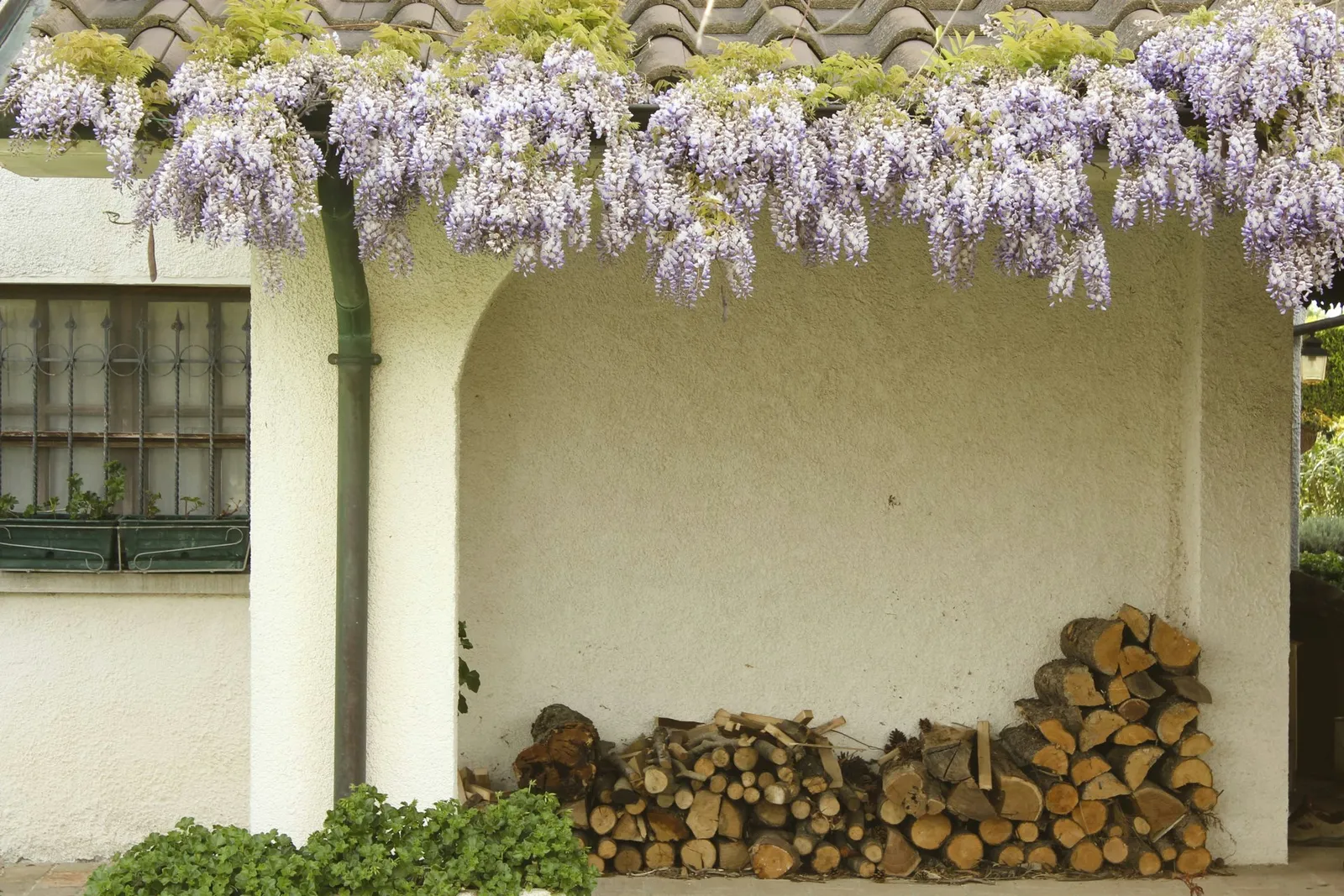
Purple wisteria vines and a firewood pile adorning the exterior of a stucco tudor cottage.
Among the beach communities of Southern California, Tudor and English cottages frequently feature stucco exteriors highlighted by dark wood trim. Select a paint palette of eggshell, mushroom, or taupe for the stucco, then introduce chocolate brown on the trim for contrast. When sections of the house contain brick or stone, paint the stucco cream, light latte, or cappuccino, and apply dove gray to the wood trim to temper the red tones in the brick.
Craftsman-Style Cottages
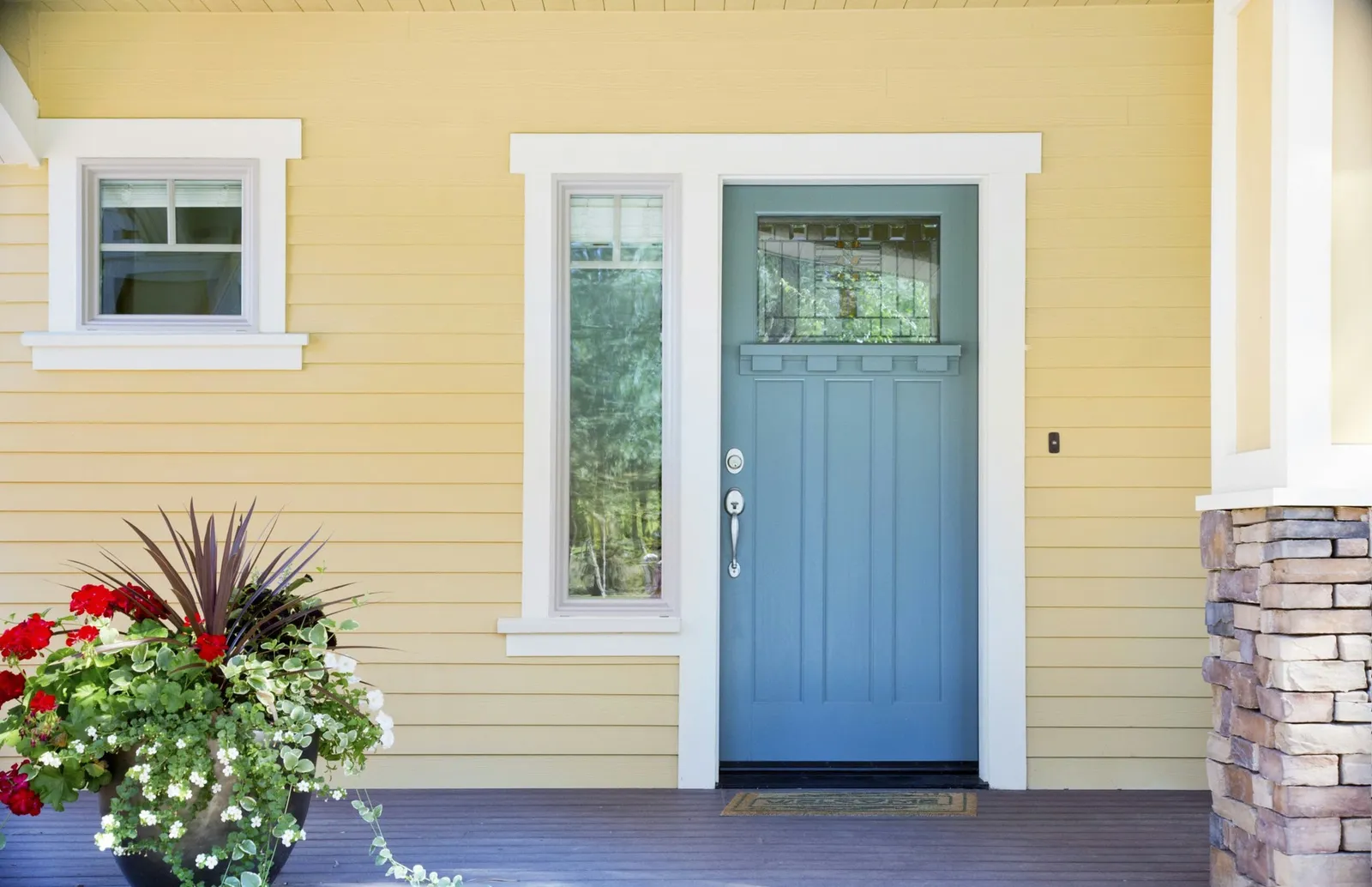
A view from the porch of a Craftsman cottage painted yellow with white trim and blue accents.
Craftsman cottages and bungalows went up across the United States during the Arts and Crafts period, which extended until as late as 1930. Featuring expansive covered porches supported by columns, their exteriors were clad in wood and often incorporated stone or brick detailing. Color options for these cottages are plentiful, ranging from rusty reds and burnt umbers to soft grays, blues, and palm green. Depending on the chosen scheme, white or lighter tints of the original color can serve as trim, with accents in a darker or lighter contrasting shade or a color sampled from the stone or brick.
The Enduring Appeal of White
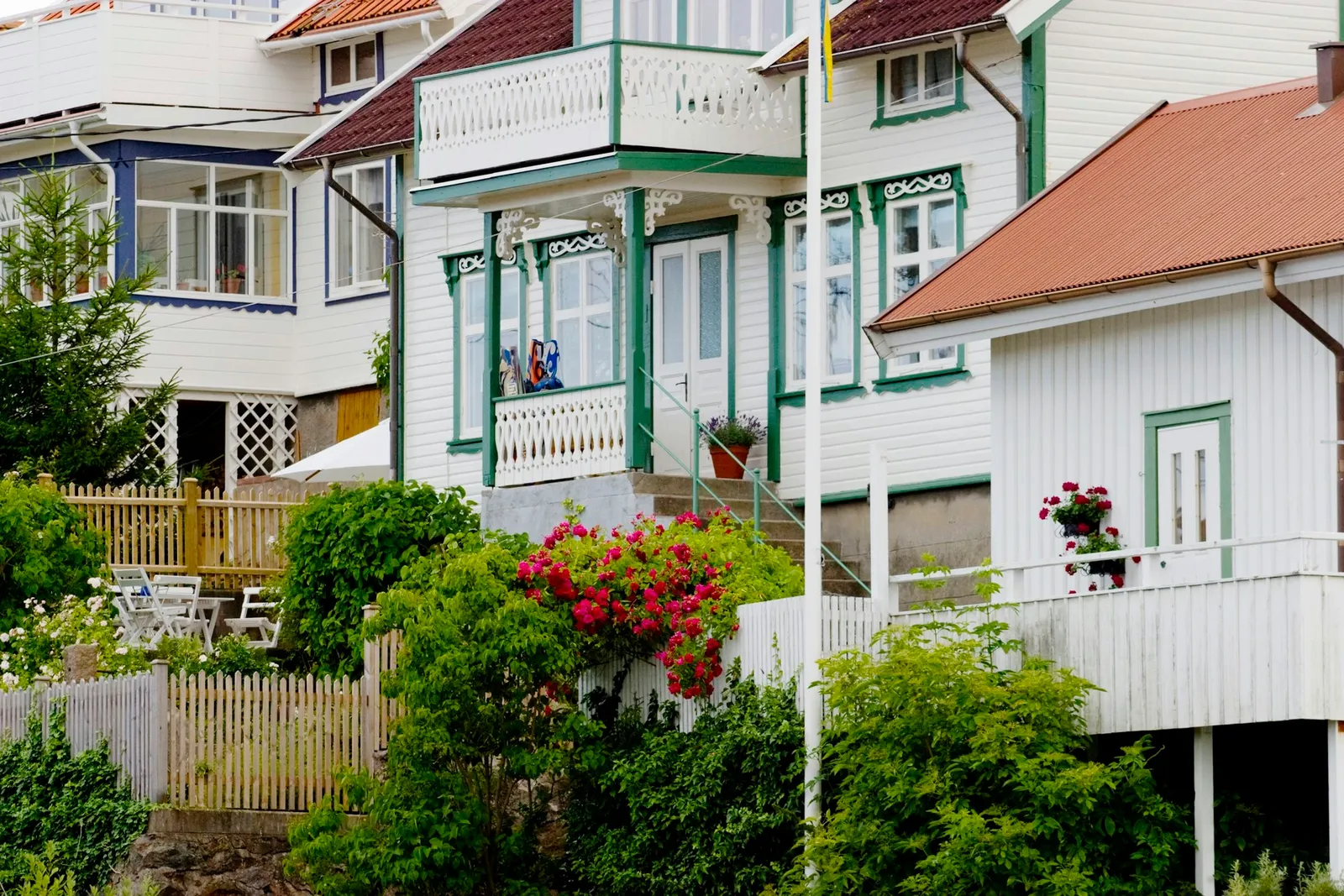
A row of white beach cottages with colorful trim.
White need not be dull—it remains a dependable color option for a cottage. To add liveliness, though, bring color into the trim and accents. A white cottage with a gray-shingled roof is complemented by a touch of peach or pink on the trim. An all-white cottage with a subtle blue undertone gains energy from a teal door and trim, paired with blue-green shutters on the windows. When selecting colors for your cottage, keep the roof color in mind as well, since it contributes to the overall scheme just as much as any other element.