Dividing Paint Colors Between Kitchen and Living Room: A How-To Guide
Open-concept kitchens, dining areas, and living rooms are popular, and so are bold paint colors. When a wall flows continuously from one space to another, switching colors can be tricky. Here are several ways to make the transition look intentional and polished.
By Drew Morgan5 steps

How to Divide Paint Colors in the Kitchen & Living Room
Two current trends—large open floor plans that merge kitchen, dining, and living areas, and the continued popularity of bright, saturated paint colors—can create a decorating dilemma. When a wall extends without interruption from the kitchen into the living room, moving from one paint color to another can be difficult. Several approaches can make the color shift appear deliberate rather than clumsy. The colors you select will determine whether the rooms merge through a gentle variation in tone or contrast sharply with bolder choices.
Step 1

Look for an architectural break in the wall to naturally divide the colors.
Find a structural feature on the wall that can serve as a natural dividing point for the colors. This might be an archway, a doorway, or the narrow backsplash area between upper and lower cabinets. If such a break exists, or even just a thin section of wall, changing colors at that spot will look smooth rather than disjointed.
Step 2

Use a decorative paint trick to create a division between two colors.
Employ a decorative painting technique to create a boundary between the two colors. Options include a checkerboard column of squares, a flowing curved line, zigzags, or stripes. Use varying shades of the wall colors along with lines or shapes that repeat other decorative details in the space.
Step 3
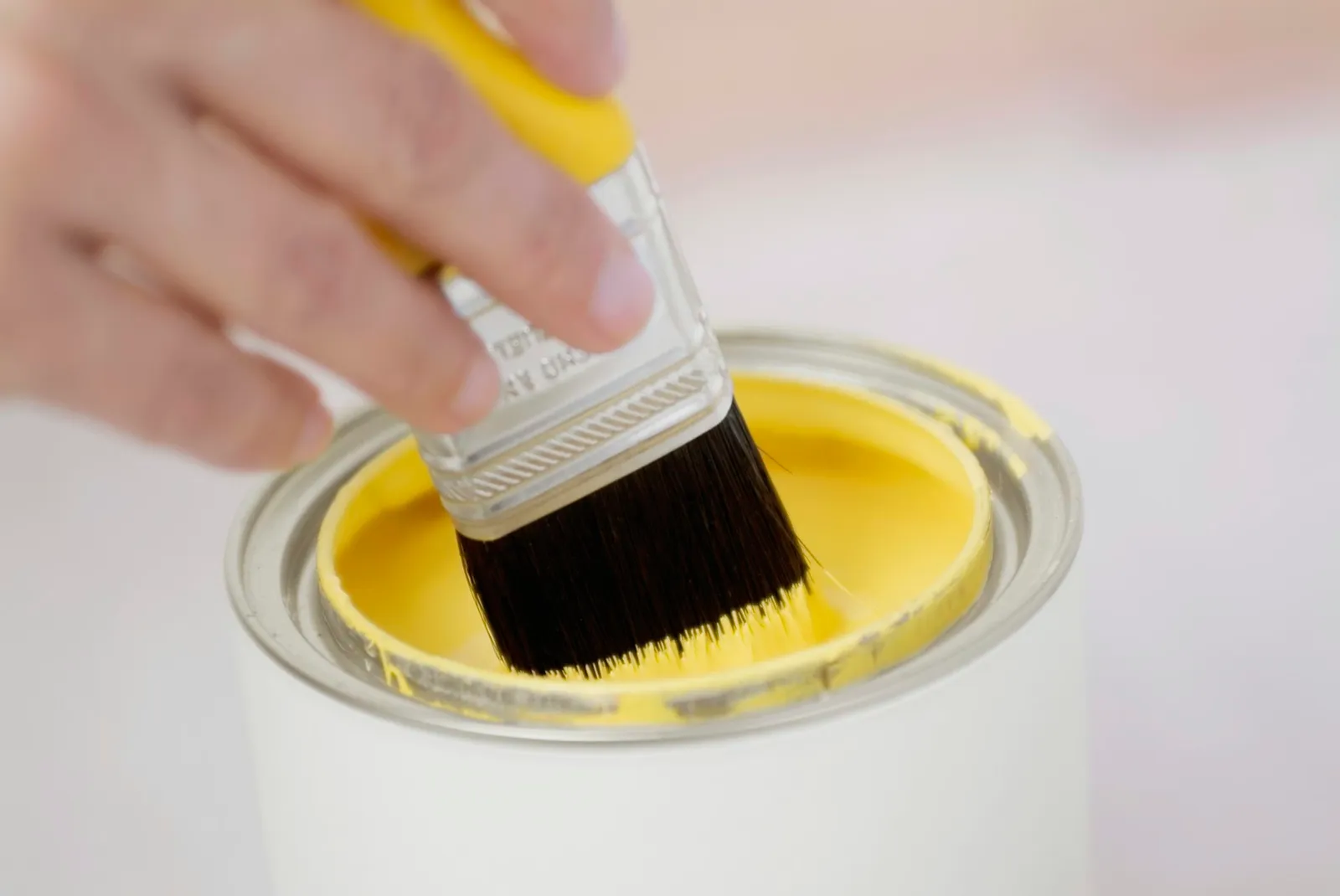
Paint a single diagonal line instead of a vertical one to divide the colors.
Consider painting a single diagonal line rather than a vertical one to separate the colors. Use masking tape on the wall to test different angles and positions until you find the right one.
Step 4

Blend the two colors together.
Blend the two colors gradually, provided that mixing them does not produce an undesirable third color (for example, combining red and green results in a muddy brown). On paper plates, mix the colors and apply them with a sponge or damp cloth so they slowly transition from one to the other.
Step 5
Install a decorative column at the point where you want the colors to change. Check decorating showrooms and home improvement stores for columns made to be mounted on a wall. Paint or stain it to match the rest of the trim or cabinetry.