Turn White Blooms Into Custom Shades Using a Simple Kitchen Method
Can't locate blooms in the exact hue you have in mind? You can create that shade yourself by coloring white flowers with an easy technique. It's an enjoyable project that works well when flowers need to coordinate with a particular palette at a wedding or celebration.
By Finley White6 steps
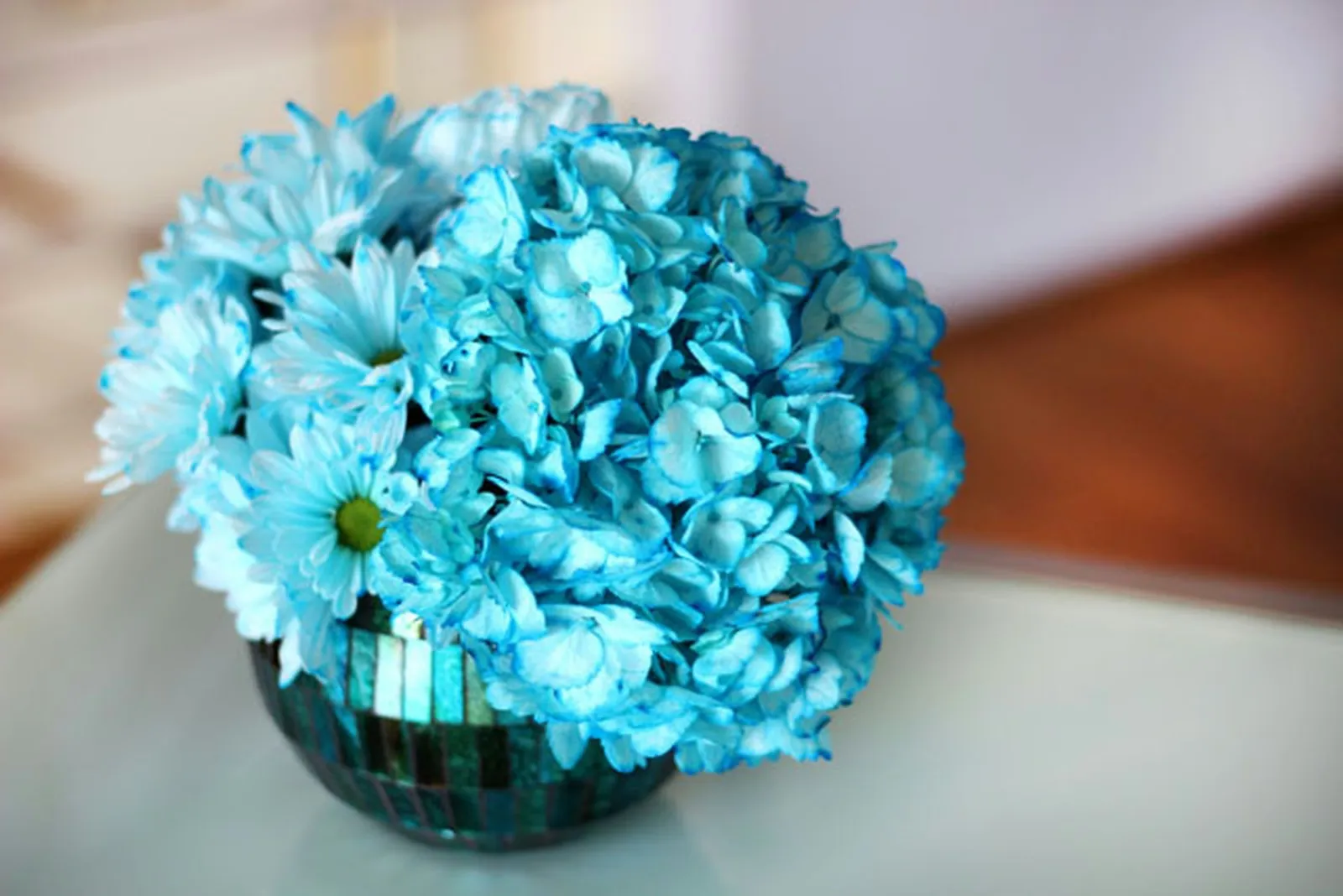
What's the solution when a specific flower color is needed but nowhere to be found? Coloring the flowers yourself is the answer. Transforming white blossoms into whatever shade you like is both enjoyable and straightforward, and the results suit events such as weddings or parties where the flowers must coordinate with a particular palette.
Step 1: Mix Food Coloring
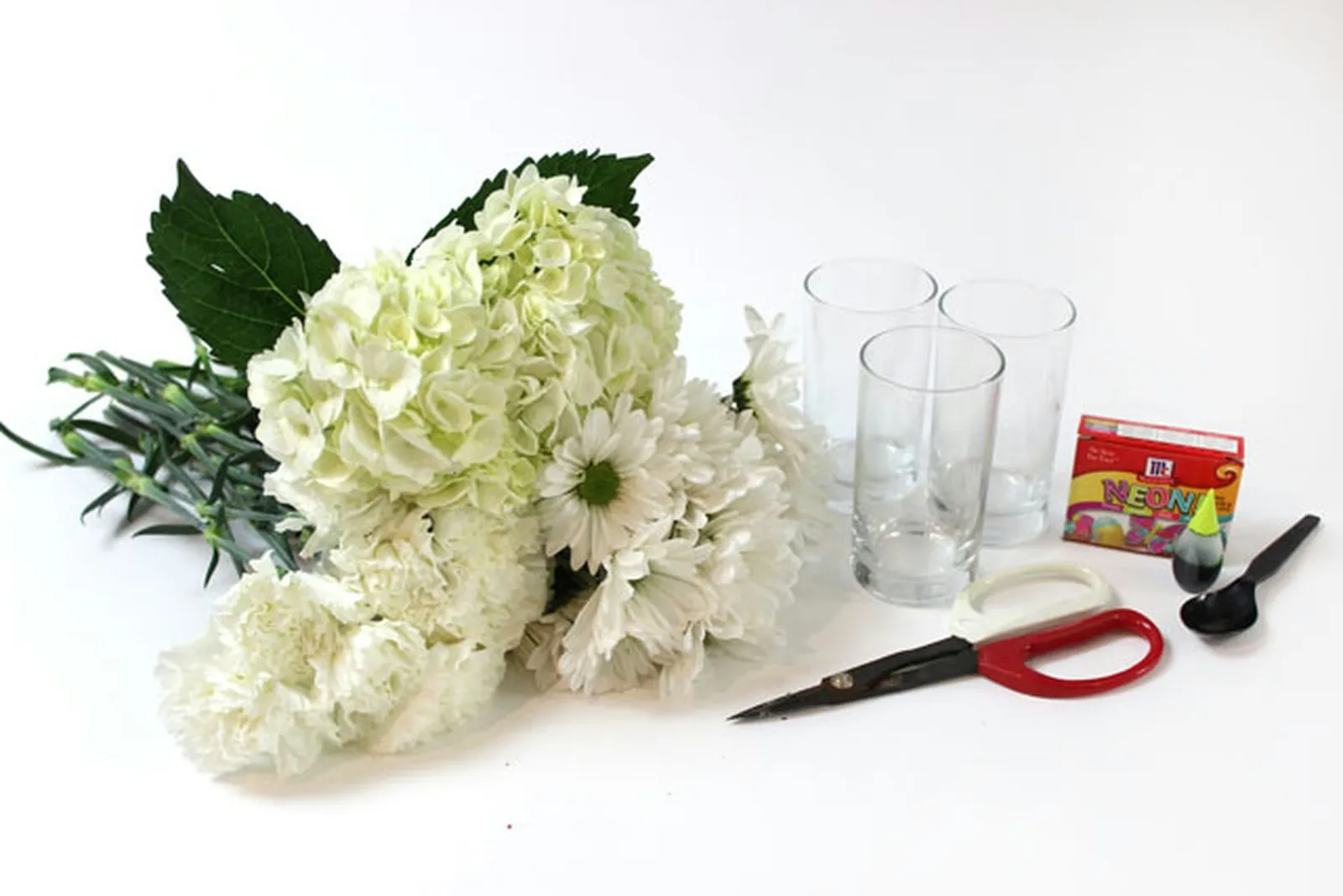
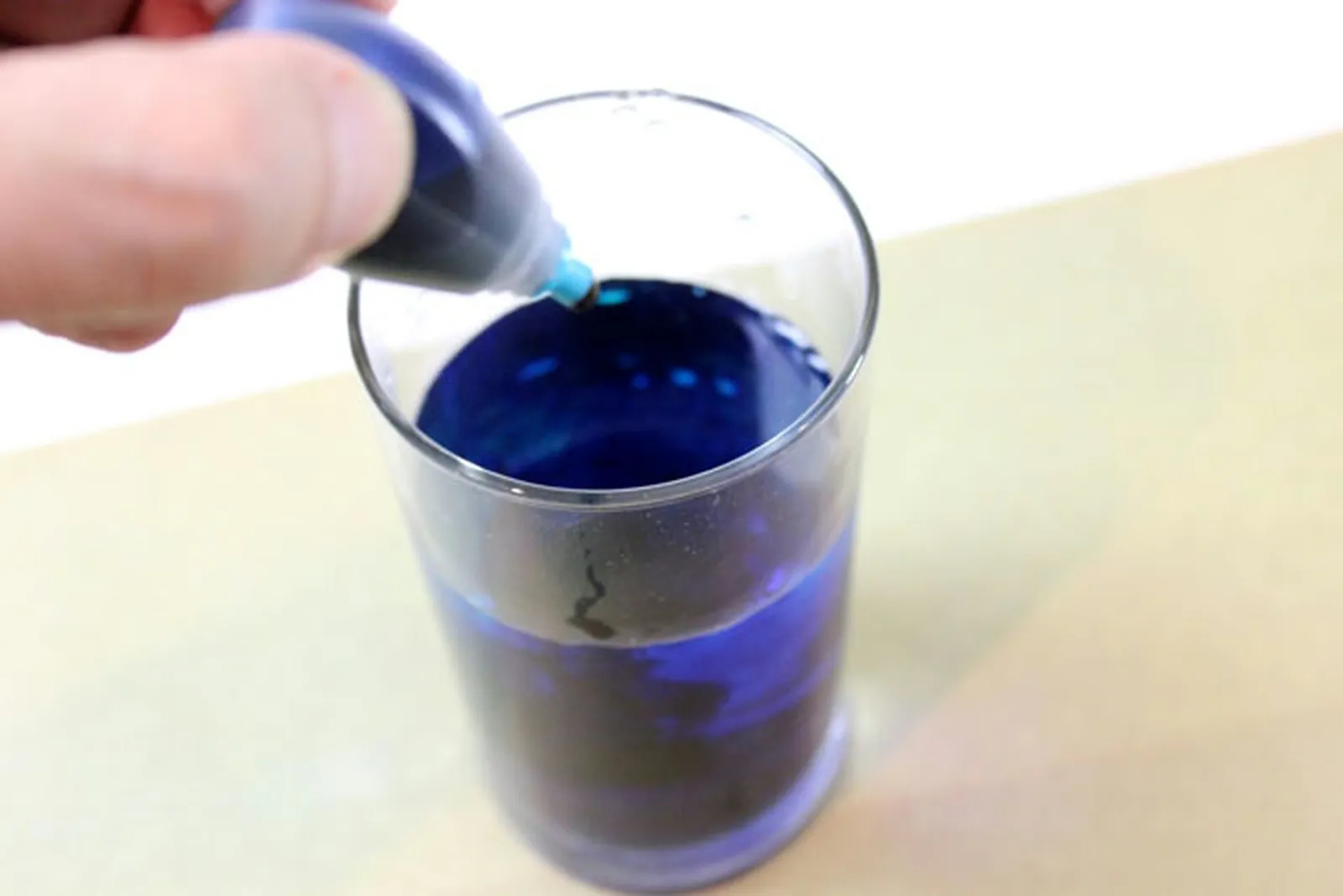
Pour food coloring into a glass filled with warm water, then mix it using a plastic spoon. For every four ounces of water, plan on roughly 25 drops of food coloring. Although food coloring is commonly sold in a box containing four colors, keep in mind that combining different colors lets you produce extra shades. Neon food coloring shades are also available in stores when you want more vibrant hues. For the flowers shown here, neon blue was used.
Step 2: Remove Leaves
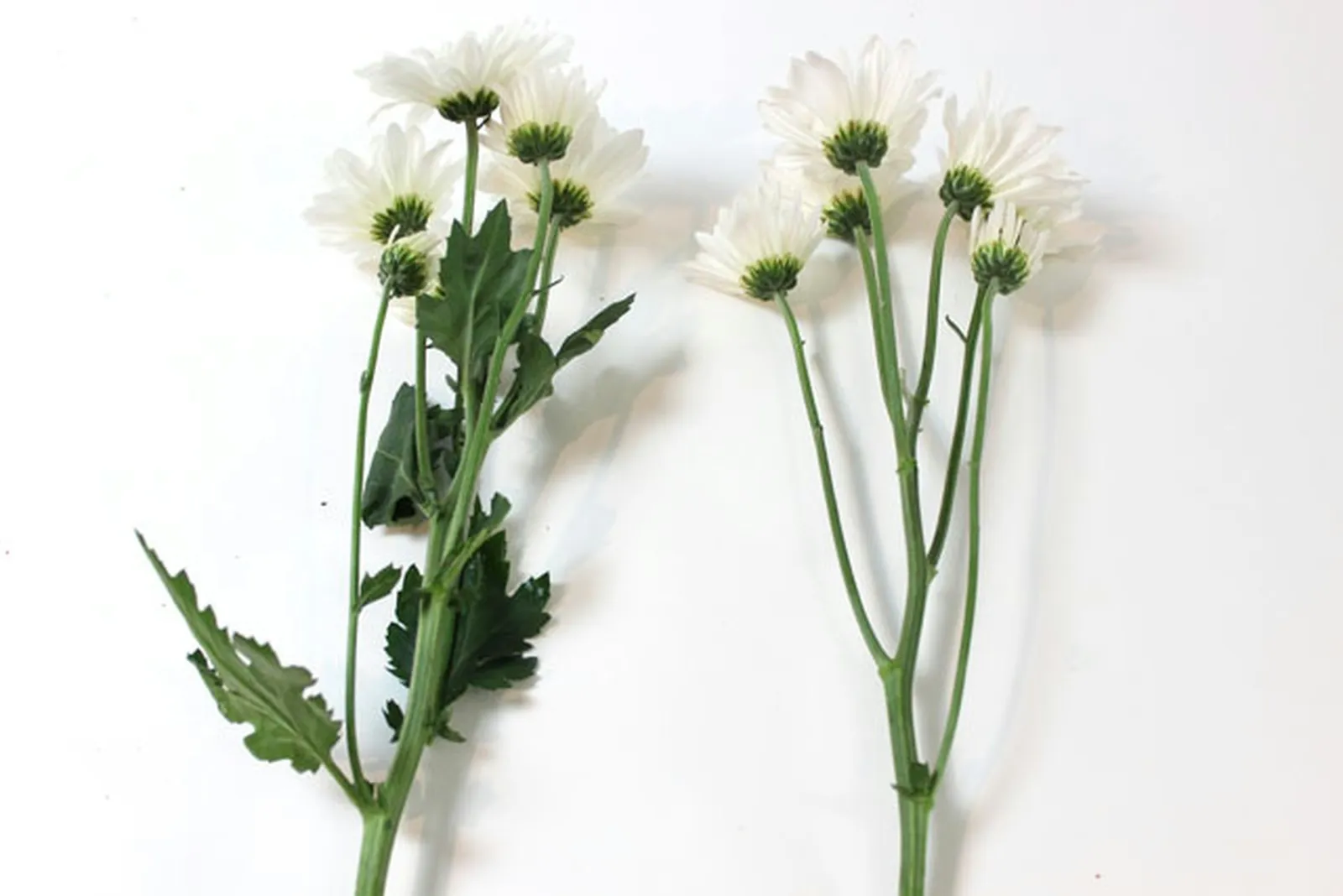
Take off all foliage from the flower stems. By stripping the leaves from the stems, the food color is kept from being directed toward the leaves instead of the flower petals.
Step 3: Cut the Stems
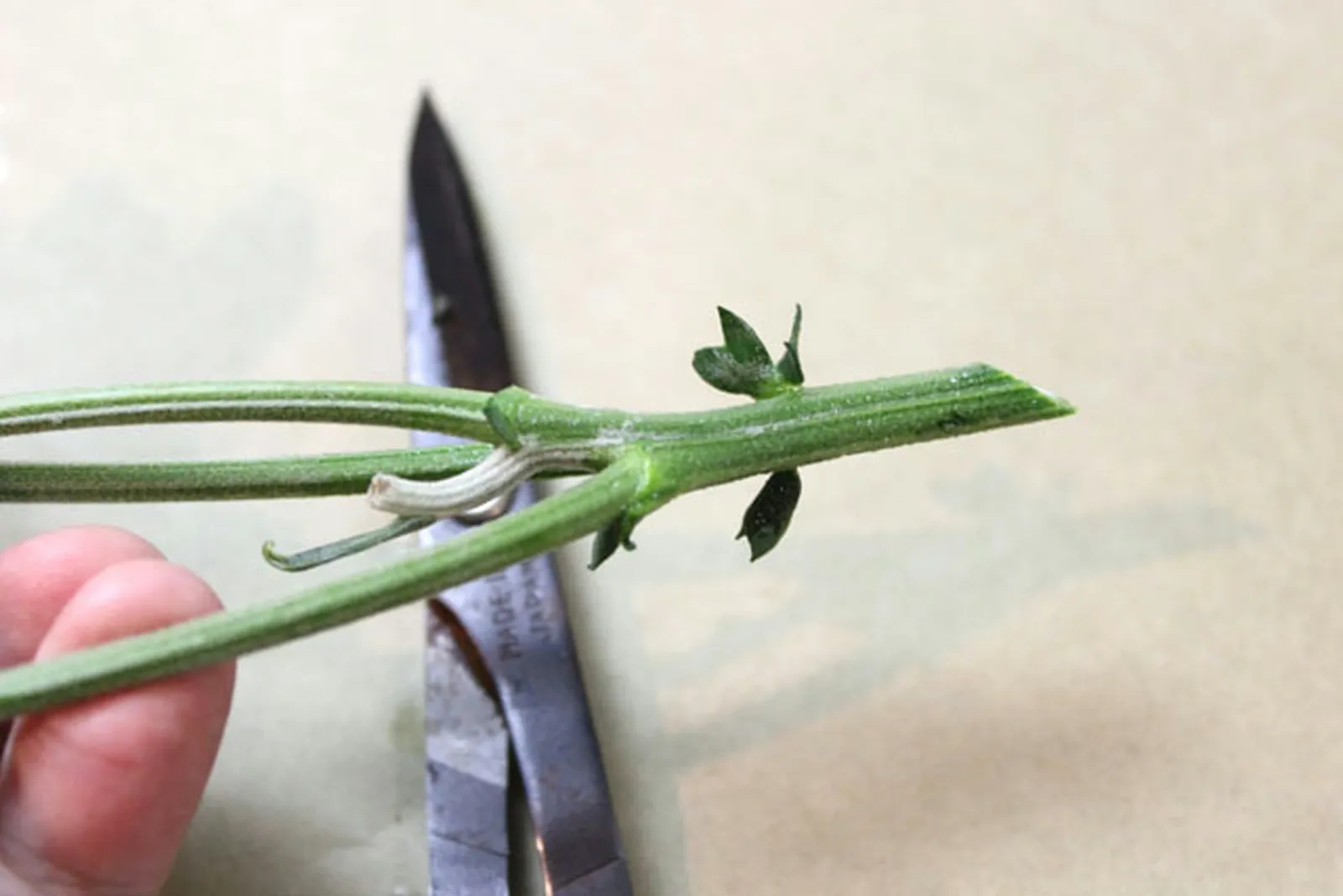
Using sharp floral shears, cut the stems at a 45-degree angle. This angle accomplishes two things. It enlarges the exposed cut surface so the stem can take in more water — along with the food coloring. Also, an angled cut stops the bottom of the stem from resting flat against the vase bottom, which would block the water supply.
Step 4: Place Flowers in the Food Coloring
Set the cut flowers into the glass containing the food coloring.
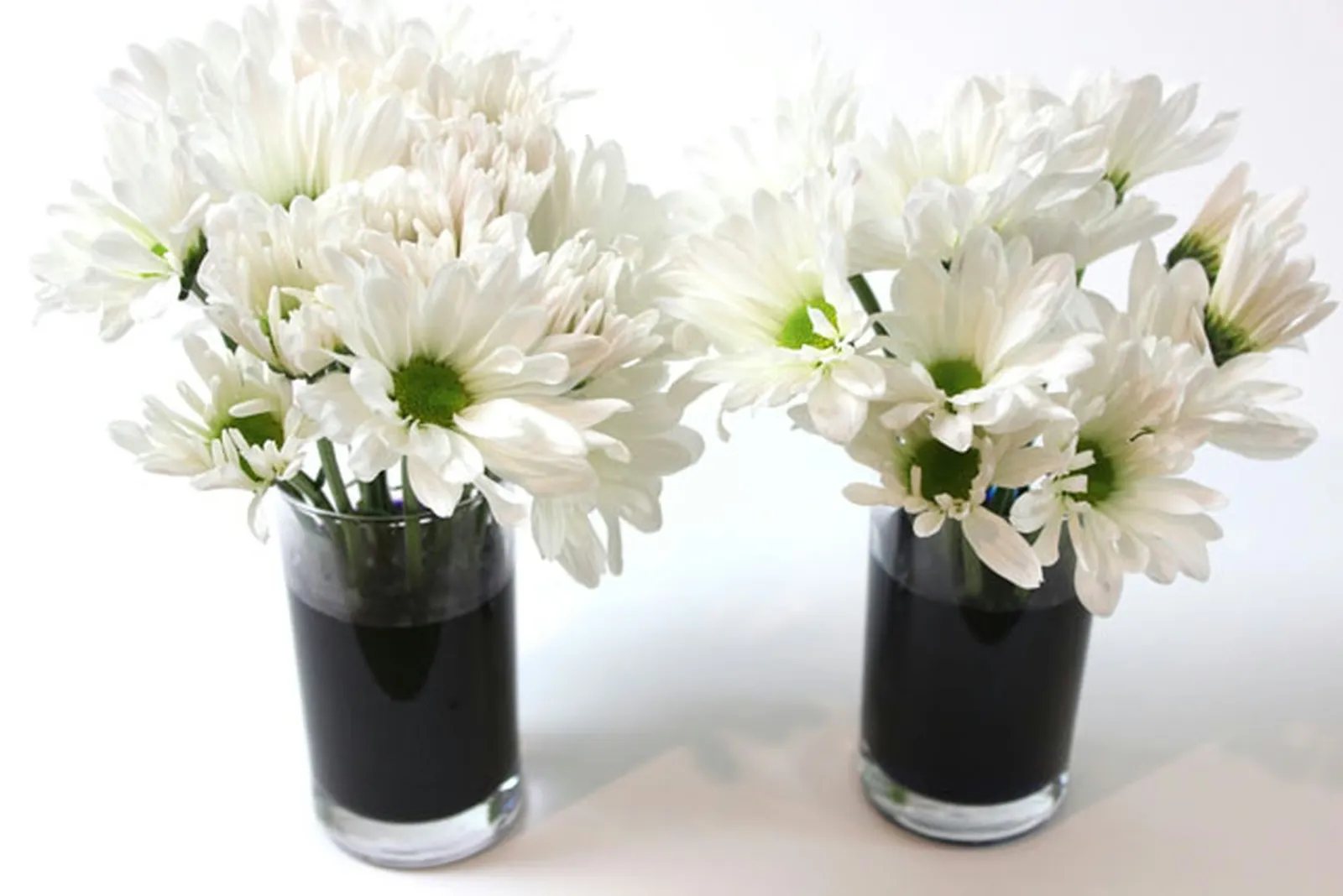
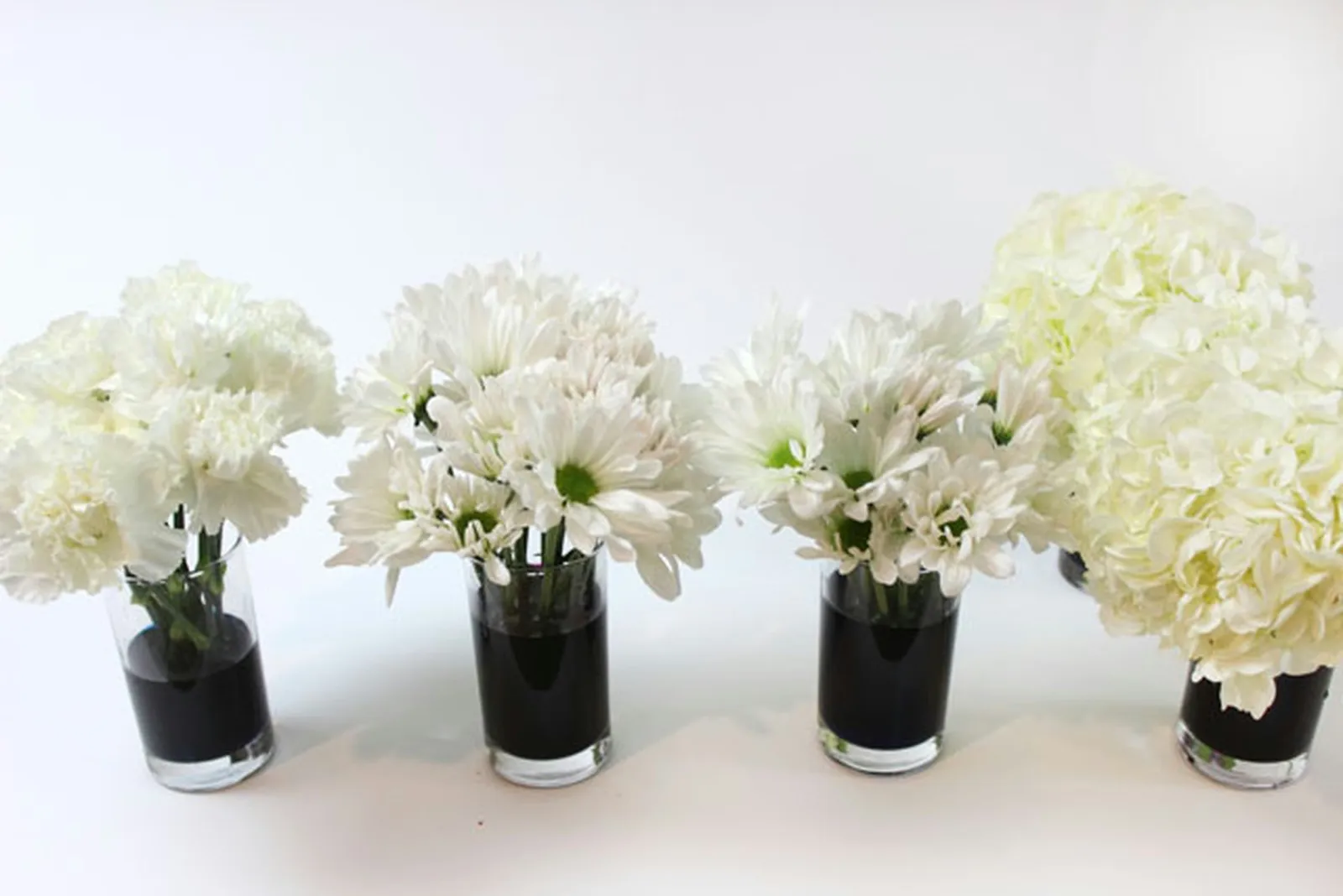
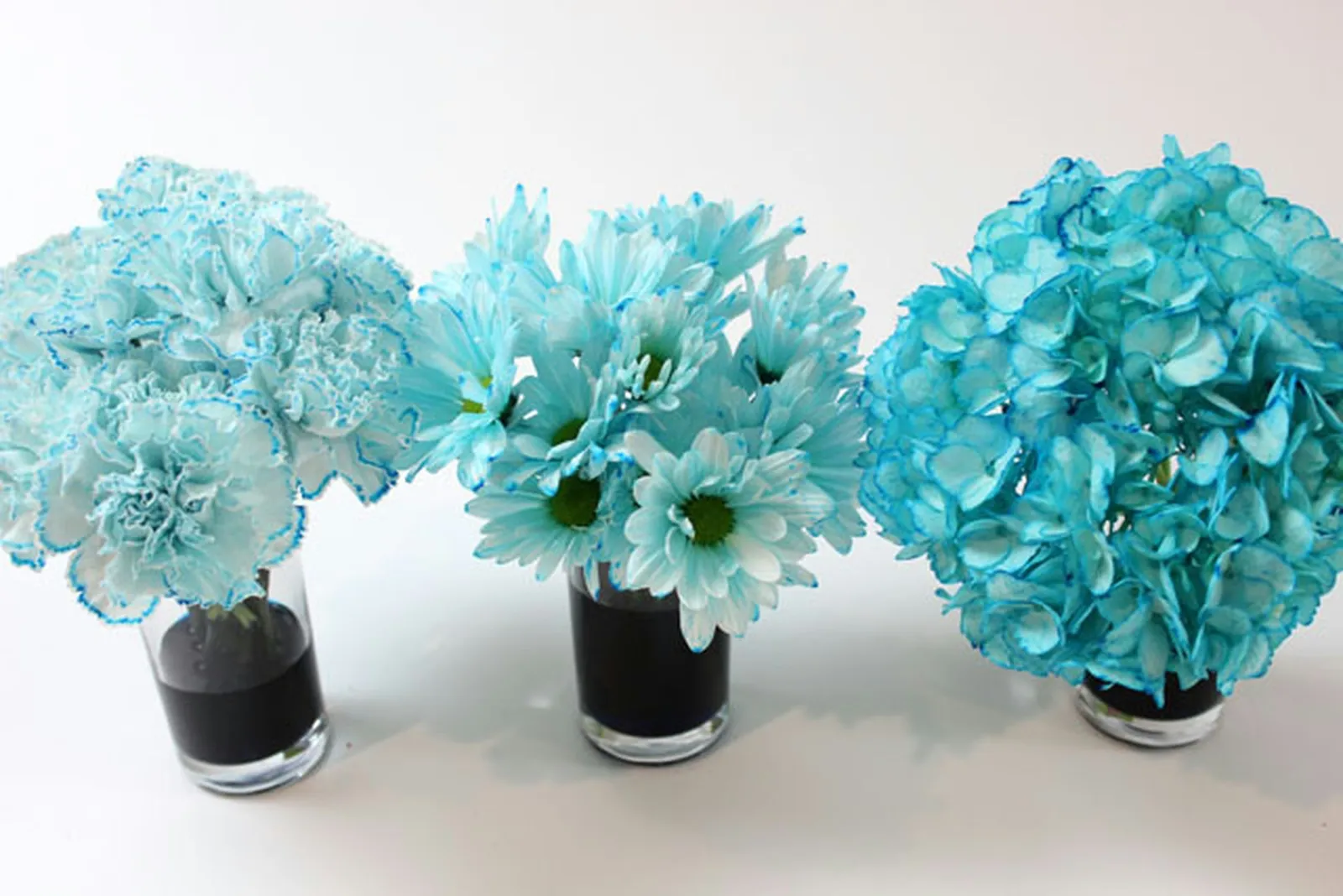
Because each type of flower absorbs the food color at a different rate, try out a variety of white flowers. In this example, carnations, mums and hydrangeas are being dyed.
Step 5: Wait 24 Hours
In some cases the petals will begin showing color within minutes, but patience is needed. Reaching their maximum color potential takes the flowers 24 to 48 hours. Pictured here are the flowers after spending 24 hours in the food coloring solution. The hydrangeas, as you can see, took in the most color.
Step 6: Rinse the Stems
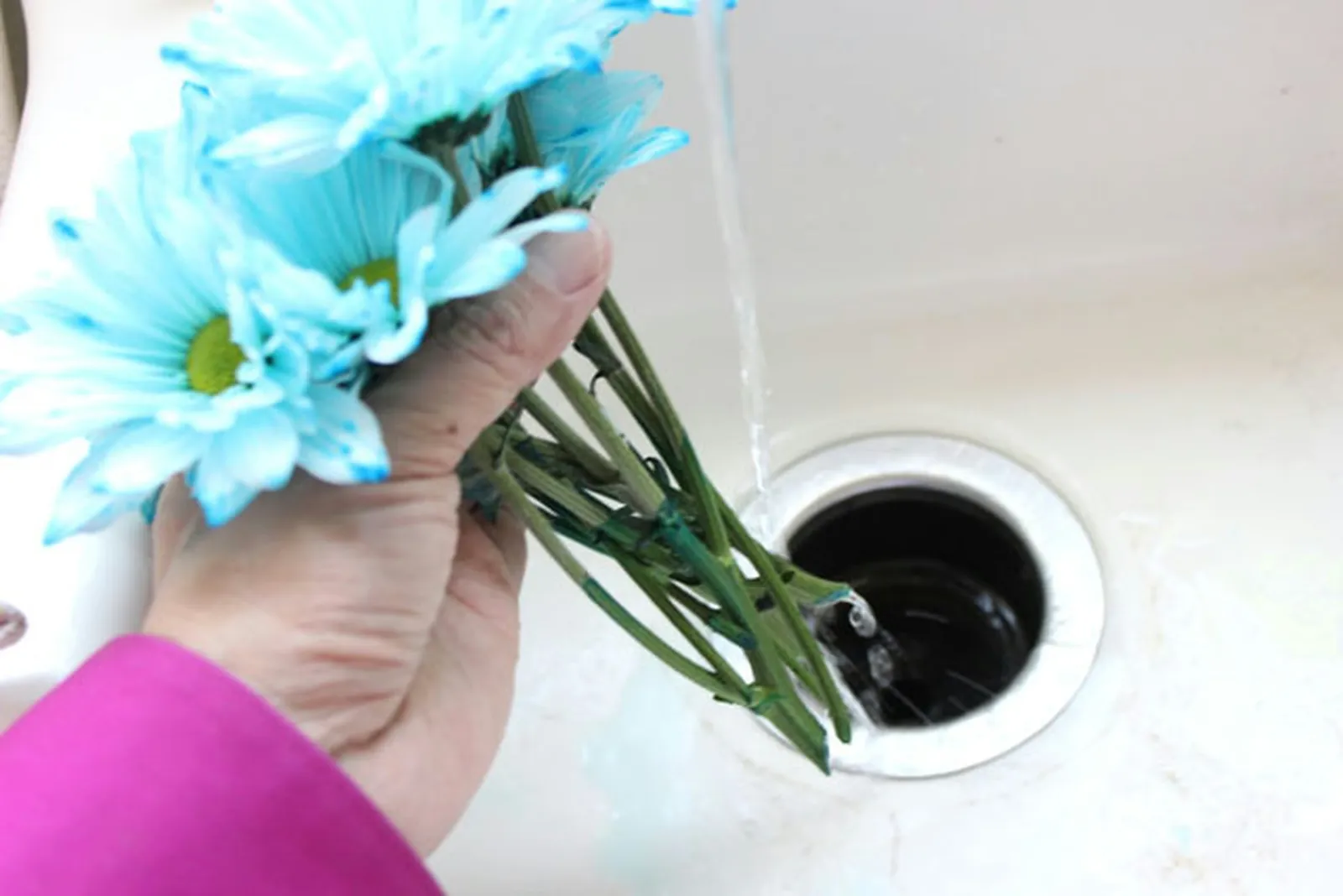
Hold the floral stems under running water to wash the food coloring off them.