Covering Exposed Plumbing Beneath a Wall-Mounted or Pedestal Bathroom Sink
When a bathroom sink lacks a built-in cabinet — as with pedestal or wall-mounted designs — the pipes remain in view, and old, corroded plumbing can make the space look unkempt. A fabric sink skirt offers a way to conceal that plumbing while adding a small amount of concealed storage.
By Sage Campbell6 steps
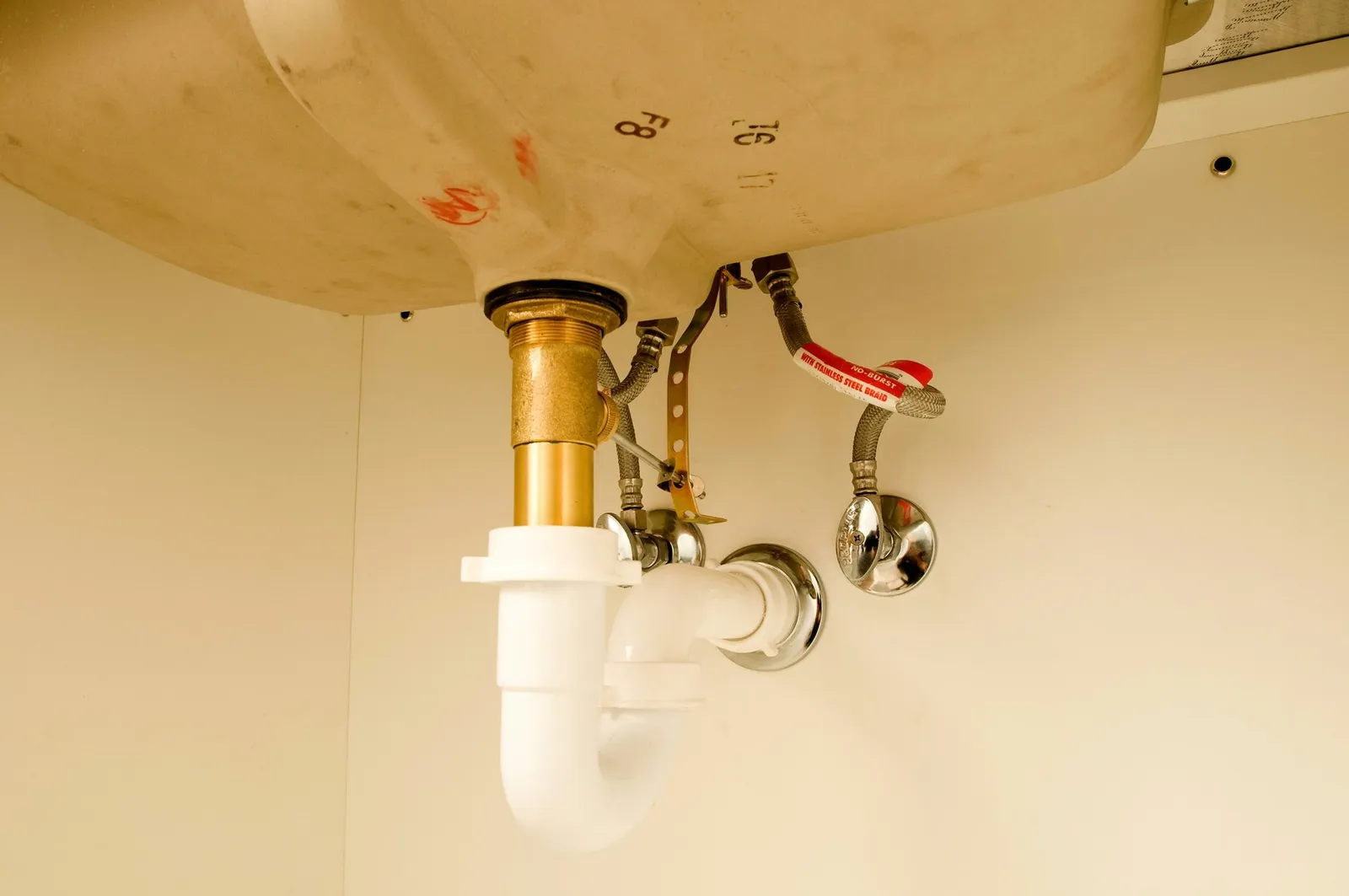
Old, corroded pipes sitting in plain sight beneath a bathroom sink can make the whole room look shabby. Sinks with a built-in cabinet keep the plumbing out of view, but pedestal sinks and wall-mounted models do not, leaving the pipes exposed. One solution is to fit a sink skirt, which conceals the plumbing and provides a modest amount of extra storage space that stays hidden.
Exposed sink pipes are an eyesore.
Step 1
Take a measurement of the distance between the top of the sink basin and the floor. Also measure around the circumference of the sink basin. Record both figures.
Step 2
Lay a bed sheet out flat. Using the height figure recorded in Step 1, measure from the hemmed edge of the sheet to that height. With fabric chalk, draw a straight horizontal line across the sheet at that point, then cut along the line with scissors.
Step 3
Leave the cut piece lying flat. Place the measuring tape flat across its top edge and note where the sink circumference measurement falls. Draw a vertical line at that spot and cut along it.
Step 4
Cut two lengths of iron-on hem tape, each matching one of the cut edges. Iron them into place to form the hem.
Step 5
Position one side of industrial-strength hook-and-loop tape along the edge of the sink basin. Remove the paper backing to reveal the adhesive, then press the tape firmly into place.
Step 6
Fix the matching side of the hook-and-loop tape around the top of the sink skirt. Fasten it around the sink to conceal the pipes.