Breaking Down Street Light Hardware: From Poles to Lenses
Street lights are essential for road safety, illuminating public ways for both motorists and those on foot. While older models rely on traditional bulbs, newer versions incorporate LED technology for energy savings. Regardless of type, these fixtures must endure weather conditions while delivering consistent light.
By Parker Rivera
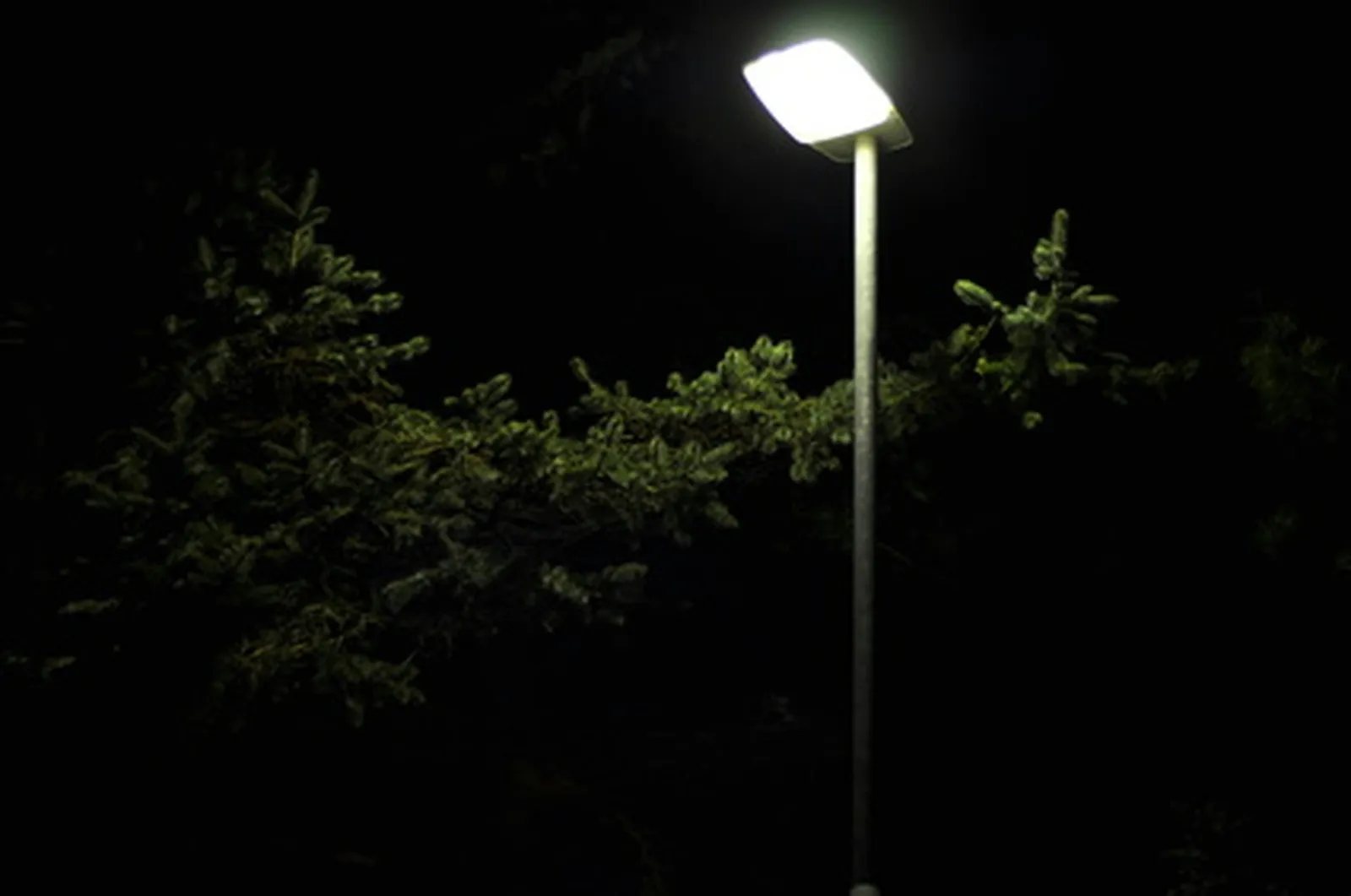
Modern LED street lights use less energy than older types of lights.
By marking public roads and sidewalks in numerous communities, street lights contribute to safety and help lower the risk of accidents involving both drivers and pedestrians. Traditional street lights rely on conventional bulbs, whereas contemporary versions use Light Emitting Diode (LED) technology to save energy. Either way, street lights must be built to endure weather conditions and still deliver illumination.
Support Pole
A shared feature across all street light designs is the post. It extends upward from a ground-level base and holds the lighting unit aloft. Within the post runs the electrical wiring that links the light straight to the power grid. Certain posts are equipped with a service door, allowing technicians to reach the control unit and perform repairs or tweaks from ground level.
Street light posts must resist ice, wind, and rain. Using rust-resistant metals or applying a protective paint layer can help shield the post from weather damage, and metal remains by far the top choice for its strength and stiffness. While some posts—such as those found in a historic district—may be ornamental, others are plain grey shafts.
Light Bulb Options
Street light bulbs are available in many different styles and sizes. The majority of conventional street lights use halogen bulbs, which operate and look much like household incandescent bulbs. These bulbs have a vacuum tube containing a filament and an inert gas (like halogen) that causes the burnt part of the filament to redeposit onto the filament wire, thereby lengthening the bulb's life. Metal halide bulbs work on a similar principle but consume even less energy and yield more light.
Fluorescent street light bulbs are fluorescent tubes filled with a gas that responds to electric current by producing light. Fluorescent street lights generally consume less energy than other bulbs and emit a greenish glow, whereas halogen bulbs give off a warmer, orange light. Lastly, light-emitting diodes, or LEDs, are the most efficient type of street light bulb. LEDs are semiconductors that generate strong illumination and outlast traditional bulbs by a wide margin.
Thermal Management
LED street lights incorporate heat exchangers to control temperature. These components manage the heat generated by electrical current as it powers the LED. By passing air over a set of fins, heat exchangers keep the lighting element cool and ensure the LED produces uniform light without darker patches or "hot spots" that could otherwise appear.
Optical Cover
Both LED and conventional street lights have a curved lens, typically made of heavy-duty glass or, more often, plastic. Street light lenses serve to amplify the light emitted inside. They also aim the light downward onto the street for peak efficiency. Additionally, street light lenses shield the fragile lighting components within. Lenses that are fogged, scratched, or broken are far simpler and more economical to replace than the entire lighting assembly.