Comparing Eased and Double-Radius Countertop Edge Treatments
Both eased and double-radius edges are curved profiles for countertops, but they differ in how pronounced the curve is. The distinction affects only the visual character of the countertop, not its function.
By Blake Reed
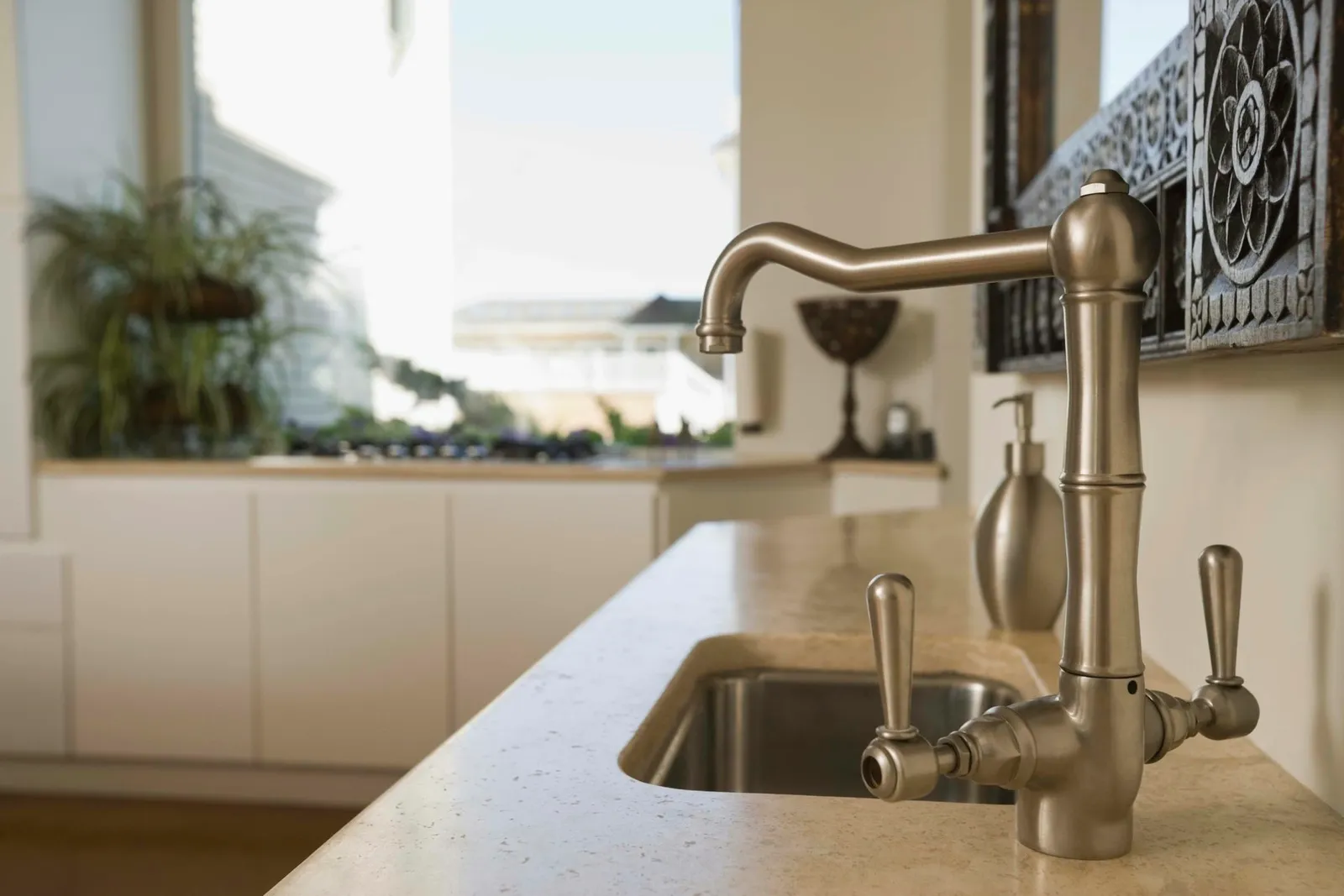
To design professionals, a countertop "edge" is an exposed side.
How much a countertop's exposed edges are curved is what separates an eased-edge counter from one with a double-radius edge. No functional difference exists between the two; the choice comes down to appearance alone. A double-radius countertop carries a bolder curve than an eased-edge version, giving it a softer, less boxy appearance.
What 'Edge' Means in Countertop Design
In the vocabulary of home design professionals, a countertop's "edges" are the finished, visible edges -- any side that butts against a wall is excluded. These edges are rarely left as perfect 90-degree angles on most counters. Sharp corners pose a safety risk. They also tend to pick up chips and dents. Additionally, they can make a space feel institutional. Countertop designers therefore typically apply an "edge profile" that incorporates bevels or curves. Among the simplest curved profiles are eased edges and double-radius edges.
How Edge Radiuses Work
Grasping the mechanics of edge radiuses makes the eased-versus-double-radius distinction easier to see. Initially, the counter's top surface and its exposed side surface are perpendicular, meeting at 90 degrees. Sanding, planing or grinding the junction to form a curved edge produces a curve that amounts to one-quarter of a circle. The radius of that circle corresponds to the radius of the countertop edge. A bigger radius means a more noticeable curve along the edge.
The Eased Edge Profile
An eased edge comes about as close to a square edge as you can get while avoiding a sharp angle. In an eased edge, the shift from the countertop's top surface to the finished side takes the form of a curve with a radius of roughly one-eighth of an inch -- quite a small radius. A standard eased edge has matching curves at both the top and bottom of the countertop slab. The finished surface therefore runs from the counter's top, across the upper curved edge, down the vertical side, then across another curve as it wraps beneath the bottom of the counter.
The Double-Radius Edge Profile
A double-radius edge follows the same setup as an eased edge, except the curves at the slab's top and bottom have a larger radius, usually around one-quarter of an inch. The result is a more pronounced curve profile. The curves do not, however, converge at the middle of the edge. Part of the edge stays "flat." This is the reason such edges are termed double-radius: two curves exist, one at the top and one at the edge. If a countertop edge instead has a single large curve with no flat section, the profile may be referred to as a "full radius" or "bullnose" edge, with the name depending on the angle of the curve.