Setting Up a Habitat for Raising Crickets
Crickets serve as a staple food for numerous pet reptiles. Historically, they were kept for fighting in China, and their chirping is enjoyed by some. You can raise crickets to feed your own pets at a lower cost or to earn some extra cash by selling them to hobbyists and pet shops. These insects are also easy for children to keep as pets or use in science projects. A cricket terrarium is essentially a tank set up to provide a suitable environment for raising or breeding crickets.
By Drew Lee
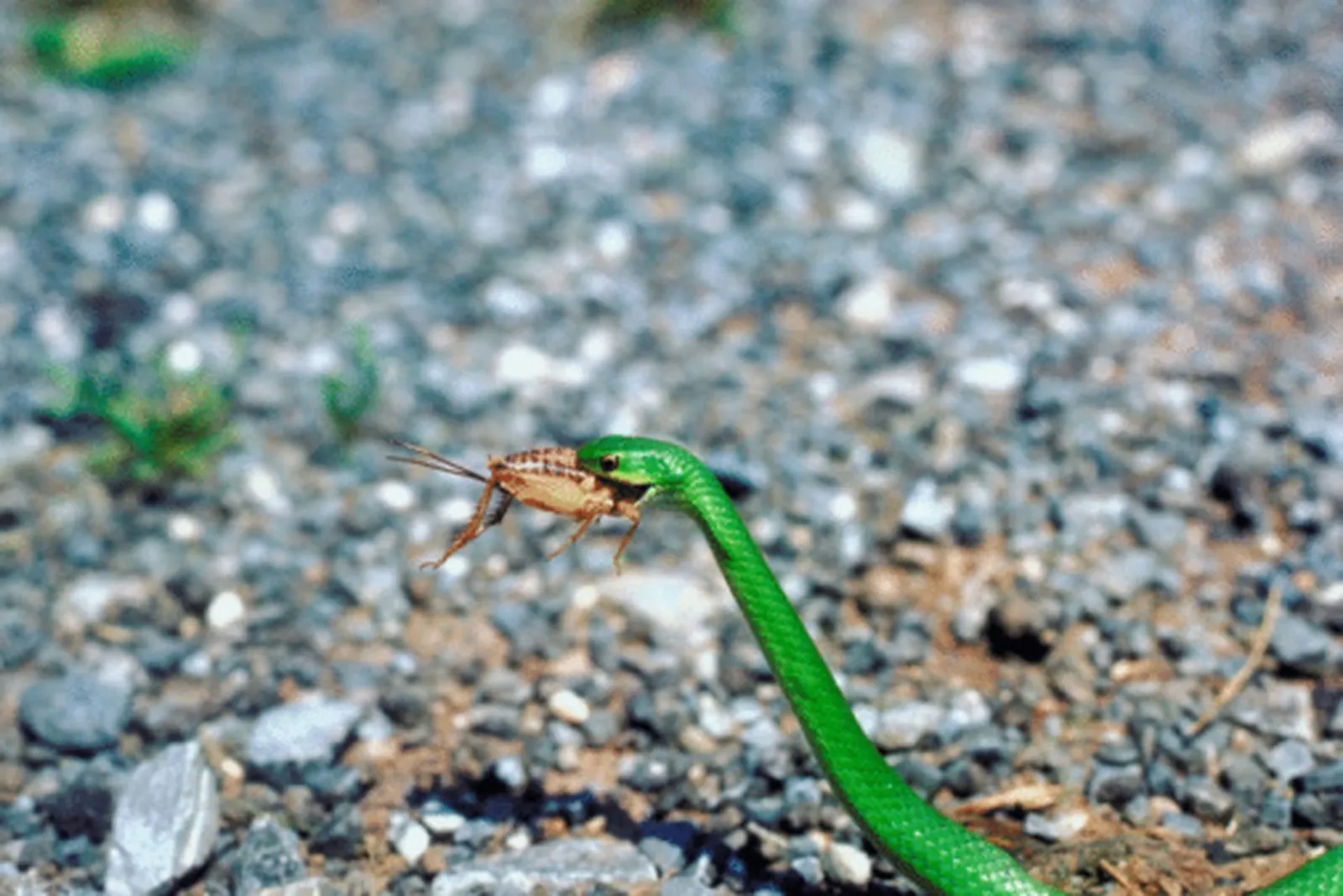
Snakes enjoy a cricket-based lunch.
Crickets serve as a staple food for numerous pet reptiles. Historically, they were kept for fighting in China, and their chirping is enjoyed by some. You can raise crickets to feed your own pets at a lower cost or to earn some extra cash by selling them to hobbyists and pet shops. These insects are also easy for children to keep as pets or use in science projects. A cricket terrarium is essentially a tank set up to provide a suitable environment for raising or breeding crickets.
Housing Tank
A glass or plastic fish tank of about 10 gallons or larger makes a good home for crickets. Clearly, a bigger tank can accommodate more crickets. Old fish tanks with leaks are fine, as long as there are no openings the crickets could get through. Large, transparent plastic containers are another option. Because mold and mites can be problematic, it's generally better to swap the lid for a piece of cheesecloth secured with an elastic band. This allows for ample ventilation. Those intending to breed a steady supply of crickets will need at least two tanks: one for adult breeders and one for eggs and young. Otherwise, adult crickets might eat the babies. If the ambient temperature is likely to drop below roughly 70 degrees F, a heat lamp is required. Crickets do well at around 85 degrees F.
Flooring
For easy cleaning, paper is the simplest substrate for crickets. Old newspapers or paper tank liners can just be taken out and replaced whenever you clean the tank. The used paper can be composted at home. Shallow dishes holding a couple of inches of damp potting compost provide a place for the insects to lay eggs. Afterward, move those dishes to a second tank. If you prefer your cricket terrarium to have a natural look, use dry potting compost or sand as the substrate throughout the tank. The substrate should be changed roughly every two weeks, depending on the tank's size and the number of crickets.
Additional Items
Offering spots for crickets to perch and hide lets you keep more of them in each tank. Having the chance to display natural behavior and escape from perceived threats helps prevent stress and keeps crickets healthy. Pieces of bark, cardboard egg cartons, small clay pots or their broken pieces all make good hiding places. A few twigs can also be added.
Feeding and Hydration
Two small bowls are needed for food and water. Crickets must have water to drink. To prevent them from drowning in the water bowl, either fill it no deeper than the smallest cricket in the tank, or soak cotton balls in water and put them in a dish. Crickets are omnivores, eating both animal and plant matter. Dog kibble mixed with vegetables provides a sufficient diet. Pet supply stores also offer ready-made cricket food, including nutrient-rich products that you feed to or dust on crickets right before giving them to reptiles.