Selecting the Right Coating for Laminate Cabinetry
Because laminate surfaces are slick, paint tends to have trouble sticking to them. Getting a lasting finish means prepping the cabinets first — removing grime and oil with a solvent, scuffing the surface to improve adhesion, then clearing away the dust — and choosing a primer and topcoat formulated for strong bonding.
By Jamie Hayes
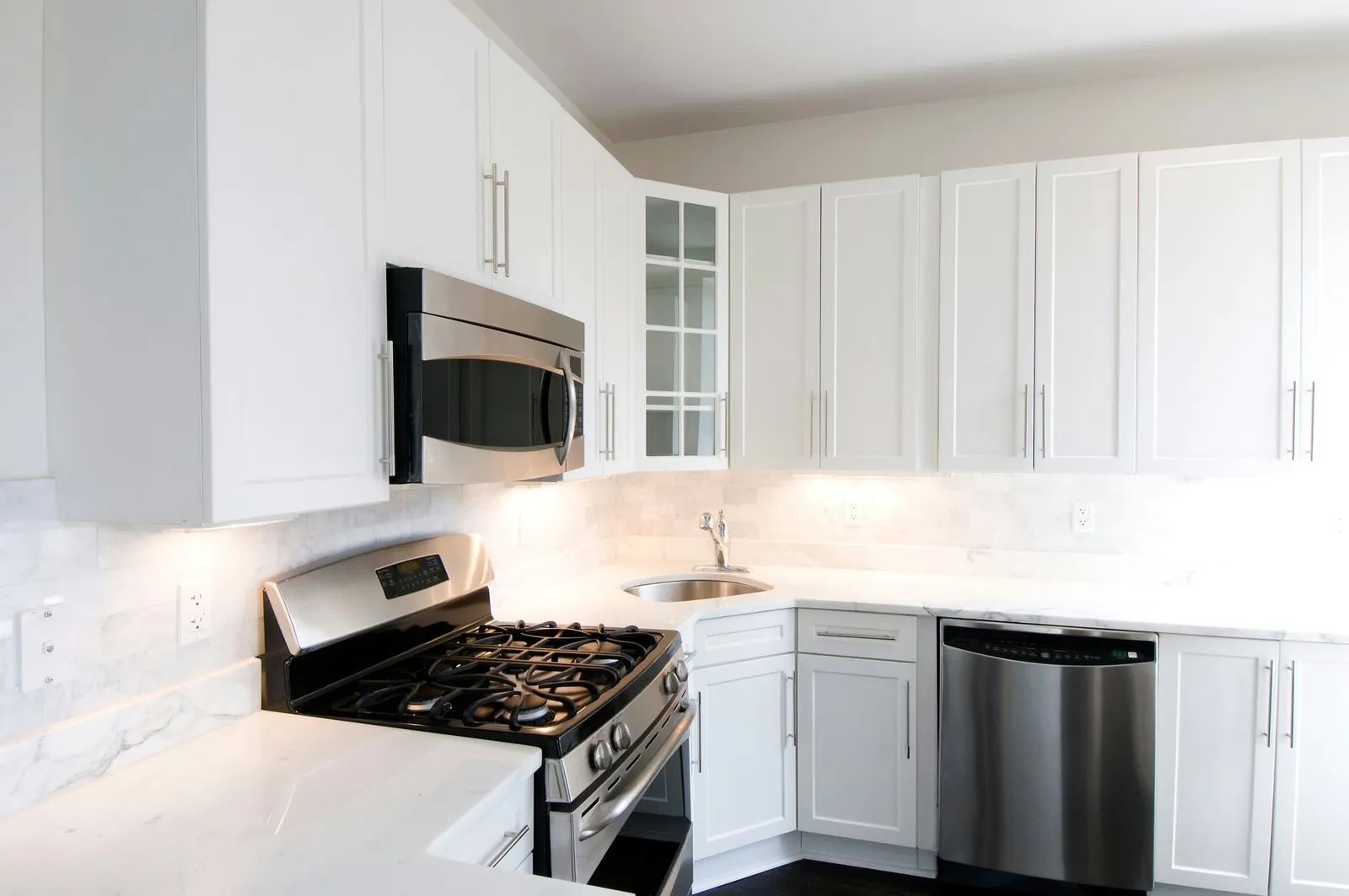
A fresh coat of paint improves the appearance of laminate cabinets.
Paint does not adhere readily to the slick face of laminate cabinets. For that reason, preparation is required before any coating goes on: wipe the surfaces with a solvent to lift dirt and grease, abrade them to give the paint something to grip, and wipe again to clear away the dust left by sanding. A primer and a paint both chosen for strong bonding properties are necessary if the finished job is to hold up over time.
Primer
Before the topcoat goes on, laminate cabinets call for a layer of quality primer to bridge the gap between paint and laminate. This Old House suggests a solvent-based primer packaged in a spray bottle. Another option is a primer made specifically for laminate surfaces. Once the primer has fully cured, sand the cabinet faces once more and wipe off the resulting dust. How long full curing takes varies by product; solvent-based primers set faster than water-based ones.
Latex Paint
Provided a quality primer is used, latex or water-based paint performs well on laminate cabinets. While it is still curing, however, the paint stays tacky and can peel readily when two coated surfaces rub together. Over a water-based primer, latex paints may need one to four weeks to cure. Over a solvent-based primer, they fully cure in a week or less. Coating the areas where cabinets contact other painted laminate surfaces with a thin film of cooking oil can help cut down on stickiness.
Alkyd Paint
Alkyd, or solvent-based, paint leaves a hard finish on laminate cabinets that is simple to clean — a particular advantage when the cabinets sit in heavily used parts of the home, the kitchen among them. Ask the Builder advises an epoxy-modified alkyd paint, which typically is sold in a spray bottle, meaning some painting skill is needed to apply it properly. Before coating every cabinet, practice on scrap laminate or on parts of the cabinets that stay out of sight.
One-Step Paint
Certain paints are formulated specifically to bond well with laminate and need no primer beneath them. Choosing one of these saves time, though this 2-in-1 product may be hard to track down. It is normally labeled as a specialized cabinet or furniture paint for laminate surfaces. Ask the staff at a local home improvement store whether they stock it. When using it, you may sand the laminate first, but applying primer could actually yield worse results.