How Schools Illuminate Their Facilities: A Look at Common Lighting Technologies
Since incandescent bulbs have drawn their fundamental design from Edison's original 1879 version, educational institutions have moved toward fluorescent-based options for their daily lighting needs due to efficiency and lifespan concerns.
By Kai Murphy
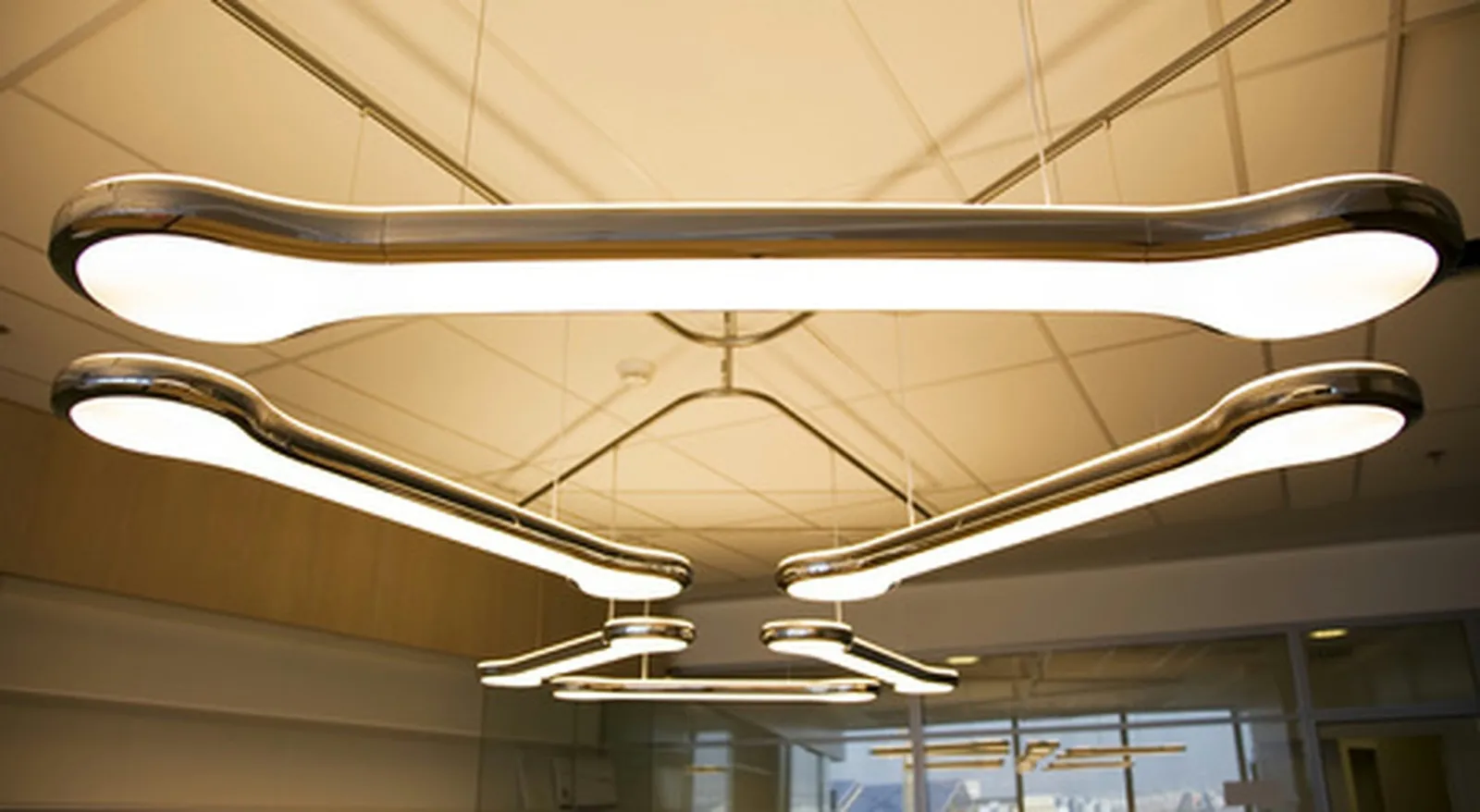
Fluorescent tubes and other lighting that is used in schools.
Incandescent bulbs, whose fundamental design traces back almost unchanged to Thomas Edison's 1879 original, have for a long time been the primary source of artificial light. However, schools and similar settings where illumination is needed throughout the entire day demand lighting solutions that outperform incandescent bulbs in terms of both efficiency and durability. Consequently, more modern and beneficial lighting technologies are typically adopted. For school lighting, various types of fluorescent bulbs have become the accepted norm.
Fluorescent Tubes
Within educational buildings, the fluorescent tube light is the most frequently encountered fixture. These take the form of elongated cylindrical tubes, typically measuring either 4 or 8 feet in length. Their efficiency is remarkable, reaching up to 75 percent greater efficiency than standard incandescent lighting—the latter accounting for 85 percent of household lighting worldwide. Fluorescent tubes generally operate for 7,000 to 24,000 hours, which can be as much as ten times the lifespan of incandescent bulbs.
Circline Lamps
Circline lamps make it possible to use fluorescent bulbs for ambient lighting purposes. In schools, ambient lighting—a low-level form of illumination—is commonly employed across large indoor spaces that do not require bright lighting. Circline lamps serve as an effective substitute for traditional lamps that rely on less efficient incandescent bulbs. Additionally, circline lamps are frequently used for portable task lighting, such as that placed over a teacher's desk in a classroom.
Compact Fluorescent Bulbs
Compact fluorescent lighting, or CFLs, represents another variety of fluorescent lighting. As one of the more recent fluorescent bulb types, CFLs have gained considerable popularity because they can be inserted directly into an incandescent light bulb socket. Compact fluorescent bulbs typically last up to 10,000 hours. Their size is quite small, with compact cylindrical tubing that closely matches the overall dimensions of an incandescent bulb. The electrical ballast, which controls the flow of electricity into the bulb and prevents unnecessary energy loss, is central to their energy efficiency.
Tungsten Halogen
Halogen lighting is yet another lighting option that can often be found in certain schools. Even though halogen lighting falls under the category of incandescent lighting—it uses a tungsten filament—it incorporates specific adjustments that enhance its energy efficiency and extend its operating life. Halogen lights are engineered to recycle heat. This is achieved through an inner coating and a gas filling that reflect heat back inward, enabling the bulb to use less energy.