George Washington Bridge Congestion: Strategies for a Smoother Crossing
Each year, over 102 million vehicles use the George Washington Bridge, making it the world's busiest span and a notorious bottleneck between New York City and New Jersey. While eliminating delays entirely is unrealistic, some advance preparation can help motorists cut down on time spent in queues.
By Casey Watson
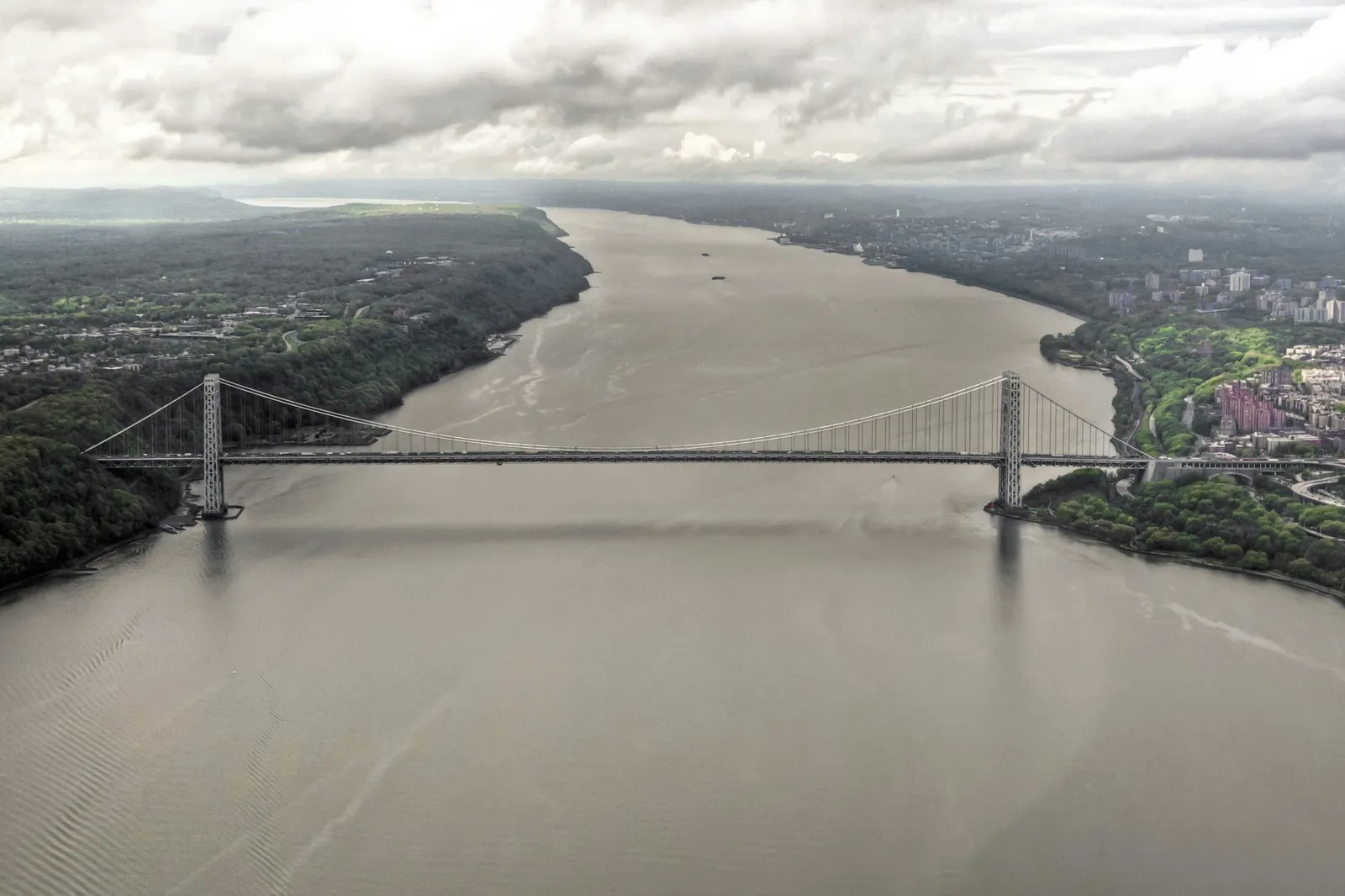
Traffic congestion is an inevitable feature of the "George."
More than 102 million vehicles cross the George Washington Bridge annually, connecting New York City and New Jersey, which makes it the busiest bridge anywhere in the world. Given that volume, finding a way around congestion is a challenge in itself, though some planning on the part of drivers can reduce how long they are stuck.
Use an Electronic Toll Option
The sheer number of vehicles crossing the bridge is one major source of delays, but another significant factor is that drivers heading toward Manhattan must pay a toll. Vehicles going the other way pay nothing. Instead of handing over cash at the booth, those who cross often can cut down on waiting time by enrolling in an E-Z Pass. This system charges fees electronically by reading a tag mounted in the windshield, and it has separate lanes where the flow of traffic tends to be quicker. One example: at night, the upper level's Palisades Interstate Parkway is reserved for E-Z Pass holders. To join, drivers can apply online and then pick up their tag at an E-Z Pass service center.
Carpool to Qualify for a Faster Lane
Carpooling is another route to a lane that moves more quickly. Noncommercial-plated, two-axle vehicles with single rear wheels are permitted in the carpool lane when they carry at least three passengers, and the vehicle then qualifies for a reduced toll. Joining the carpool program requires being an E-Z Pass holder first. One caution: you may not collect hitchhikers on the bridge approach in order to reach the required number of occupants. Picking up a hitchhiker is not in itself illegal, but doing so by changing lanes or stopping at a bus stop to take on riders will result in a citation.
Check Conditions Before You Go
Choosing the right time to cross and knowing what conditions are like on the bridge can pay off. Port Authority alerts, sent at no charge to a smartphone or email address, give details about current incidents or ongoing construction likely to cause backups, and drivers can sign up for them. Another option is dialing 511 for current traffic information supplied by the New York State Department of Transportation. Radio stations in the area on both sides of the Hudson River also regularly broadcast bridge traffic bulletins, making them a useful resource.
Choose Your Timing and Level
As might be expected, traffic on the George Washington Bridge slows to a crawl at rush hour. According to the Port Authority, weekday peak periods run from 6 a.m. to 10 a.m. and 4 p.m. to 8 p.m., while weekend peaks run from 11 a.m. to 9 p.m.; even so, congestion frequently begins sooner. Crossing outside those windows offers an almost certain chance of a less crowded trip. Heading toward New Jersey is typically faster on the lower level, whereas the upper level is faster for trips into the city. Pedestrians and cyclists can also cross the bridge. The upper level's south sidewalk is open from 6 a.m. to midnight, though it is occasionally shut for maintenance work.