Scotland's Heather Moorlands: A Semi-Natural Landscape
Moorland in Scotland refers to terrain that is neither woodland nor farmed. Broadly speaking, it is an elevated, uncultivated area marked by heavy rainfall, acidic soils, and short, scrubby plant life. Around 12 percent of Scotland's total land area is thought to be moor. Although the term can cover everything from grassy hilltops to peat bogs, heather-dominated moorland makes up the majority of Scottish moors.
By Avery Howard
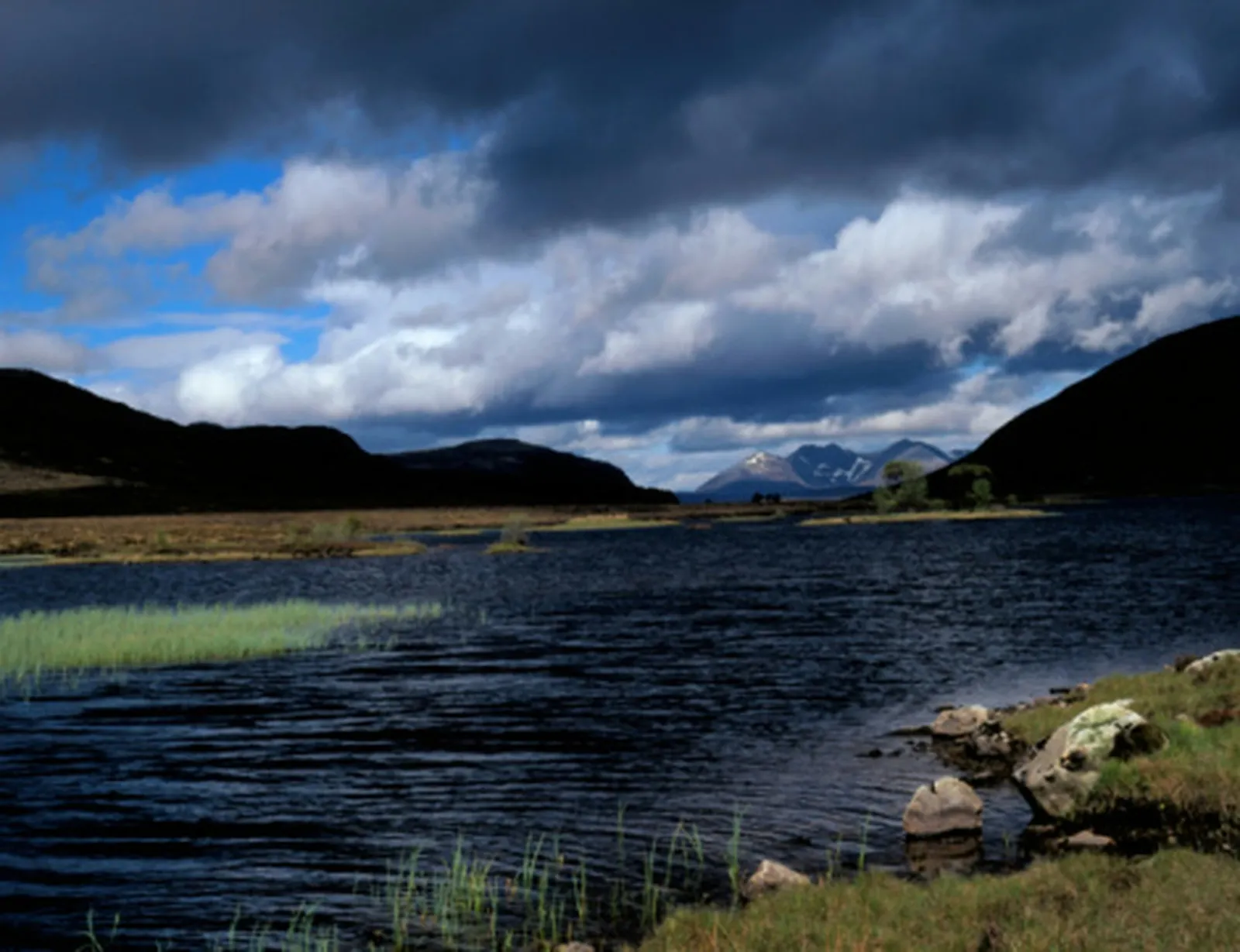
Some of Scotland's most beautiful scenery includes moors.
In Scotland, land classified as moor is terrain that has neither tree cover nor agricultural use. Viewed through a broader ecological lens, a moor is an elevated, uncultivated expanse defined by abundant rainfall, acidic soil, and vegetation that stays low and scrubby. Roughly 12 percent of Scotland's land mass is estimated to be moor. The term can describe a broad spectrum of landscapes, ranging from grassy hilltops to bogs, yet heather moorland accounts for most of Scotland's moors.
How Moors Came to Be
Moors are not entirely a product of nature. Much of their vegetation consists of species that would ordinarily grow as the underbrush of a forest. If left alone, a heather moor would gradually revert to woodland. The creation of moors traces back to early hunters who set fires to drive out prey animals, and in doing so opened up artificial clearings where grazing animals could feed. Periodic burning keeps them in existence today, stopping reforestation and producing the distinctive patchwork look associated with moors.
Plant Life
Heather, a low-growing evergreen shrub, forms the ground cover on most Scottish moors. Multiple heather varieties exist, each growing and blooming at its own pace, but all of them bear the familiar spear-shaped clusters of purple flowers. Young heather feeds a variety of animals, among them sheep, cattle, deer, and rabbits. Without periodic burning, however, heather grows into woody thickets that grazing animals cannot use. This is a further reason why moorlands in Scotland are burned so often.
Animal Life
Red deer, wild rabbits, and hares live on heather moors, which rank among the few habitats available to these animals in Scotland. Heather moors are also the only habitat for the red grouse, Britain's sole native endemic species. Consequently, they sustain sizable populations of hen harriers as well. Moorland has existed in Scotland for so long that it has produced deeply established ecosystems that could not persist without heather moors.
Preservation
Because heather moors are partly artificial, they need continuous management to survive. Scotland's moors are declining in extent, pressured by both cultivation and reforestation. Most reforestation is deliberate, but even simply failing to burn moorlands on a regular basis allows trees to take over gradually and push heather down into the underbrush. Environmentalists and hunters are both engaged in conservation work, united by a wish to protect the distinctive mix of plants and animals that Scottish moors sustain.