Diagnosing Common Malfunctions on a Campbell Hausfeld IronForce Nailer
When a pneumatic nailer stops working properly, identifying the specific symptom — air leaks, skipped fasteners or jammed nails — points to the worn or loose component that needs attention.
By Skyler Mitchell
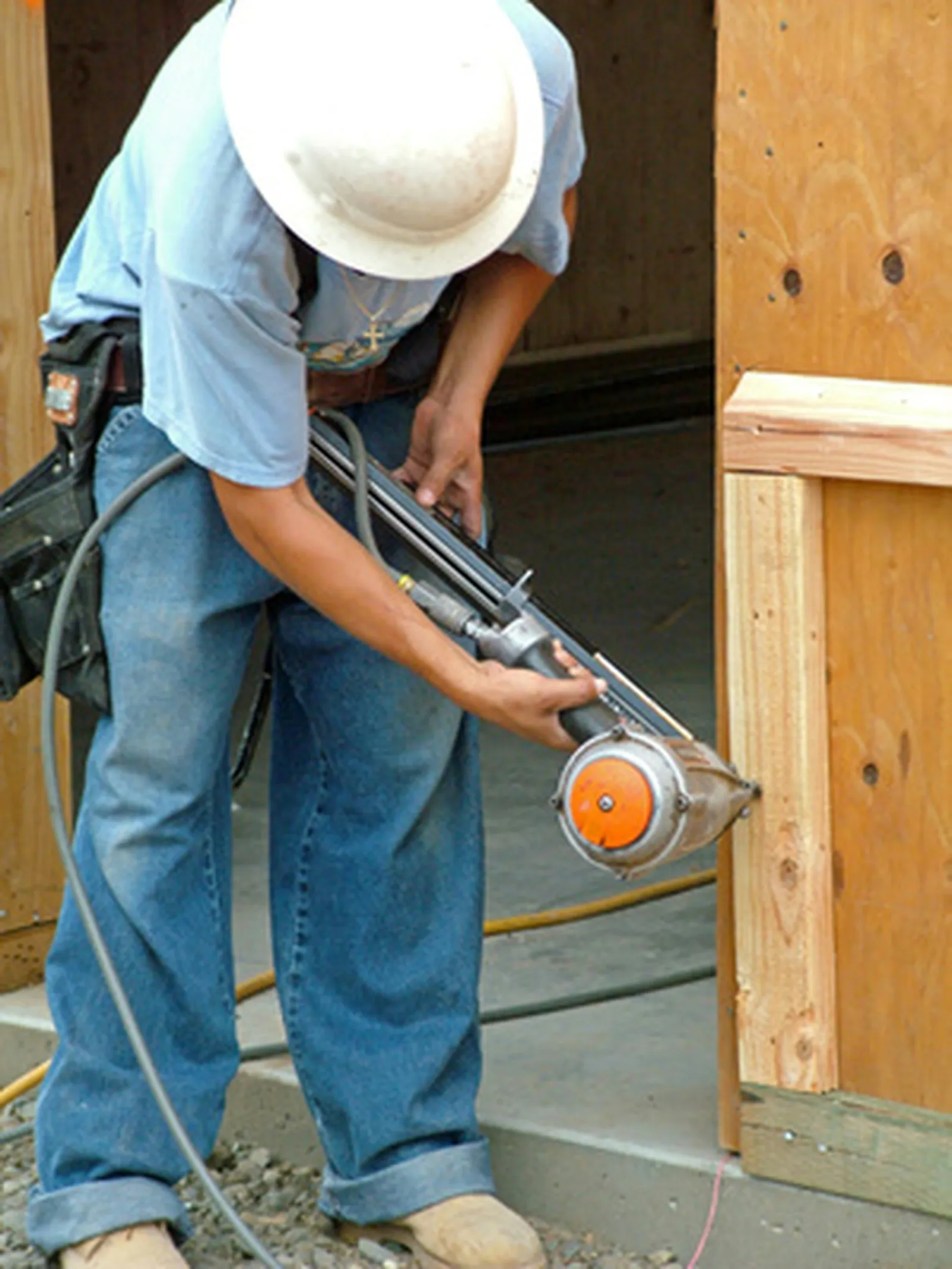
A nail gun drives nails efficiently.
Pneumatic nailers speed up woodworking tasks considerably. Jobs such as fitting molding, casing and trim tend to progress without trouble until the tool begins to malfunction. Among the models made by Campbell Hausfeld, the Angle Finish Nailer, model CHN70600, has become a widely used option for general purpose fastening. Carpenters, construction workers and contractors have adopted this tool and grown accustomed to its particular behaviors. Certain situations will cause the nailer to stop working, and recognizing those situations makes diagnosis easier.
Air escaping near the trigger
Look at the O-rings inside the trigger housing. When a nailer is dropped, these rings frequently sustain damage, and once damaged they let air escape around the trigger valve. Swapping out the O-rings puts an end to the leak at the trigger valve.
Air escaping between housing and nose
Determine whether the bumper or the O-ring seals have sustained damage. When this happens, air can escape between the housing and the nose. The fix is to install a replacement bumper or new O-ring seals.
Air escaping between housing and cap
Snug down the housing screws so that air can no longer escape between the housing and the cap. Should the leak continue, install a new housing gasket.
Air escaping between housing and cap (continued)
Tightening the housing screws should stop air from escaping between the housing and cap. If the leak does not stop, replace the housing gasket.
Fasteners being skipped
Clear out the drive channel and magazine. Dust, dirt and tiny bits of construction debris are able to clog the nailer's drive channel and magazine. Keeping both areas free of buildup helps stop the tool from skipping nails.
Assess the nail pusher spring. A spring that is bent, kinked or broken should be replaced so the tool no longer skips nails.
Look over the air hose and compressor fittings. Use an adjustable wrench to tighten any fittings that have come loose. When loose fittings restrict the air supply reaching the nailer, the tool skips nails.
Inspect the O-rings on the piston for signs of wear. Fit new piston seals where the O-rings are worn, and replace the trigger valve O-rings if they appear damaged.
Nails becoming jammed
Look for wear on the driver guide. Installing a new guide once the old one is worn keeps nails from jamming the tool.
Inspect the nail supply. Use only the appropriate nail type. Nails of the wrong size end up bent, which jams the tool.
Check whether the nail driver has been damaged. A nail driver that has been fouled or worn down through heavy use will cause jamming. Replacing it stops the jamming.