Devices for Securing Timber During Woodworking Tasks
From crafting a tiny toothpick to erecting a full log cabin, wood's attractive appearance, durability and adaptability make it a valuable material. While carrying out woodworking, implements that grip components steadily can fulfill several roles.
By Rowan Rivera
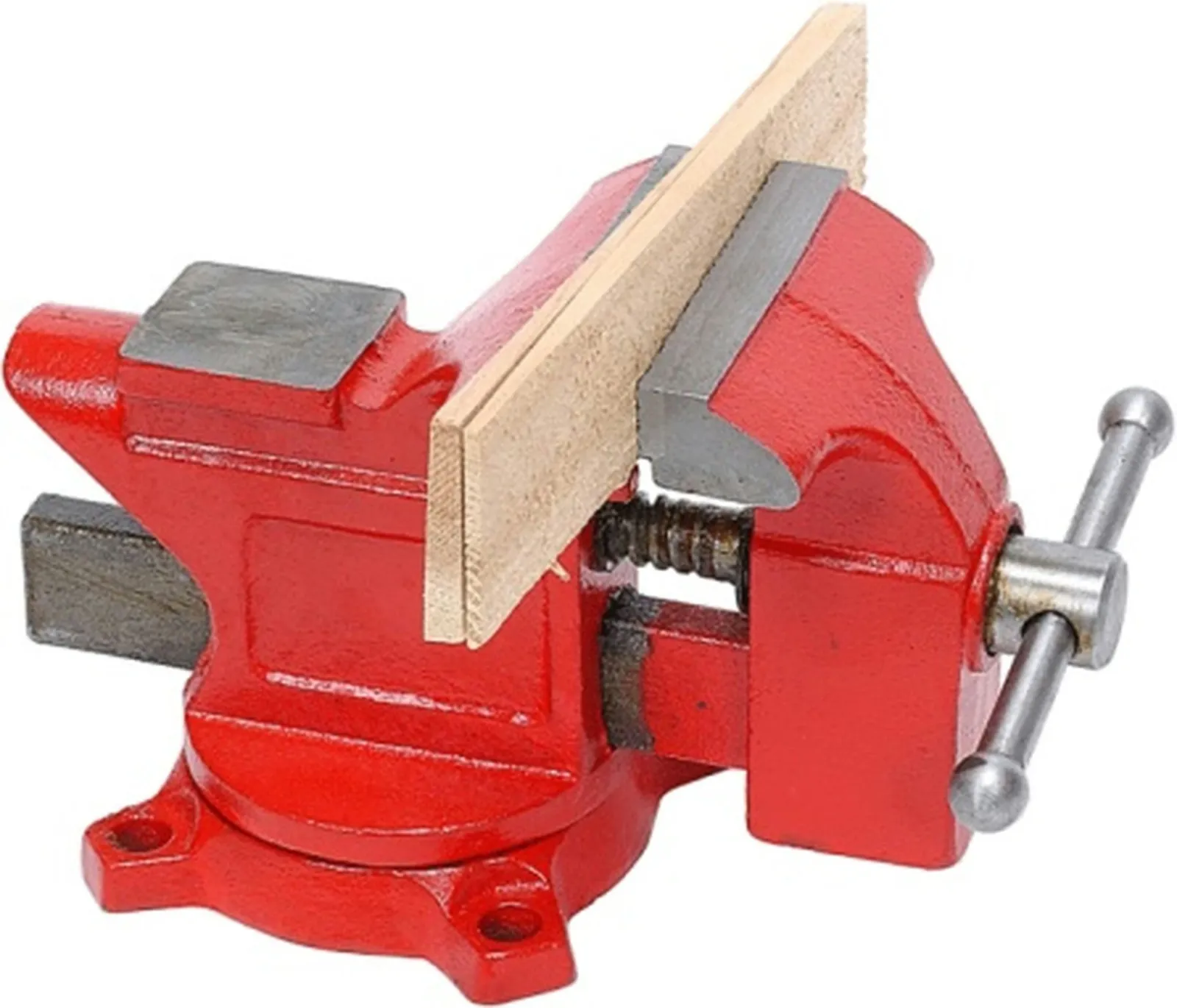
Holding devices can help make it easier to shape and join pieces of wood.
Wood's attractive appearance, durability and adaptability make it a valuable material, whether the finished product is as tiny as a toothpick or as large as a log cabin. While carrying out woodworking, implements that grip components steadily can fulfill several roles. These roles include keeping a piece of wood firmly in position so that working on it becomes simpler and less risky, and also pressing components together while adhesive is applied.
Bench Stop
A bench stop ranks among the most straightforward ways to secure wood. It consists of a small device made from wood or metal that is fastened to a workbench, protruding above the bench's upper surface. When a piece of wood is set on the workbench and leaned against the bench stop, it stays put during planing or sanding.
Bench Vise
A bench vise is another tool that keeps a wood piece steady while it is being worked on. The vise is mounted firmly to a workbench, and the wood is gripped between a pair of parallel metal jaws. These jaws can be screwed apart or together to accommodate wood of varying thicknesses, and once tightened, they press against the wood to hold it firmly. The jaws may feature a smooth surface to reduce harm to the wood, though certain versions have a serrated edge that bites into the wood for a more secure grip.
Bar Clamp
Clamps for woodworking serve to hold components while adhesive bonds them. They are available in many shapes and sizes, and the bar clamp is a widely used type. It consists of a pipe or metal bar, with a metal jaw attached at one end and a movable jaw that slides along the bar. The movable jaw can be locked into place to match the wood's dimensions, and a screw is then tightened to exert pressure that presses glued pieces firmly together.
C-Clamp
Another familiar clamp style is the C-clamp. It is a metal tool shaped like the letter C, with a threaded screw positioned across the open part of the C. Loosening the screw creates a gap where wood pieces can be inserted, and tightening the screw then presses them firmly together.
Quick-Release Clamps
Quick-release clamps generally resemble bar clamps in style and are employed for the same kinds of tasks. Their design, however, incorporates a quick-release mechanism. This allows for faster removal, which can make them simpler to operate.
Specialty Clamps
Specialty clamps are made in many shapes and sizes, with examples including angle, edge, spring and strap clamps. Their designs usually help with clamping tasks that are more difficult.
Hand Screw
Hand screws generally consist of two wooden jaws connected by two metal screws or spindles. Rotating both screws at once opens and closes the jaws while keeping them parallel, allowing them to grip wood pieces firmly together. Turning just one screw, however, can tilt the jaws slightly, which can be helpful for wood pieces whose sides are not parallel.