The beginnings of Eggs Benedict are disputed, yet the dish is generally associated with New York in the late 1800s. The sauce that crowns it has a far longer record. A French cookbook dating to 1651 includes it, and it was once called Sauce Isigny, after a town in Normandy. After World War I, when butter was in short supply in France and imports came from Holland, the sauce took the name hollandaise.
Info
- Cook time: 50 minutes
- Total time: 50 minutes
- Yield: 4
Ingredients
Hollandaise Sauce
- 2 sticks unsalted butter
- 3 large egg yolks
- 4 teaspoons fresh lemon juice
- 2 pinches of cayenne pepper
- Kosher salt
Eggs Benedict
- 2 tablespoons distilled white vinegar
- 8 large eggs
- 2 tablespoons unsalted butter, plus extra for spreading
- 8 slices Canadian bacon
- 4 English muffins, split
- Chopped fresh chives, for topping
Instructions
- Start the hollandaise. In a small saucepan over medium heat, melt the butter for 6 to 8 minutes, until the foam subsides but the butter has not browned. Pour the clear butter into a liquid measuring cup, leaving the milk solids in the pan; throw the solids away.
- Set up a gentle water bath. Put about 1 inch of water in a medium saucepan and heat over medium until it steams but does not simmer. In a medium stainless-steel bowl, whisk the egg yolks with 1 tablespoon water and 2 teaspoons lemon juice. Rest the bowl over the saucepan, making sure it does not touch the water. Whisking without stopping, cook for 3 to 5 minutes, until the mixture turns pale yellow and thickens. Check now and then that the water is not boiling, since the yolks could overcook.
- Finish the sauce. Take the bowl off the saucepan. Pour in the melted butter very slowly—a drop at a time at first—whisking constantly until the sauce is thick. Whisk in the remaining 2 teaspoons lemon juice, the cayenne and ¼ teaspoon salt. If it is too thick, whisk in warm water 1 tablespoon at a time to loosen it. To hold it, set the bowl back over the saucepan of water with the heat off and whisk now and then.
- Poach the eggs. Pour 3 inches of water into a large wide pot and heat over medium-high until it steams and shows small bubbles; lower the heat as needed to keep it at a bare simmer. Stir in the vinegar. Crack 4 eggs into separate small bowls or ramekins. Slip them gently into the water, keeping as much space between them as you can. Cook for 3 to 3½ minutes, until the whites are set but the yolks still run. Lift the eggs out with a slotted spoon onto a kitchen-towel-lined plate. Pat them dry gently and trim away any wispy bits. Repeat with the other 4 eggs.
- Brown the bacon and toast the muffins. Melt the butter in a large skillet over medium-high heat. Add the Canadian bacon and cook 1 to 2 minutes per side, until lightly browned and heated through. Toast the English muffins at the same time and spread them with butter.
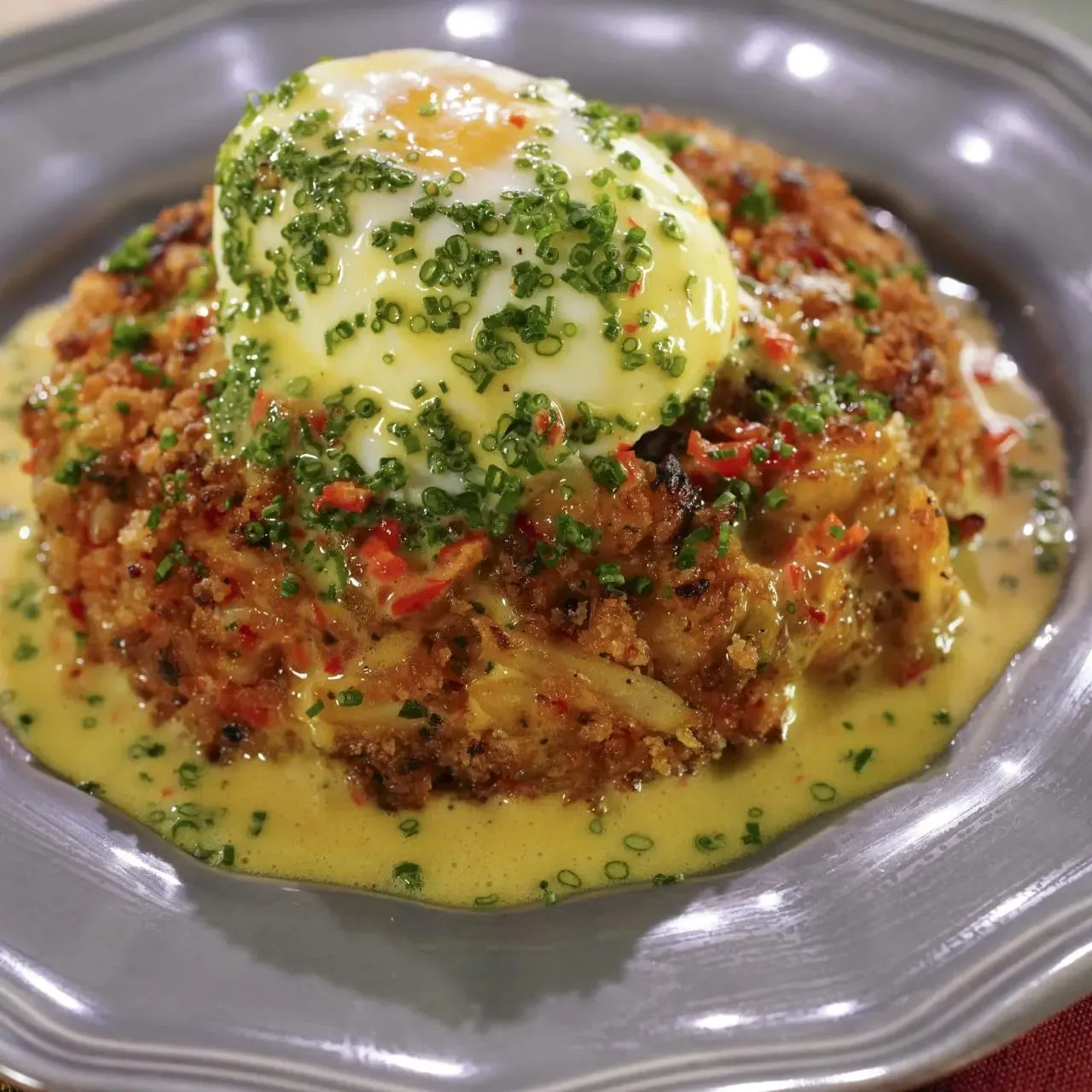
- Assemble. Put a slice of Canadian bacon and a poached egg on each muffin half. If the hollandaise needs thinning, whisk in a little warm water and season with salt. Spoon it over the eggs and scatter chopped chives on top.