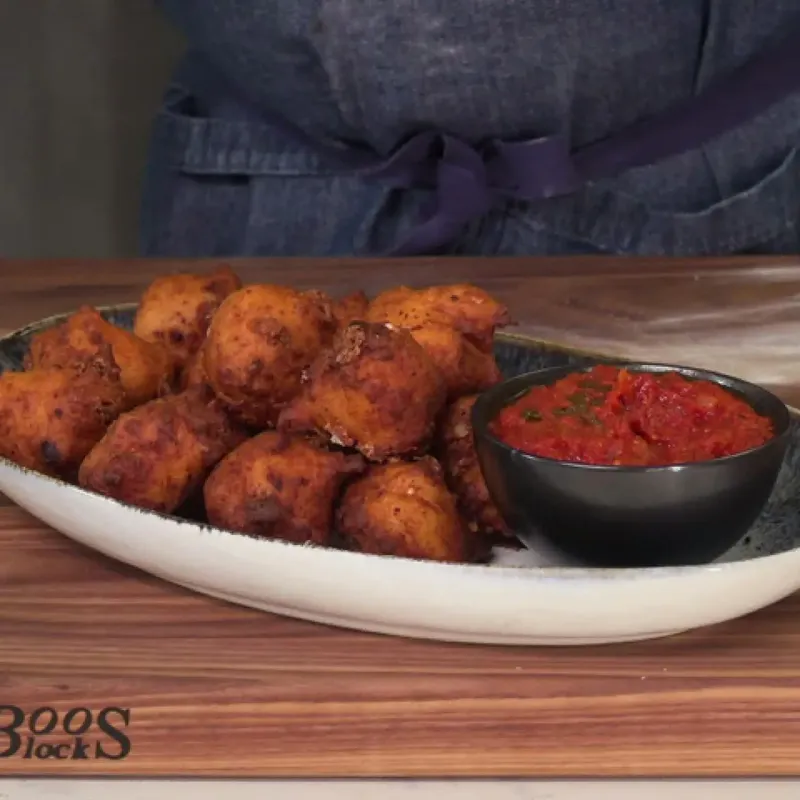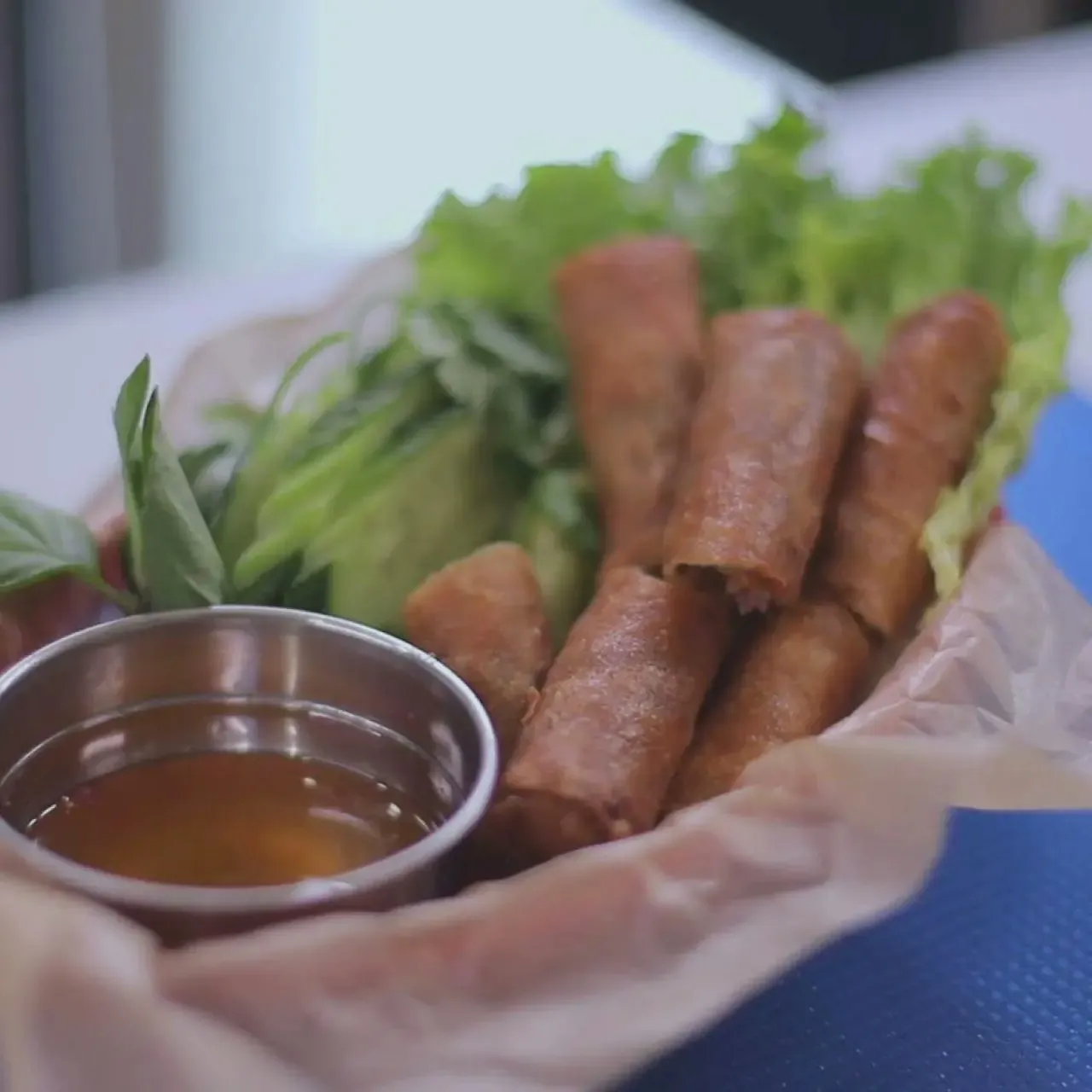
Wrapped in rice paper, they tend to be called spring rolls. Swap in a wrapper made from wheat and eggs, though, and the same filling becomes nem ran in northern Vietnam or cha-gio in southern Vietnam. By any name, the result is a deep-fried treat.
Info
- Cook time: 1 hour 50 minutes
- Time from start to finish: 2 hours 15 minutes
- Yield: 50 rolls
Ingredients
Nuoc Cham Dipping Sauce
- 1 cup hot water
- 3/4 cup fish sauce, preferably Viet Huong's Three Crabs Brand
- 3/4 cup sugar
- 1/4 cup apple cider or white vinegar
- Juice of 6 calamansi limes
- 3 garlic cloves, finely chopped
- 2 or 3 Hawaiian chili peppers, finely chopped
For the Rolls
- 1 1/2 quarts wood-ear mushrooms (black fungus mushrooms)
- 2 ounces glass noodles (bean thread)
- 1 pound ground pork
- 2 cups peeled, chopped taro roots
- 1 medium carrot, cut into small cubes
- 2 cups chopped cabbage
- 1 small white or yellow onion, finely diced
- 5 tablespoons fish sauce, preferably Viet Huong's Three Crabs Brand
- 2 teaspoons sugar
- 1/4 teaspoon ground black pepper
- Four 16-ounce packages wheat egg roll wrappers, such as Menlo All Purpose Wrappers, thawed if frozen
- 1 egg, beaten
- Vegetable oil, for frying
Instructions
- Make the sauce first. Stir the hot water, fish sauce and sugar together in a bowl until the sugar dissolves. Allow the mixture to cool, then stir in the vinegar, calamansi juice, garlic and chile peppers. Taste and tweak the sauce to suit you. It can be made ahead, and any leftover sauce keeps in the refrigerator for up to three months.
- Prep the mushrooms. Boil them in water for 2 minutes, then drain. Chop into roughly 1/2-inch pieces and set aside.
- Soften the noodles. Put the glass noodles in a large bowl of hot water and leave them for 10 minutes until soft. Drain, then cut into 1-inch lengths.
- Cook the filling base. In a wok or a medium deep pot, combine the ground pork, taro root and wood-ear mushrooms. No oil is needed, since the pork carries plenty of fat. Cook over low heat, stirring, until the pork and taro are fully done.
- Finish the filling. Turn off the heat, then mix in the carrots, cabbage, glass noodles, onions, fish sauce, sugar and pepper.
- Separate the wrappers. Pull the sheets apart slowly so they don't tear. One edge of each sheet is harder than the rest, the side where the wrappers were joined together. Tear or cut that edge off so every side is the same thickness.
- Roll them up. Spoon about 1 full tablespoon of filling onto each wrapper. Fold the top over the filling, then the right side, then the left, and roll down to the end. Brush on a little beaten egg to seal. Continue with the rest of the filling and wrappers.
- Heat the oil. In a wok or deep skillet, bring vegetable oil to 325 degrees F.
- Fry in batches. Cook the rolls a few at a time until golden brown, 2 to 3 minutes. Move them to a paper-towel-lined tray to drain. Serve hot and fresh.
Notes
Rice paper is the traditional wrapper for cha-gio, but each sheet has to be moistened before it becomes pliable enough to roll and fold. Using wheat wrappers skips that step, which is why I prefer them. Fried rice paper also doesn't hold its crispness as well as wheat wrappers do.
Serve the rolls wrapped in lettuce with assorted Vietnamese herbs (rau thơm), such as fresh mint, cilantro and Thai basil, or whatever herbs you have on hand. Pairing the rolls with fresh lettuce and herbs and dipping them in nuoc cham helps cut the greasiness of deep frying.