Info
- Cook time: 1 hour 45 minutes
- Total time: 3 hours 15 minutes
- Yield: 8
Ingredients
- 1 cup dried porcini mushrooms
- 4 ounces chanterelle mushrooms, halved
- Extra-virgin olive oil
- Kosher salt
- Four 1/8-inch slices guanciale, finely diced
- 10 fresh sage leaves, plus 2 sprigs for the sauce
- 2 cups ricotta cheese
- 1 cup freshly grated Parmigiano, plus extra for garnish
- 1/4 cup chopped fresh Italian parsley
- 10 large eggs, preferably heirloom or organic
- All-purpose flour, as needed
- 1/2 recipe Chef Anne's All-Purpose Pasta Dough, rolled into sheets for ravioli (recipe follows)
- Semolina flour, as needed
- 1 stick unsalted butter
- 1/2 cup chicken stock
Chef Anne's All-Purpose Pasta Dough
- 1 pound all-purpose flour
- 4 large eggs plus 1 yolk, preferably heirloom or organic
- 1/4 cup extra-virgin olive oil
- 1 to 2 tablespoons water, or more if needed
- Kosher salt
Instructions
- Soak the porcini in hot or room-temperature water for 30 minutes. Lift them out with a slotted spoon, then chop finely.
- Heat the oven to 375°F.
- Toss the chanterelles with olive oil and salt. Spread on a sheet tray and roast until golden brown, about 15 minutes. Set aside for garnish.
- In a sauté pan over medium-high heat, render the guanciale until crisp. Remove with a slotted spoon to a paper towel-lined plate. Fry the sage leaves in the rendered fat until crisp, about 30 seconds; season with salt and crumble. Reserve guanciale and sage for garnish.
- In a medium bowl, combine the ricotta, Parmigiano, parsley, 2 whole eggs, and the diced porcini. Mix well and season with salt.
- Lightly flour a clean work surface. Lay out 2 sheets of the rolled pasta dough, each at least 12 inches long, and brush lightly with water. Place 4 equal dollops of the ricotta mixture on each sheet, spacing them evenly. Use a spoon to create a small well or "nest" in the center of each dollop. Carefully separate the remaining 8 eggs, placing one yolk in each ricotta nest (discard any broken yolks).
- Top each sheet of ricotta nests and yolks with another sheet of pasta. Press around each nest with your index fingers to seal, then cut out the ravioli with a fluted ring cutter or dough roller (each should be 3 to 4 inches across). Transfer to a tray generously dusted with semolina.
- Bring a large pot of well-salted water to a boil. In a large sauté pan, melt 1/2 stick of the butter and add 1/4 cup of the chicken stock (reserve the rest for the second batch). Add a sage sprig and season with salt. Bring to a boil, then reduce to a simmer.
- Carefully add 4 ravioli to the boiling water and cook for about 2 minutes, no longer. Using a spider or slotted spoon, transfer them to the pan with the butter and stock and cook for 2 to 3 minutes. If the sauce thickens too much, add a few drops of the pasta cooking water. The sauce should coat the ravioli in a buttery hug. Repeat with the remaining 4 ravioli, using the remaining 1/2 stick butter, 1/4 cup chicken stock, and 1 sage sprig.
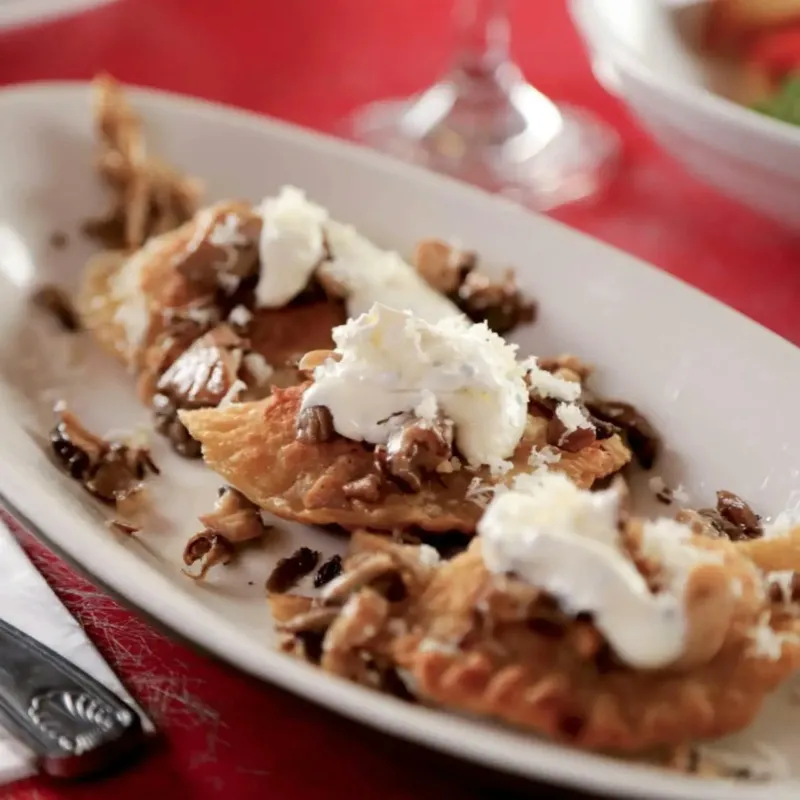
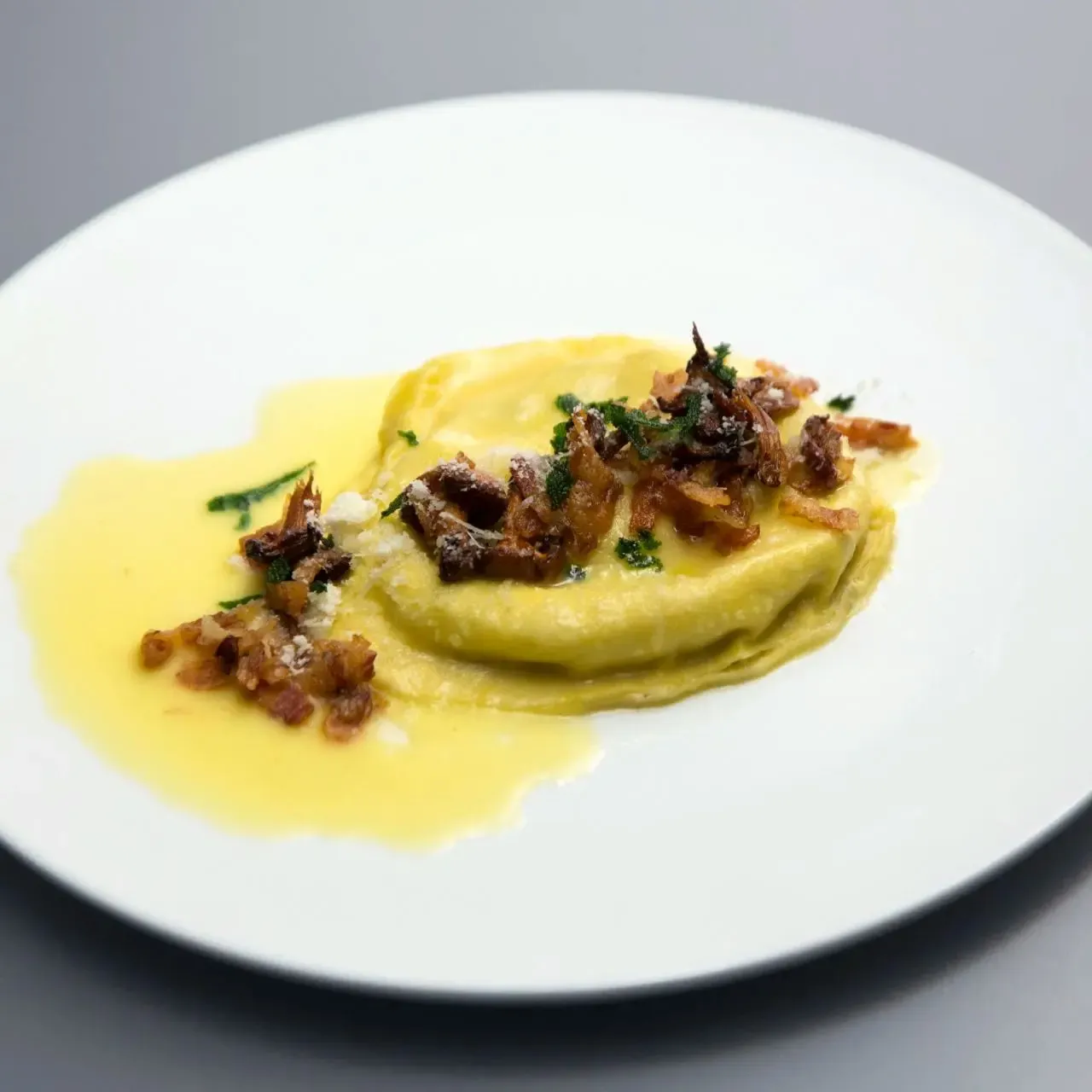
- Plate the ravioli, one per serving. Spoon a little extra sauce over each and finish with a sprinkling of grated Parmigiano, guanciale, chanterelles, and fried sage.
- For the pasta dough: Mound the flour on a clean, dry work surface. Make a well in the center about 8 inches wide (larger is better). Crack all the eggs and the yolk into the well; add the olive oil, water, and salt.
- Beat the eggs with a fork, incorporating the olive oil, water, and salt. Gradually begin to incorporate flour from the inner edge of the well, being careful not to break the sides or the egg mixture will run out. Don't worry about lumps. Once enough flour is mixed in that the egg mixture won't run when the well is broken, use your hands to combine everything well. If the dough feels tight and dry, wet your hands and knead with wet hands. When the mixture comes together homogeneously, begin kneading.
- Kneading is crucial: put your body weight into it, stretching the dough without tearing it. Using the heels of your palms, roll and stretch the dough until it is very smooth and supple, almost velvety. Kneading usually takes 8 to 10 minutes for an experienced kneader and 10 to 15 for a beginner. This step creates the perfect, toothsome texture of your pasta. When the dough is ready, wrap it in plastic and let rest for at least 1 hour. If using immediately after resting, do not refrigerate.
- Roll and cut the pasta into the desired shape. It should be beautifully smooth and supple.