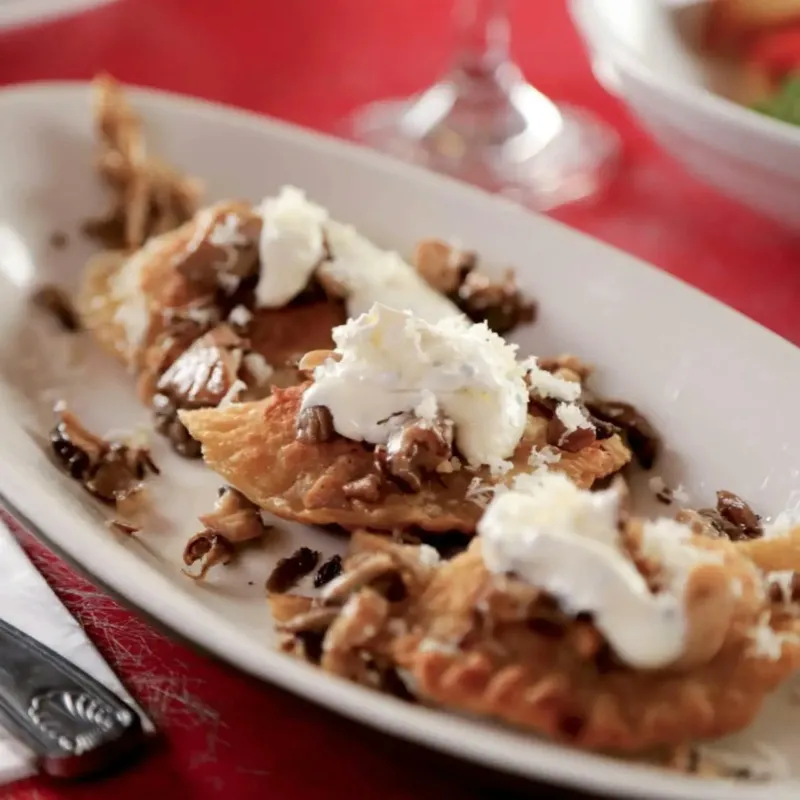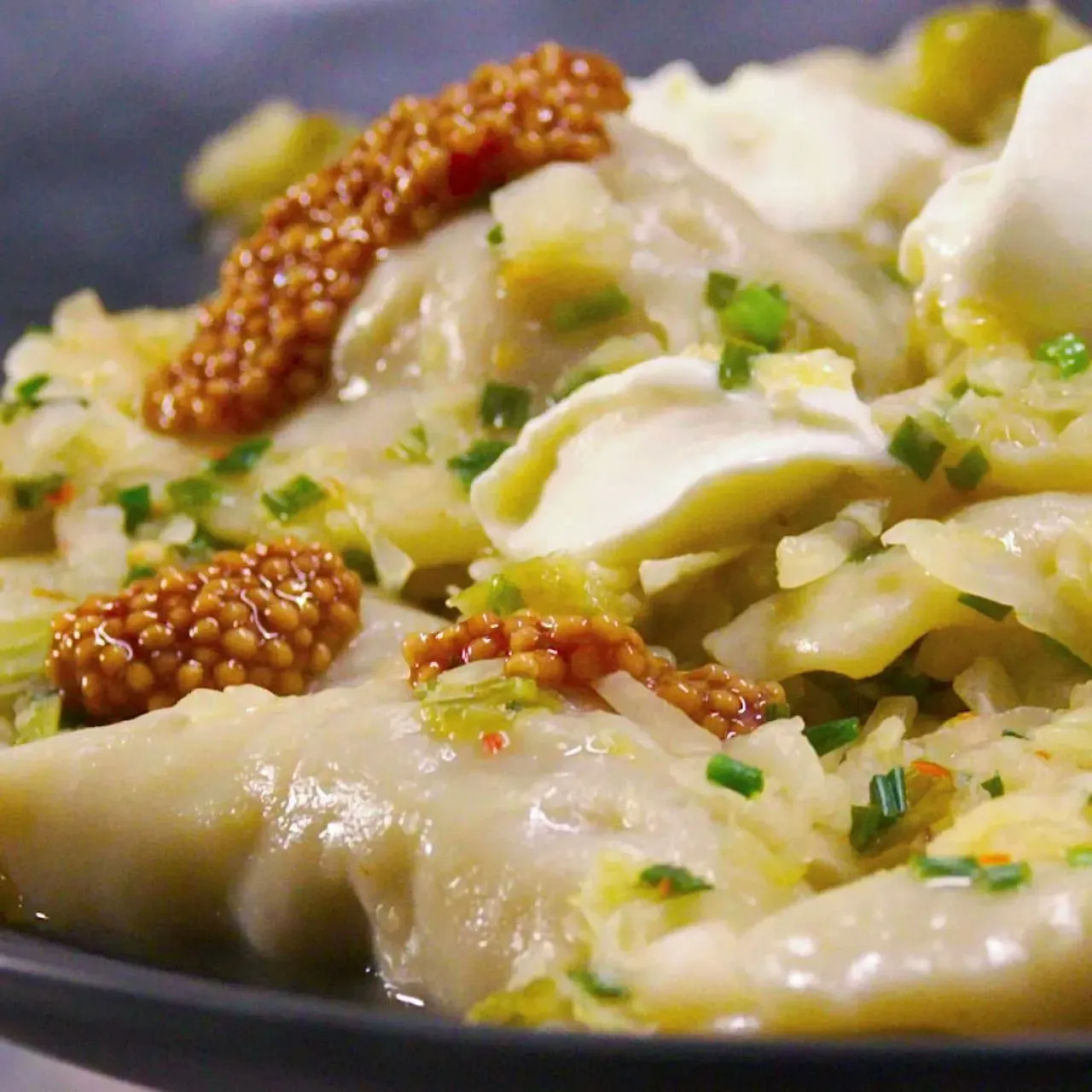
I learned to make pierogies as soon as I was tall enough to reach the counter, and in Cleveland that's practically a birthright. The dough I use comes from my grandfather. The filling—smoky pork shoulder mixed with spicy sauerkraut—strikes a balance between hearty and tangy, and it tends to disappear quickly.
Info
- Cook time: 2 hours 50 minutes
- Total time: 49 hours 35 minutes
- Yield: 40 pierogies
Ingredients
For the Smoked Pork
- 1 cup Diamond Crystal kosher salt
- 1/2 cup dark brown sugar
- 1 ounce ground coriander
- 1 ounce ground cumin
- 1/2 ounce ground black pepper
- 1/2 ounce red pepper flakes
- One 3 1/2- to 4-pound bone-in pork shoulder, skin off, trimmed
- One 1-pound bag spicy sauerkraut, preferably Cleveland Kraut Spicy Kraut, chopped
For the Pierogi Dough
- 1 stick (8 tablespoons) unsalted butter, at room temperature
- 1 cup sour cream, at room temperature
- 2 teaspoons kosher salt, plus more for the cooking water
- 4 large eggs, at room temperature
- 4 cups all-purpose flour, plus more for rolling
Instructions
- Cure the pork (two days ahead): In a bowl, combine the salt, brown sugar, coriander, cumin, black pepper, and red pepper flakes. Coat the pork on all sides with the mixture, then refrigerate it uncovered overnight. Any leftover seasoning can be kept in an airtight container for up to 6 months.
- Make the dough and smoke the pork (one day ahead):
- In the bowl of a stand mixer fitted with the paddle attachment, cream the butter. Add the sour cream and salt and beat until smooth, scraping down the sides and bottom of the bowl. Beat in the eggs; if the mixture looks slightly lumpy, it will smooth out once the flour is added.
- Add 2 cups of flour and mix briefly until a thick batter forms. Switch to the dough hook, scrape the bowl, and add the remaining 2 cups flour. Mix on medium speed until a dough forms and begins to climb the hook, cleaning the bowl as it goes. If the dough seems too wet and isn't coming together, add more flour—start with a loose 1/4 cup.
- Turn the dough out onto a floured surface and bring it together into a ball with floured hands, kneading a few times if needed and sprinkling with flour if it sticks. The dough should be soft and silky, not sticky. Wrap it in plastic wrap, flatten into a disc, and refrigerate overnight. This rest hydrates the flour and relaxes the dough for easier rolling.
- Set up the smoker: Get a smoker running at 300 degrees F with clear smoke. If using a charcoal grill, set it up for indirect heat by building the coals on one side only and, if you like, add wood to the coals for extra flavor. For a gas grill, heat one side only to medium-high.
- Smoke the pork: Place the pork fat side up and smoke until tender—the meat should pull away from the bone easily and reach 160 degrees F internally, about 3 to 4 hours. Let it cool until you can handle it, then shred the meat and discard the bone. Stir in the chopped sauerkraut along with its liquid. Keep the filling chilled until needed.
- Roll and cut the dough (the next day): Halve the dough and roll each half to 1/8-inch thickness on a floured surface. Cut rounds with a 4-inch circle cutter. Repeat with the remaining dough. Keep the rounds refrigerated between sheets of wax or parchment paper. Gather the scraps, press them back into a ball, and let rest in the fridge if needed before rerolling.
- Prepare a tray: Line a sheet tray with parchment or wax paper and sprinkle it with flour.
- Fill and seal: Moisten the edges of each dough round with water, place about 2 tablespoons of filling in the center, and fold over, pressing to seal while being careful not to let filling get into the seams. Set each finished pierogi on the prepared tray and repeat. At this stage, they freeze very well.
- Keep them firm: If the dough rounds become too soft or hard to handle while you're working, return them to the fridge.
- Cook: Boil the pierogies in batches in salted water at a strong simmer until they float, about 5 minutes. If you like, pan-fry them afterward.
Notes
Oven method (no smoker): Preheat the oven to 350 degrees F. Roast the pork covered with aluminum foil until fork-tender, 2 1/2 to 3 hours. When cool enough to handle, pull and chop the meat into small pieces and discard the bone.